
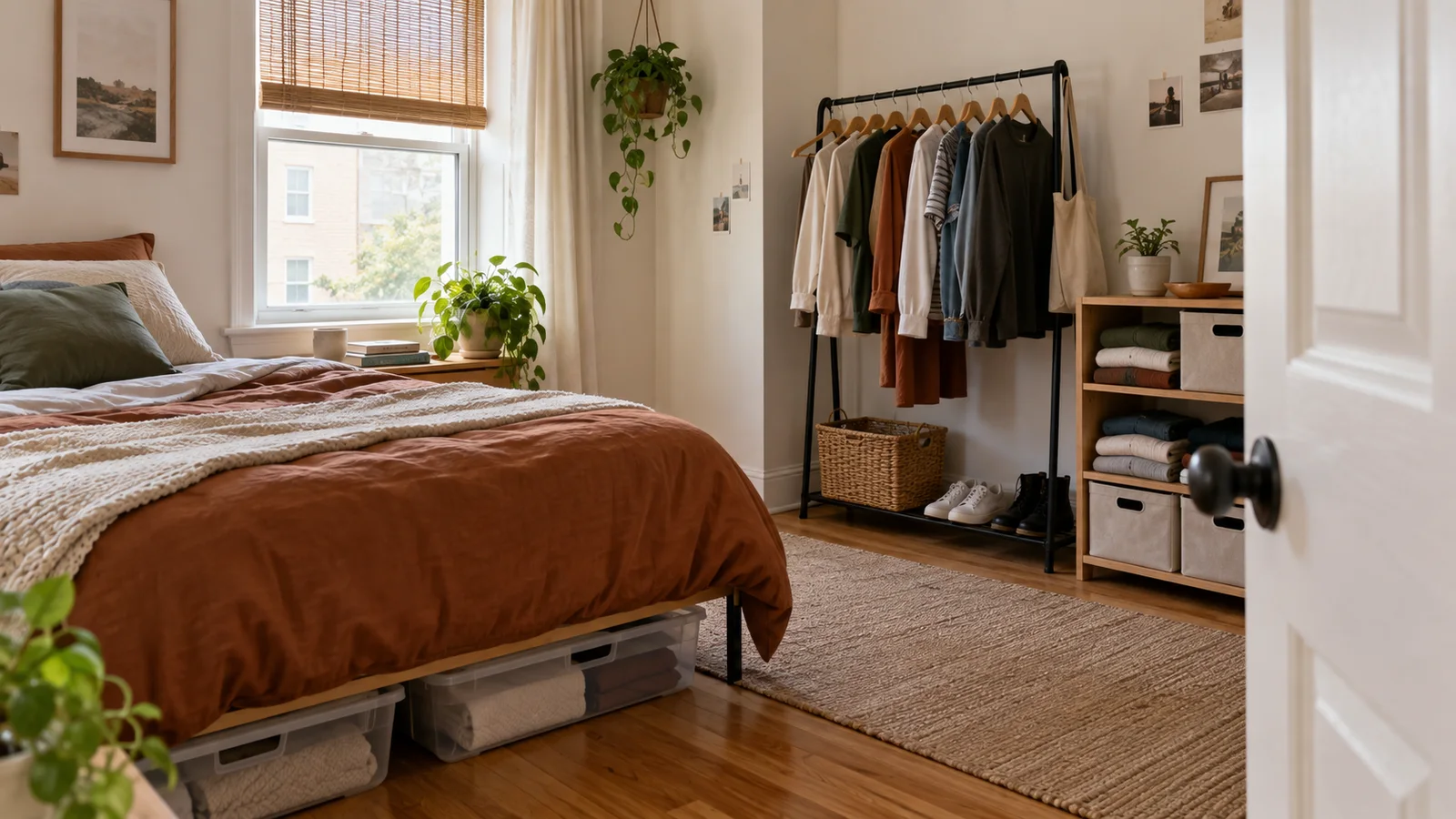
You can store clothes without a closet or dresser by giving each group of clothes one clear home: a hanging zone, a folded zone, and a less-frequent zone. The best setup depends on what you own and the usable space around your bed, door, and windows.
Start with a plan before you buy a rack, shelf, or bin. A storage piece can look small in a listing but still block a door, make it hard to change the sheets, or leave no room to clean. Your goal is a system you can reach, reset, and live with every day.
Your room decides what fits. Measure before you buy, and treat product listings and styled room photos as starting points rather than proof that a setup will work in your space.
Start with the clothes you actually need to store
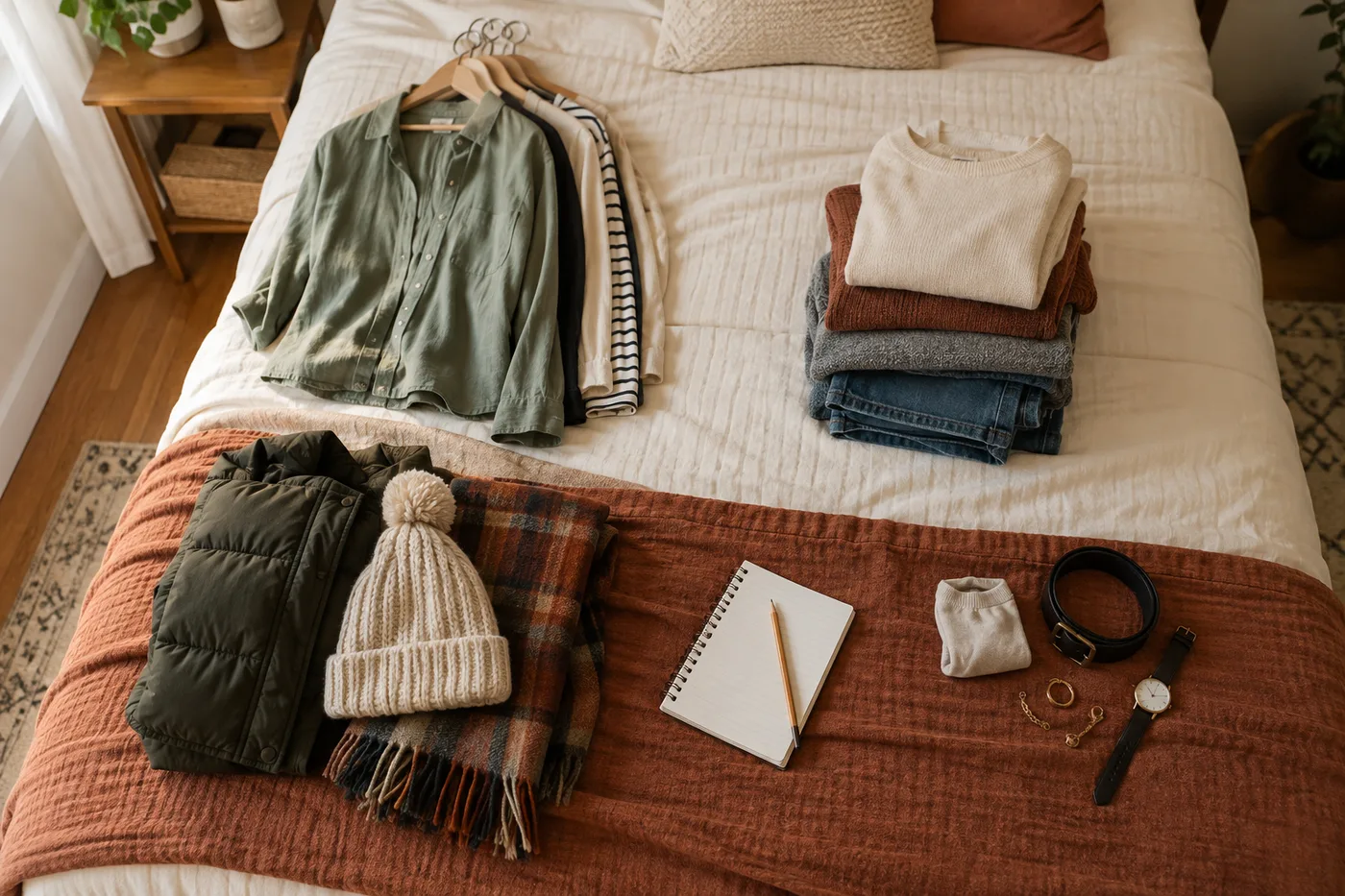
Emptying every item onto the bed is not required. Instead, make a simple count in the places where clothes already collect. Write down four groups:
- Clothes you wear this week
- Clothes that need or benefit from hanging
- Clothes that can be folded
- Seasonal, special-occasion, or backup items
This split matters because one solution rarely handles all four groups well. A rail may help with shirts and dresses but does little for socks. A bin can hold sweaters but makes getting dressed slower if it holds every everyday item.
For each group, decide how often you need to reach it. Daily clothes should be at an easy height and in a place you can open without moving other furniture. Less-used items can move to a higher shelf or under the bed if you can pull them out without scraping the floor or blocking a route through the room.
Measure the space before choosing storage
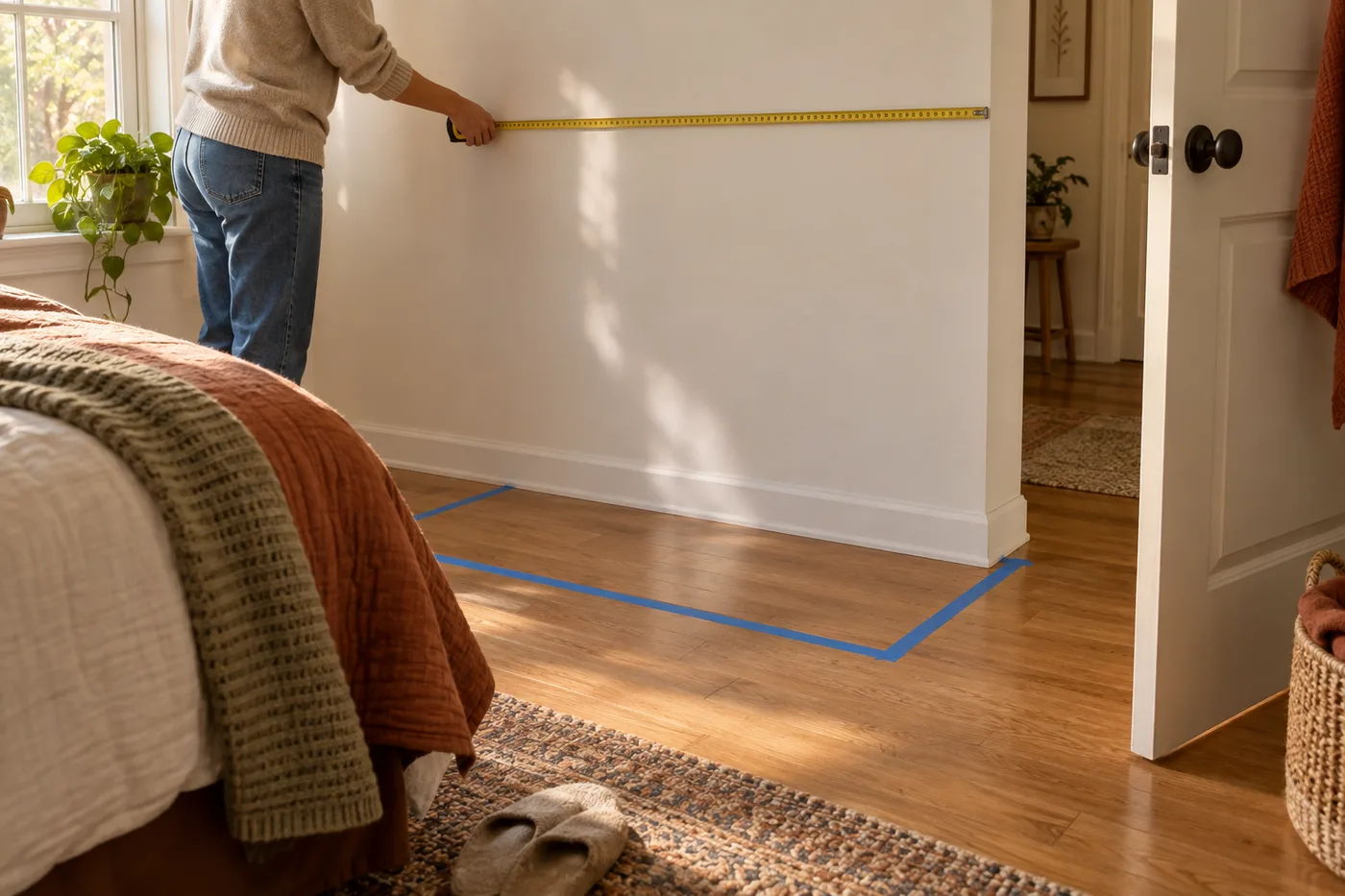
Use painter’s tape, a paper outline, or an empty box to mark a possible storage zone on the floor. Then check the route around it.
Measure and record:
- The wall width you can use
- The depth from that wall to the nearest path or bed
- The door swing and any closet, bathroom, or drawer that opens into the same area
- The clear space under the bed, including legs or center supports
- The height and hanging length you need for your longest everyday pieces
- Where a vacuum or broom needs to reach
Do not assume a tall unit is safe just because it takes little floor space. The U.S. Consumer Product Safety Commission identifies tip-over hazards associated with clothing storage units. If a freestanding unit includes anchoring instructions or a restraint, follow those instructions and confirm that your rental rules and wall surface allow the installation.
FIT CHECK
Mark the complete footprint, then open every nearby door and walk the route you use at night. Measure the usable path after the storage is outlined, not only the empty wall before it arrives.
Choose one main clothing zone
Most small rooms work better when the main clothing storage stays together. Spreading a few items across every wall can make it hard to get dressed and harder to see what needs putting away.
| Storage choice | Best when | Check before using it |
|---|---|---|
| Open rail | You hang a small daily wardrobe | Stability, load limit, longest garment, walking path |
| Closed wardrobe | You need clothes out of sight | Full exterior size, door clearance, delivery route, anchoring |
| Shelves with bins | Most of your clothes fold | Reach height, bin pull-out room, stack stability |
| Under-bed containers | You store less-used clothes | Bed supports, lid height, pull-out space, cleaning access |
An open hanging zone
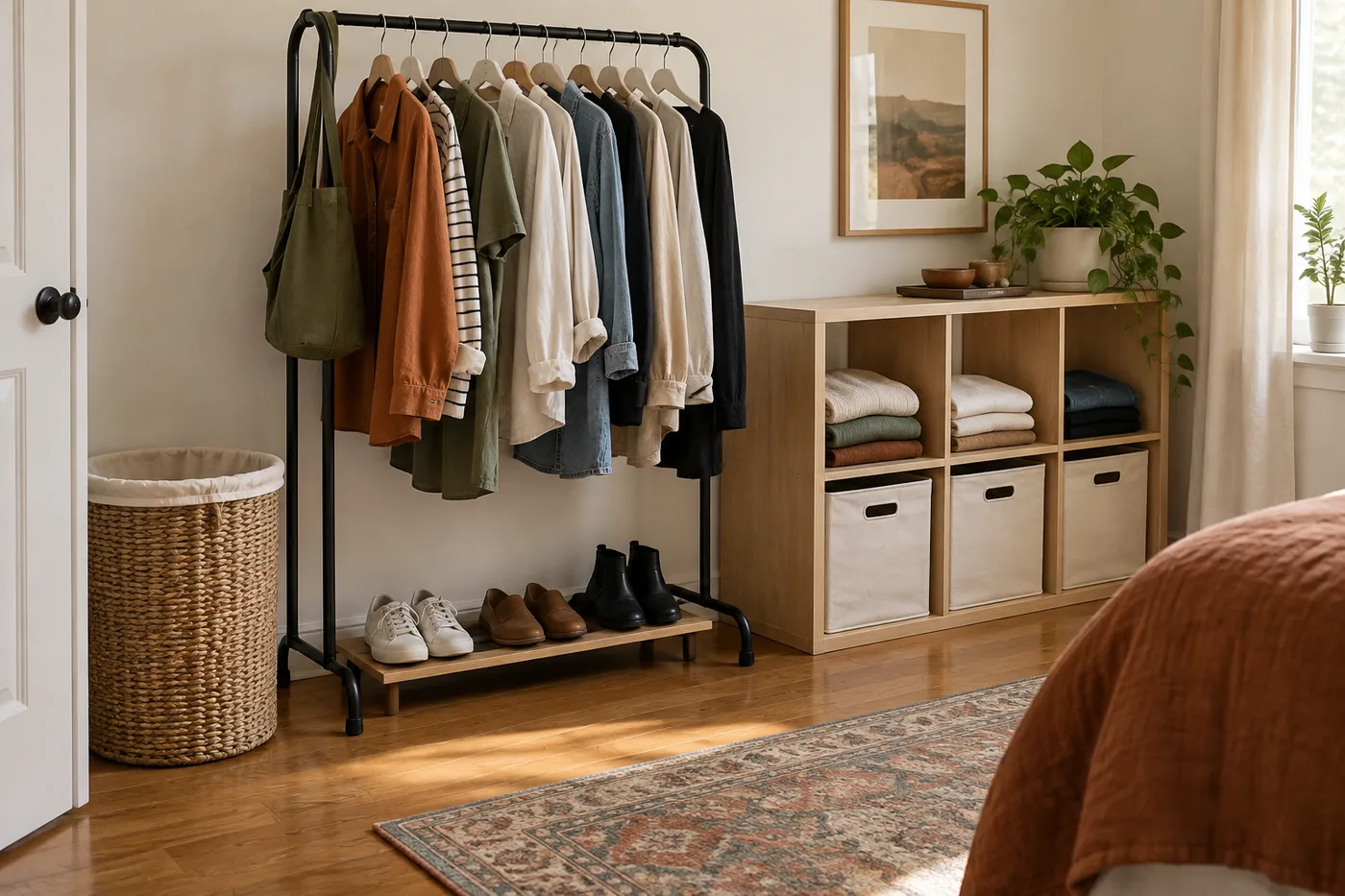
An open rail or freestanding rack can be useful when you have a small group of clothes that you want to hang and use often. It is easy to see, but it leaves clothes visible and exposed to room dust.
Use this approach when you can keep the rack in one stable spot and have another home for folded items. Keep the rail within its stated load limit. Avoid filling it with items that drag on the floor or make it hard to walk past the bed.
This option may suit a short-term rental or a room where you want to move the storage later. It is a poor fit if seeing your whole wardrobe feels distracting, if the rack blocks a door, or if you have nowhere for underwear, socks, and folded layers.
A closed wardrobe or cabinet
A wardrobe can combine hanging space and shelves behind doors. It can reduce visual clutter and give clothes some dust protection. It also takes a larger, fixed piece of floor space.
Before considering one, confirm the complete exterior size, door clearance, assembly instructions, wall-anchoring requirements, and the delivery route into the room. Do not assume that a freestanding wardrobe is renter-safe without checking its instructions and your lease. Do not buy it based on a claimed garment capacity.
This option may suit you if clothes need to stay out of sight and you have a clear wall. It is a poor fit if the doors cannot open fully or if a safe anchor cannot be installed as required.
Shelves or cubes with removable bins
Open shelves and cube-style storage can create drawer-like homes for folded clothes when a dresser will not fit. Bins can group small items so they do not become a loose pile.
Place the groups you reach every day on the shelves you can use without stretching or crouching. A simple label can help you return items to the right bin. Keep the shelf surface clear enough that you can pull a bin out with one hand.
This option may suit you if most of your wardrobe folds. It is a poor fit for stacks that fall forward, shelves that are too high for daily use, or furniture that needs mounting you cannot safely complete.
Under-bed storage for less-frequent clothes
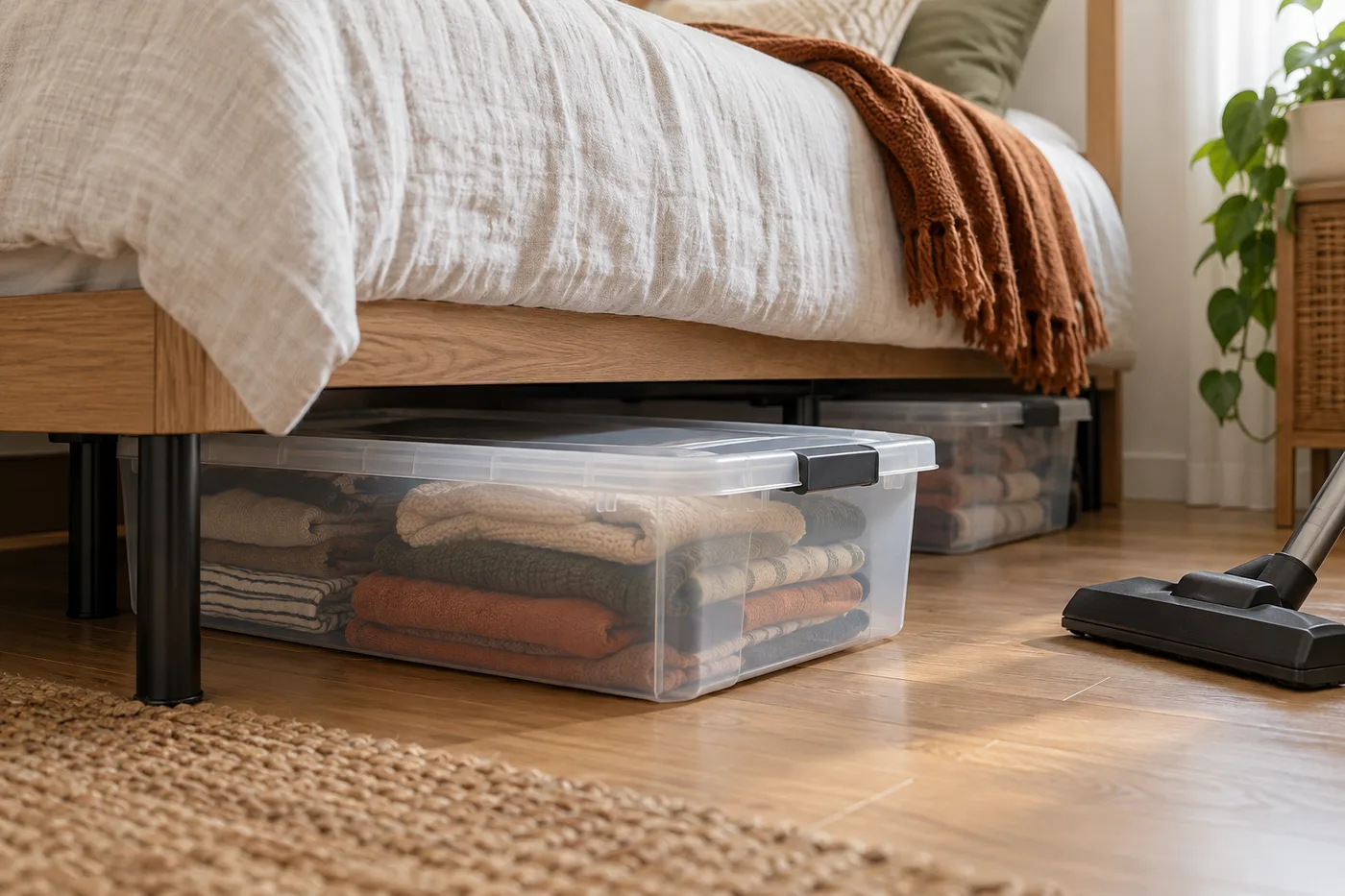
Under-bed storage can be a useful second zone for seasonal clothes, spare bedding, or items you do not reach every morning. Check the full path, not only the height. A container must clear bed supports, pull out toward open floor, and leave you able to clean beneath the bed.
For long-term storage, clean the clothes first and use containers that close securely. Utah State University Extension recommends clean, pest-free, airtight containers to help keep clothes moths from laying eggs on stored items. That is pest guidance, not a promise that every container prevents every problem. Follow each garment’s care label and deal with an active pest issue before relying on storage alone.
This option may suit you if the bed already has clear, accessible space below it. It is a poor fit if you must move the bed to reach the containers or if a container will not slide out safely.
Give hanging clothes a practical boundary
Separate the clothes that need hanging from the clothes that are easy to fold. You do not need a perfect rule for every fabric. Use the care label, the way you wear the item, and whether folding creates a problem you want to avoid.
Put your longest everyday pieces together first. Then check that they hang freely and do not brush the floor, a shelf, or another rail. Keep a little room between groups so you can remove one item without pulling several down.
If you use a wall-mounted rail, shelf, or rod, use the hardware and installation method specified by its maker. Do not assume adhesive strips, tension systems, hooks, or wall anchors suit every load or surface.
Make folded clothes easy to find
Folded storage works when each category has a boundary. A shelf, shallow bin, drawer alternative, or basket can be that boundary. The exact folding style matters less than being able to see the category and put it back without rebuilding a tall stack.
Start with the items you reach most often: everyday tops, pants, sleepwear, underwear, and socks. Give each a separate home. If a group does not fit, reduce the group, add a second assigned bin, or move a less-used category to your seasonal zone. Do not keep pushing more clothes into one unstable stack.
For small items, avoid a deep catchall bin. Divide it by category using containers you already have, then label only if the labels will help everyone who uses the space.
Protect clothes without hiding the problem
Closed storage can cut down on dust, but it should still be easy to inspect and clean. Pull out under-bed containers and wipe or vacuum the surrounding floor as part of your normal cleaning routine. Utah State University Extension recommends cleaning areas where clothes moths may live and thoroughly vacuuming floors, shelves, and drawers.
Follow garment care labels before packing clothes away. Do not use cedar, fragrance, or a storage bag as a substitute for cleaning an active pest problem. Utah State University Extension says cedar-lined closets and chests have limited value against clothes moths because repellent concentrations are difficult to maintain.
Set up the room in this order
- Pick the one wall, nook, or under-bed area that will be your main clothing zone.
- Mark its footprint and open every nearby door before moving anything in.
- Put daily hanging clothes in the hanging zone.
- Put daily folded clothes in shelf or bin homes beside that zone when possible.
- Move less-used clothes to a separate, clean seasonal zone.
- Leave a clear route to the bed, door, and cleaning area.
- Use the setup for a week, then note what lands on the chair, floor, or bed. That group needs a simpler home, not a larger pile.
This sequence helps you find the category that lacks a home before you add more furniture. Recheck the route to the bed and doors after each change.
A simple no-purchase reset to try first
Before adding furniture, collect the bags, boxes, hooks, and shelves you already own. Assign only three temporary homes: hanging, folded, and seasonal. Place a laundry basket or hamper where clothes normally land. Then live with the setup for a few days.
This can show whether your real problem is a lack of hanging space, a lack of small-item storage, or a layout that blocks access. It can also keep you from buying a large piece that solves the wrong problem.
Questions to ask before you buy anything
- Does it fit in the room after every nearby door is opened?
- Can you reach the clothes you use every day?
- Does the maker require anchoring, a certain wall type, or a specific installation method?
- Can you clean around and under it?
- Does it solve hanging, folded, or seasonal storage? Which group will still need a home?
- Can you move it into the room and later remove it from the rental?
Frequently asked questions
What is the easiest way to store clothes without a closet or dresser?
Start by separating daily hanging clothes, daily folded clothes, and less-frequent clothes. Then give each group one reachable home. An open rail plus bins or shelves can work for some rooms, while a closed wardrobe may suit a room that needs clothes out of sight. Measure first because either choice can block a small room.
How can you store clothes in a small bedroom with no closet?
Keep one main clothing zone together, then use under-bed space only if containers can slide out and the floor can still be cleaned. Check door swing, bed access, and the longest items you need to hang before choosing furniture.
How do you keep clothes from getting dusty without a closet?
Use clean, secure containers for stored clothes and clean the storage area regularly. For an active clothes-moth concern, Utah State University Extension recommends clean, pest-free, airtight storage and regular cleaning. Follow garment care labels and seek appropriate pest help if the issue continues.
Keep the system easy to maintain
Your first setup does not need to be permanent. If clothes keep landing on a chair, floor, or bed, identify the category that has no easy home. Move that category closer to where you use it, give it a smaller container, or reduce what stays in the room. This is usually more useful than adding storage everywhere at once.