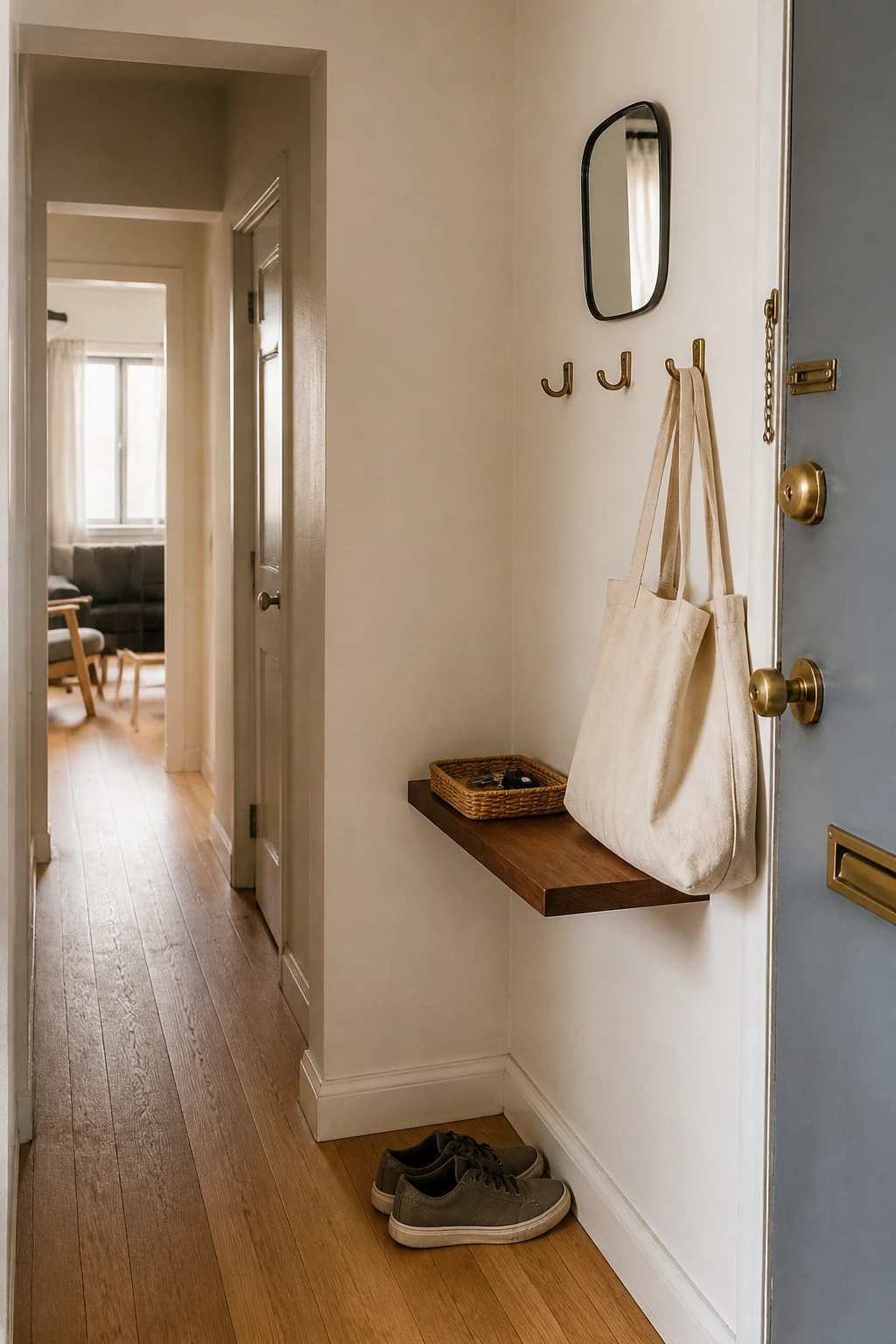
What should become easier the next time you come home?
When your front door opens straight into your living room or a tight 36-inch hallway, clutter accumulates at the threshold instantly. The natural reaction is to buy a big coat rack or a 3-tier wooden shoe shelf. But in small apartments, deep furniture quickly turns the entryway into a hazardous obstacle course.
The secret to a functional apartment entryway is not more furniture—it is shallow depth and zero-drill vertical elevation.
Explore the No-Drill Entryway Buying Guide
1. The 32-Inch Clear Walking Lane Rule
Before ordering any organizer, open your front door to its standard 90-degree swing. Measure the distance from the edge of the open door to the opposite wall.
In standard US building codes, accessible residential hallways require at least 32 to 36 inches of clear walking width. If you install a typical 14-inch shoe bench in a 40-inch hallway, you leave only 26 inches—forcing you to turn sideways every time you carry groceries or trash bags.
The Golden Rule: Keep all entryway furniture under 10 inches in depth.
2. The Over-The-Door Airspace Strategy
Your interior closet door or front utility door represents roughly 14 square feet of completely unutilized vertical storage.
By hanging a heavy-duty fabric pocket organizer over the back of the door, you can store:
- 12 pairs of sneakers, flats, and sandals
- Dog leashes, poop bags, and harnesses
- Winter beanies, scarves, and gloves
- Mail, sunglasses, and keys
Ensure your organizer uses foam-padded top brackets to prevent metal-on-paint scuffs on your landlord’s door frame.
3. Slim Flip-Drawer Shoe Cabinets
If you prefer concealed shoe storage, ultra-shallow flip-drawer cabinets (like Baxton Studio or IKEA Trones style) measure only 9.4 inches deep. Because shoes sit vertically inside pivoting bins rather than flat on shelves, you can hide up to 10 pairs of shoes without losing a single foot of hallway walking width.
4. The One-Week No-Buy Box Test
Before purchasing new furniture, place a simple shallow tray or cardboard shoe box lid on an existing table or windowsill near the door. Use it strictly for daily keys, wallet, and sunglasses for 7 days.
If the habit sticks, invest in a dedicated wall-safe floating catchall tray. If keys still end up on the kitchen counter, move the arrival point to where your natural routine already flows.