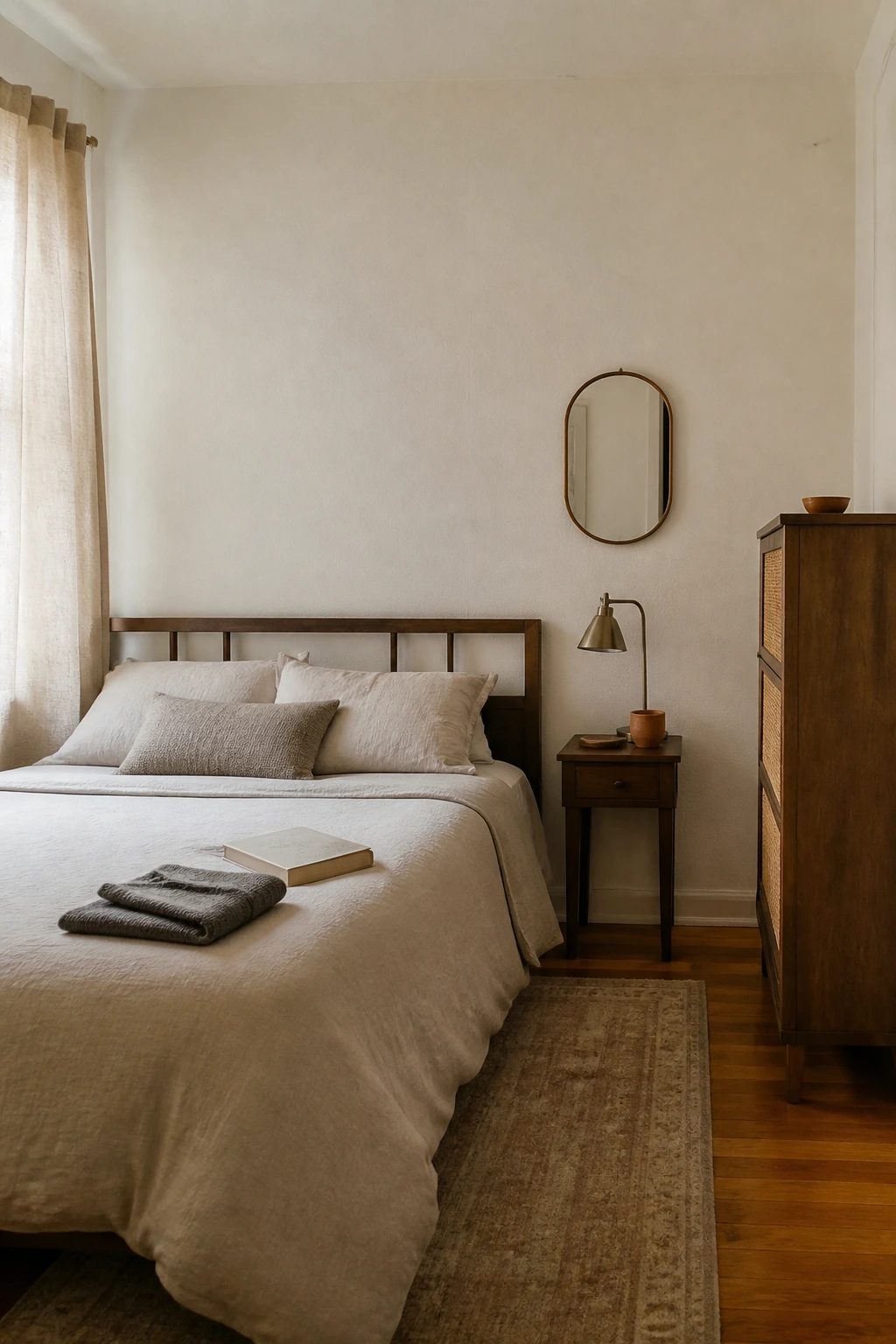
Watch one complete routine before measuring or buying.
Protect the route, opening parts, and exit plan.
Measure and rehearse
Use your room as the standard.
The numbers below are examples of what a reader might measure, not universal clearances. Your household, lease, building instructions, and access needs decide what works.
- What to measure
- Measure the narrowest route from the door to the bed and wardrobe, including open drawers and doors. For bedside storage, measure from the mattress edge to the nearest obstruction and note the height your hand reaches comfortably.
- Clearance and access
- Test the route in low light and include access needed for mobility aids, cleaning, changing bedding, and opening drawers. Keep heaters, vents, windows, and required exits unobstructed.
Before you add anything
Ask three room-specific questions.
Write the answers beside your measurements. A choice that misses one of them is easier to rule out before it reaches the room.
- 01
What must be reachable from bed?
- 02
Where can in-between clothes stop?
- 03
What needs access for sleep, cleaning, or mobility?
No-buy test
Prove the routine before the purchase.
Use one existing chair, hook already provided by the property, or breathable basket as a strict holding zone; remove anything beyond its edge each laundry day.
Low-commitment paths
Change one part, then observe.
These are starting paths, not promises that one setup fits every home.
- 01
Give worn-but-not-ready-to-wash clothes one breathable, limited holding place.
- 02
Keep only night-time essentials at the bedside.
- 03
Move the overflow category that most often reaches the floor before buying bedroom storage.
Decision boundaries
Know the compromise and the stop sign.
Renter-aware does not mean risk-free. Check the property rules, instructions, surface, access, and consequences before committing.
- Renter-aware path
- Start with lightweight freestanding pieces that cannot tip and can leave with you. Check the lease before fixing anything to a wall, and follow furniture safety instructions where anchoring is required.
- Trade-offs
- An open clothing zone is easier to use but remains visible. Closed storage looks quieter but needs floor space, door clearance, and a routine that prevents hidden overflow.
- Who should avoid this path
- Skip a new bedroom piece if it makes getting out of bed or reaching the door harder. Avoid tall unstable storage, blocked vents, and overloaded existing hooks.
Practical example — illustrative, not a standard
Put the measurements into a real decision.
If an open drawer leaves a 22-inch route beside the bed, test whether the person using that side can pass comfortably and carry laundry. If not, reduce drawer depth in the route by relocating the dresser rather than adding a slimmer obstacle.
The common thread
Measure first. Keep the exit plan visible.
The Fit Check helps you decide whether a solution still works when the room changes, the lease matters, or the routine gets busy.
Read the Fit Check method