
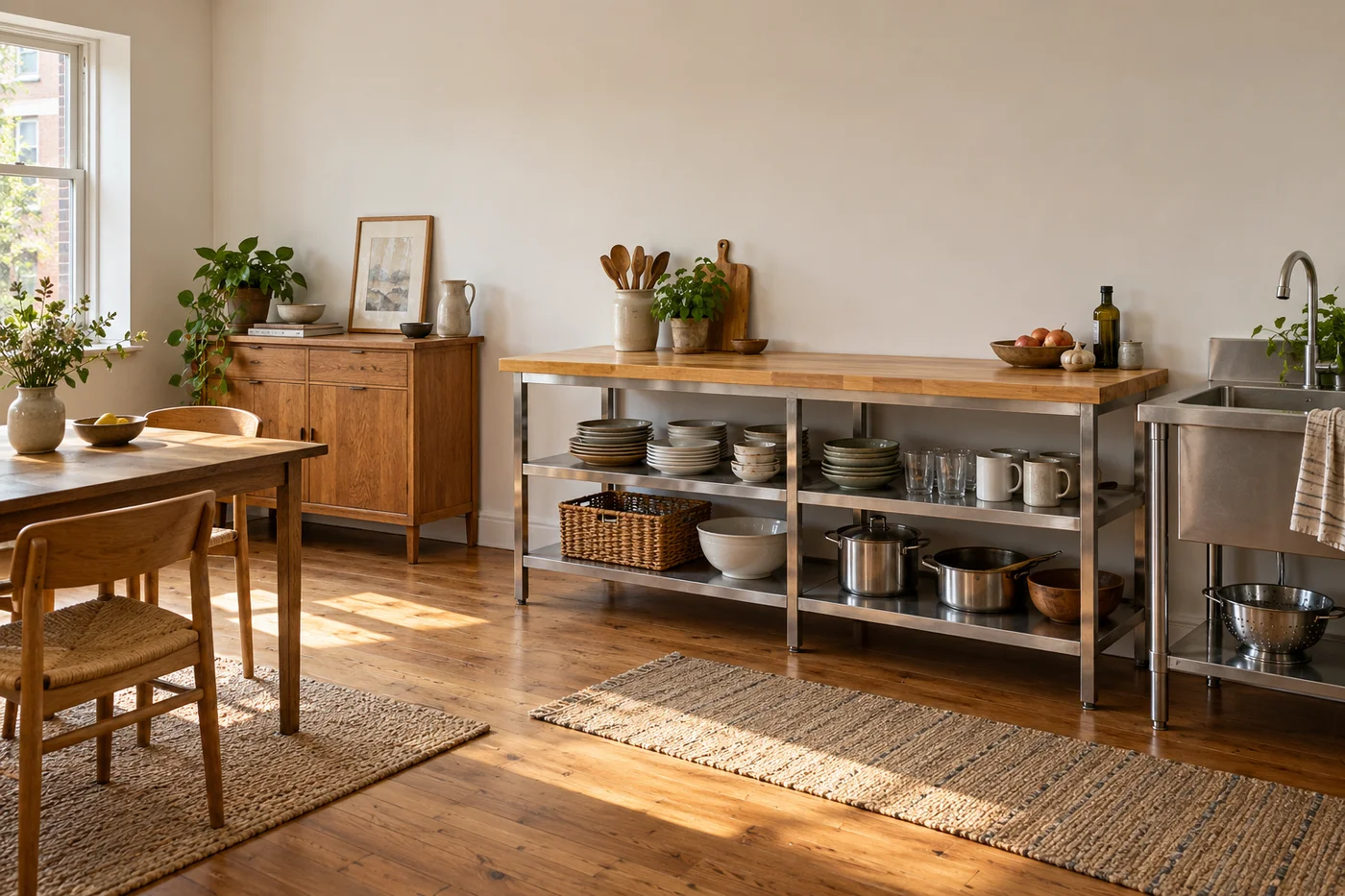
Small kitchen storage without cabinets works when each non-food item has a clear job and home. Start with dishes, cookware, utensils, and prep tools. Keep the things you use most close to where you cook, then move occasional items out of the active zone. A shelf or cart can help, but only after you know exactly what it needs to hold.
This guide does not cover food storage. If your main problem is cans, dry goods, snacks, and other shelf-stable food, see how to organize a small kitchen without a pantry.
Separate food from kitchen gear
When cabinets are scarce, a single shelf often becomes a mix of pasta, plates, pans, appliances, and cleaning supplies. That makes it hard to put anything away. Divide the problem before choosing a solution.
Make four groups: dishes and glassware, cookware and bakeware, prep tools and utensils, and small appliances. Put food aside for its own plan. Put cleaning supplies in a separate, appropriate location. The FDA advises keeping nonperishable food away from household cleaning products and chemicals, so do not use one mixed shelf as a substitute pantry. Read the FDA guidance.
You are not deciding what to buy yet. You are finding the items that must be reached daily and the ones that can be stored farther away.
Start with what you use
Sort each group by how often you use it. Daily items might include plates, bowls, one pan, one pot, cooking tools, a cutting board, and the mugs you actually reach for. Weekly items may include serving dishes or bakeware. Occasional items may be holiday platters, specialty tools, or a small appliance that stays unused most of the month.
This is not a rule that you must own fewer things. It is a way to keep the busiest part of a small kitchen from doing the work of a full-size cabinet wall. If you have six pans but use two most weeks, give the two daily pans the best location. Put the rest in a separate place only if it stays accessible and safe.
Protect the working zone
The prep surface, sink approach, refrigerator door path, and stove area need room to work. Before adding a shelf, cart, or rail, use tape or a box to mark its full footprint. Then open every door and drawer that comes near it. Walk from the refrigerator to the sink and stove while holding something bulky, such as a pot.
Do not treat an empty wall as available storage until you check the route in front of it. A piece can fit against the wall and still make it difficult to pass, clean, or open an appliance. Your kitchen decides the usable depth. Product photos and general diagrams cannot measure it for you.
Keep combustible storage away from the stovetop. The National Fire Protection Association advises keeping items that can catch fire, including towels, packaging, wooden utensils, and oven mitts, away from the cooking area. Its cooking-safety sheet is a helpful boundary, but it does not replace the installation and clearance instructions for your own appliances.
Choose one main storage zone
Most cabinet-poor kitchens are easier to live with when non-food storage is grouped in one main zone instead of scattered on every counter. This might be a low shelf, a stable freestanding unit, a section of a dining-area sideboard, or a cart that has a defined parking place.
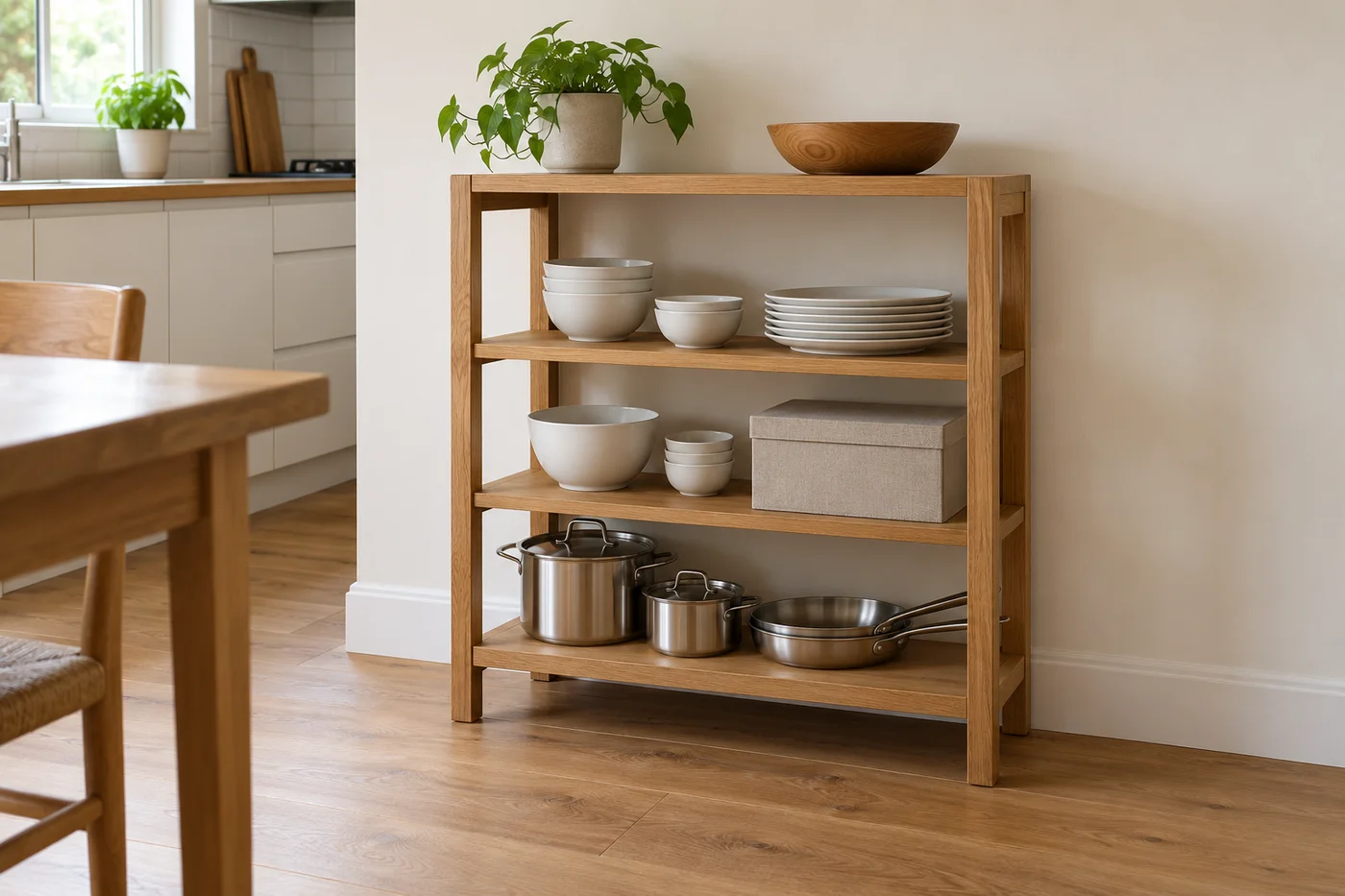
Choose the zone based on the items it must hold:
- Dishes and glasses: a reachable shelf where you can remove one item without moving a stack.
- Cookware: a lower, stable area with room to lift out a pot or pan.
- Utensils and prep tools: a container near the prep area that does not crowd the counter.
- Small appliances: a place that does not block the workspace or require lifting them through a narrow gap.
Check the maker’s instructions before using any storage furniture or mounted hardware. Do not assume a shelf, rail, adhesive hook, or cart suits a particular load, wall, or rental situation. Use only the loads and installation methods specified by the maker.
Make open storage do a specific job
Open storage can make daily dishes and pans easy to see, but it also leaves them exposed to cooking residue and dust. Use it for items you reach and wash often. Keep the arrangement simple enough that you can wipe the shelf and return items after drying them.
Avoid turning an open shelf into a tall pile. Store stacks at a height where you can take one plate or bowl without pulling others forward. Keep handles and sharp tools from becoming obstacles on the path through the kitchen. If a group does not stay tidy on an open shelf, put it in a bin, drawer alternative, or a closed zone instead.
For utensils, use one container for the tools that are actually used while cooking. Keep specialty items elsewhere. A crowded crock beside the stove can become a fire and cleaning problem if it collects packaging, towels, or loose wooden tools in the cooking area.
Use a cart as a station
A cart is most useful when it has one job. It can be a tea-and-coffee station, a prep-tool station, a baking station, or overflow space for a few daily dishes. It becomes unhelpful when it is rolled around constantly because it has no clear home.
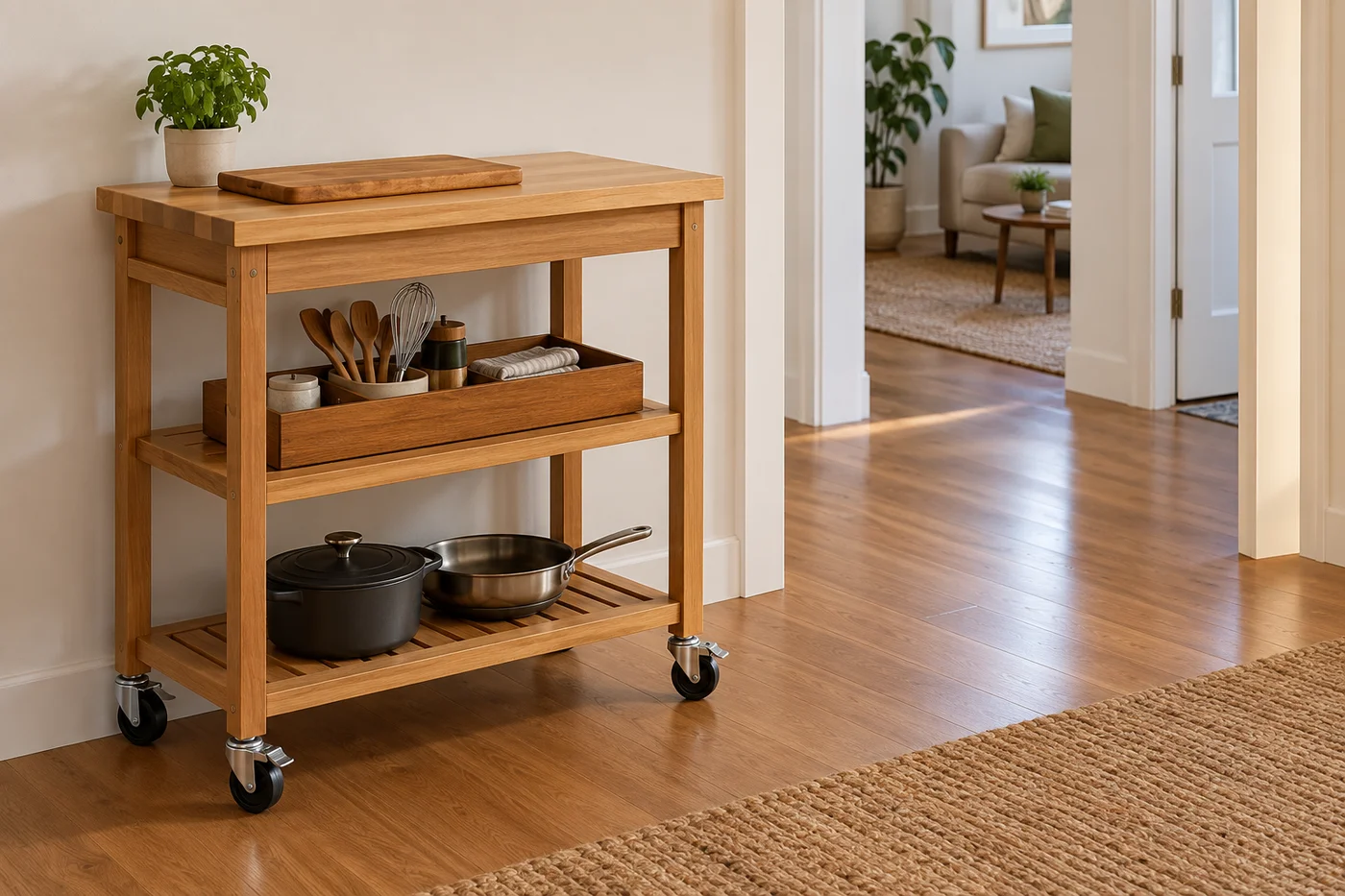
Before using a cart, mark where it will park. Check the sink, oven, refrigerator, cabinets, and door swing with the cart in place. Test whether you can clean under and around it. Do not park it next to the stovetop simply because the gap is open. Keep combustible items and storage away from the cooking area, as NFPA advises.
If the cart has drawers, doors, or a tall loaded structure, follow its instructions about stability and anchoring. Rolling does not automatically make furniture safe from tipping. A cart may also be a poor fit when young children are present, a pet can pull at it, or the only available spot is on a main route.
Check safety before adding height
Vertical storage can free floor space, but it needs a safety check. The CPSC’s Anchor It! campaign says anchoring furniture with drawers, doors, and shelves to the wall helps prevent tip-over injuries. If a unit includes restraints or anchoring instructions, follow them. Confirm the wall, hardware, and rental rules before installation.
Keep frequently used, lighter items within comfortable reach. Place only what you can safely handle in upper storage. Do not turn a tall unit into a ladder of heavy cookware, and do not depend on a general article for its capacity. The specific product instructions are the source for that information.
Set up the room in this order
- Set aside food and cleaning supplies from dishes, cookware, and tools.
- Identify daily, weekly, and occasional kitchen gear.
- Protect the sink, prep area, refrigerator path, and stovetop zone.
- Test one main shelf, cart, or other non-food zone with a marked footprint.
- Put daily items in the easiest-to-reach positions.
- Assign occasional items to a separate home before adding more storage.
- Recheck door swing, walkway, cleaning access, heat, and anchoring requirements.
Use the setup for a week. If a pan or utensil keeps landing on the counter, it may need a simpler home closer to the work it supports. If an item stays untouched, it may not belong in the daily zone.
For more ways to organize a small home, browse Storage Ideas.
Frequently asked questions
How do you organize a kitchen with no cabinets?
Separate non-food items into dishes, cookware, prep tools, and appliances. Give daily items one reachable zone, keep the active work area clear, and add a shelf or cart only after you check the full footprint, doors, and cleaning access.
What should not be stored near a stove?
Keep items that can catch fire away from the stovetop. NFPA examples include oven mitts, wooden utensils, food packaging, towels, and curtains. Follow appliance instructions for your own kitchen.
Do freestanding kitchen shelves need to be anchored?
Follow the storage unit’s instructions. CPSC advises anchoring furniture with drawers, doors, and shelves to help prevent tip-over injuries. A freestanding unit still needs a stability check, especially when it is tall or loaded.
Build one useful zone at a time
Cabinets make kitchen storage easier, but they are not the only way to create order. A small kitchen can work with a clear separation between food and gear, a protected cooking zone, and one well-planned storage station. Make the next change solve one specific problem, then live with it before adding another piece.