
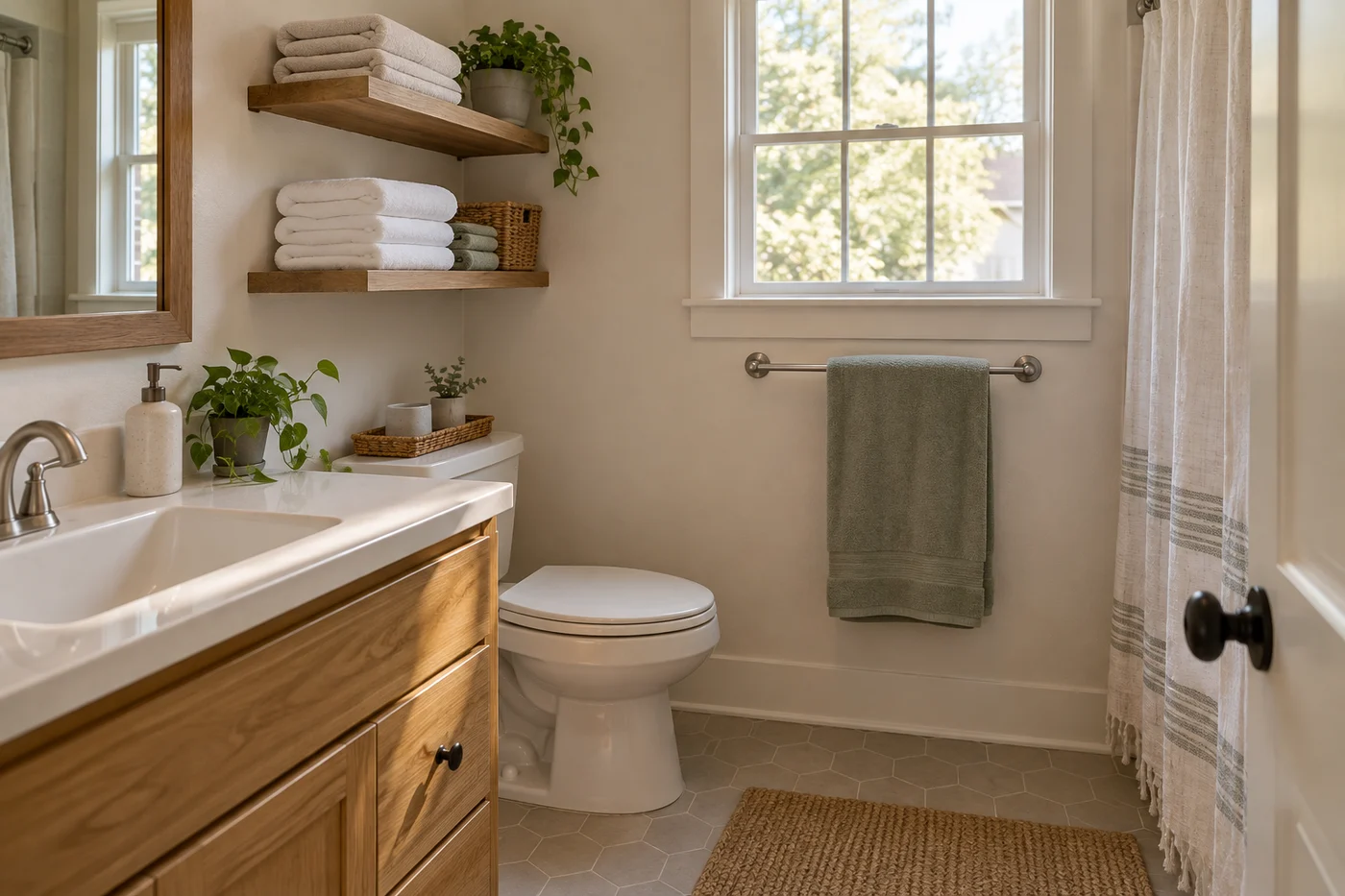
Towel storage for a small bathroom needs three places: a home for clean towels, a place for used towels to hang, and a route to laundry. Plan drying space first. Then keep the clean supply you regularly need within reach and move excess reserves to a suitable dry cupboard outside the bathroom if space is limited.
A basket full of beautifully rolled towels solves only the clean-storage part. It does not give everyone a place to hang a towel after showering. Separating those tasks helps you choose a practical arrangement without turning every wall and door into storage.
For the rest of the room, use the renter bathroom storage plan to fit toiletries and portable storage around your towel arrangement.
Count towels by job rather than by matching set
Gather the towels you expect the bathroom to serve. Separate bath towels, hand towels, washcloths, bath mats and guest supplies. Decide which belong in the room every day and which only need to be available when circumstances change.
Use your household routine to choose the active supply. Laundry frequency, the number of people using the bathroom and the time towels need to become ready for reuse all affect the arrangement. There is no single towel quota that fits every home.
Keep a small reserve where you can retrieve it easily, but avoid allocating the bathroom’s best shelf to towels you seldom need. Guest supplies can live with other household linens if the nearby storage is suitable. Store bath mats in a way that does not force you to move all the bath towels whenever you need one.
If you share the bathroom, give each person a clear used-towel location. Knowing whose towel is hanging where is more useful than keeping identical folds on every shelf. Choose a method everyone understands without needing a complicated label system.
Plan drying before reserve storage
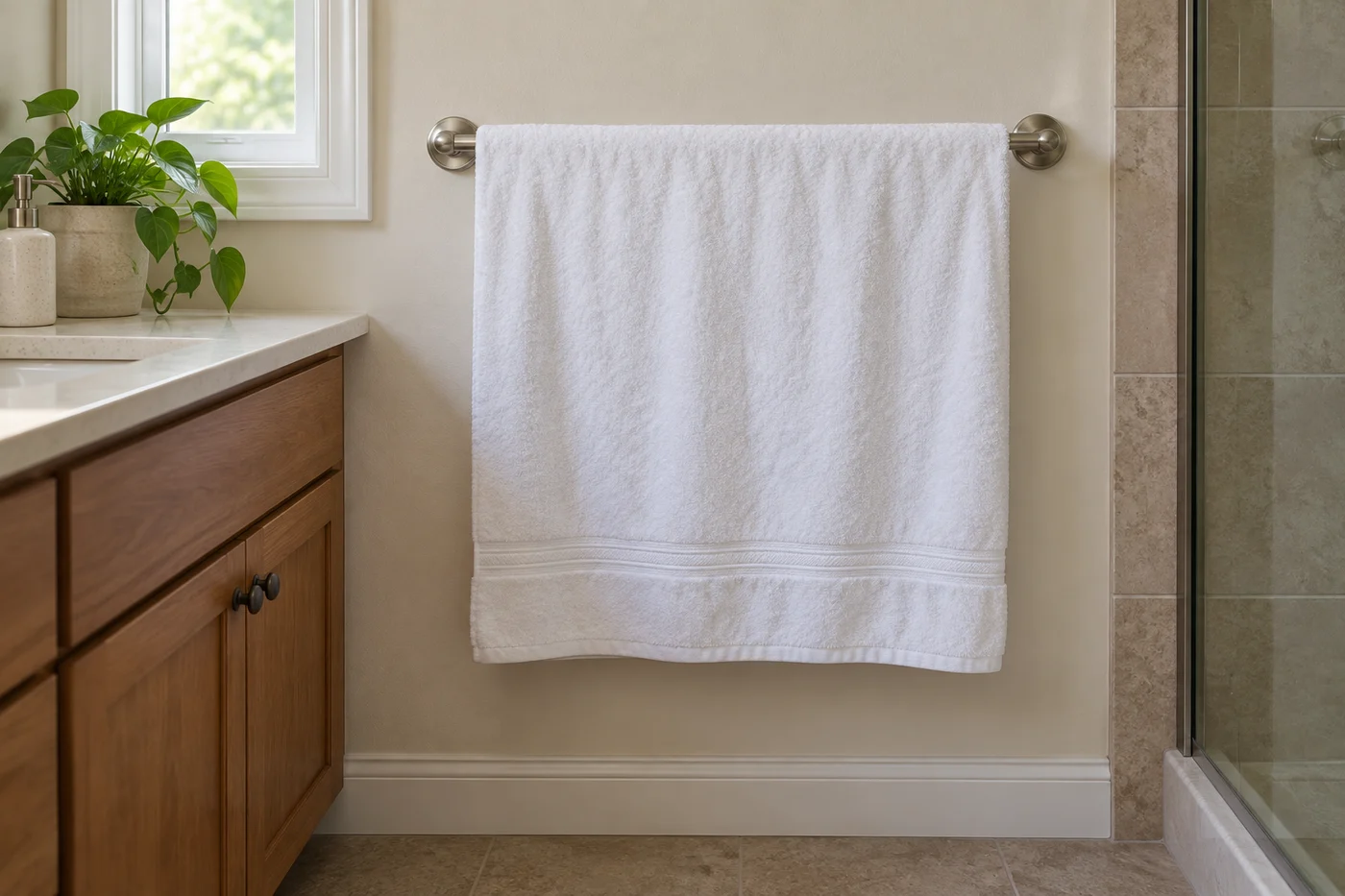
Look at where towels hang after use. Check whether they touch the floor, bunch against each other, cover a radiator or interfere with the door. Choose a location you can reach without stepping across the room with wet feet.
An existing towel bar may be sufficient if you can spread towels without overlapping them. A hook can suit a limited location, but check whether the towel you hang remains heavily bunched. If towels are staying damp, review the arrangement and room ventilation rather than hiding them in a container.
The EPA recommends using the bathroom fan or opening an appropriate window when showering. Report persistent rental moisture problems or plumbing leaks to the property owner or manager. A new rack cannot repair a faulty fan or water leak.
Keep damp towels separate from clean folded reserves. Follow the textile care label for laundering and drying, and put clean towels away only when ready for storage. This guide does not prescribe a universal wash temperature or number of uses between washes.
Before buying additional storage, simulate the bathroom with everyone’s towels in use. The arrangement should work on a normal laundry day as well as immediately after cleaning.
Measure your actual folded towels
Fold one of your bath towels the way you would like to store it, then measure its width, depth and height. Repeat with a hand towel and any thicker towel that uses more space. A photograph of neatly folded towels cannot tell you how yours fit.
Measure the shelf’s usable area between panels or obstructions. Include space above the stack so your hand can lift a towel out. For a basket or drawer, compare the inside dimensions, not the outer footprint. Check the opening as well: a container may fit inside a cupboard but be awkward to remove through the door.
Try a short stack on your existing shelf. Remove the towel you would normally choose, then return one to the stack. If the whole pile shifts, reduce the height, change the fold or use another grouping.
A deeper shelf does not have to mean two rows of indistinguishable towels. Use the front for current supply and the rear for an identifiable reserve only if retrieving it is easy. Otherwise a smaller visible group may be a better use of the shelf.
Keep your measurements as planning notes, not promised capacity. You are checking your own linens, and another household’s towel sizes and folds may be different.
Match the clean-storage format to the location
| Storage format | Suits | Main limitation to check |
|---|---|---|
| Existing shelf with short stacks | Towels you can see and reach | Stack movement and hand space above |
| Removable bin in a cupboard | A grouped reserve or washcloths | Interior size and easy removal |
| Open basket outside direct splash | A modest supply of dry towels | Cleaning the container and seeing the bottom |
| Drawer with upright folds | Towels that fit the drawer height | Opening clearance and manageable compression |
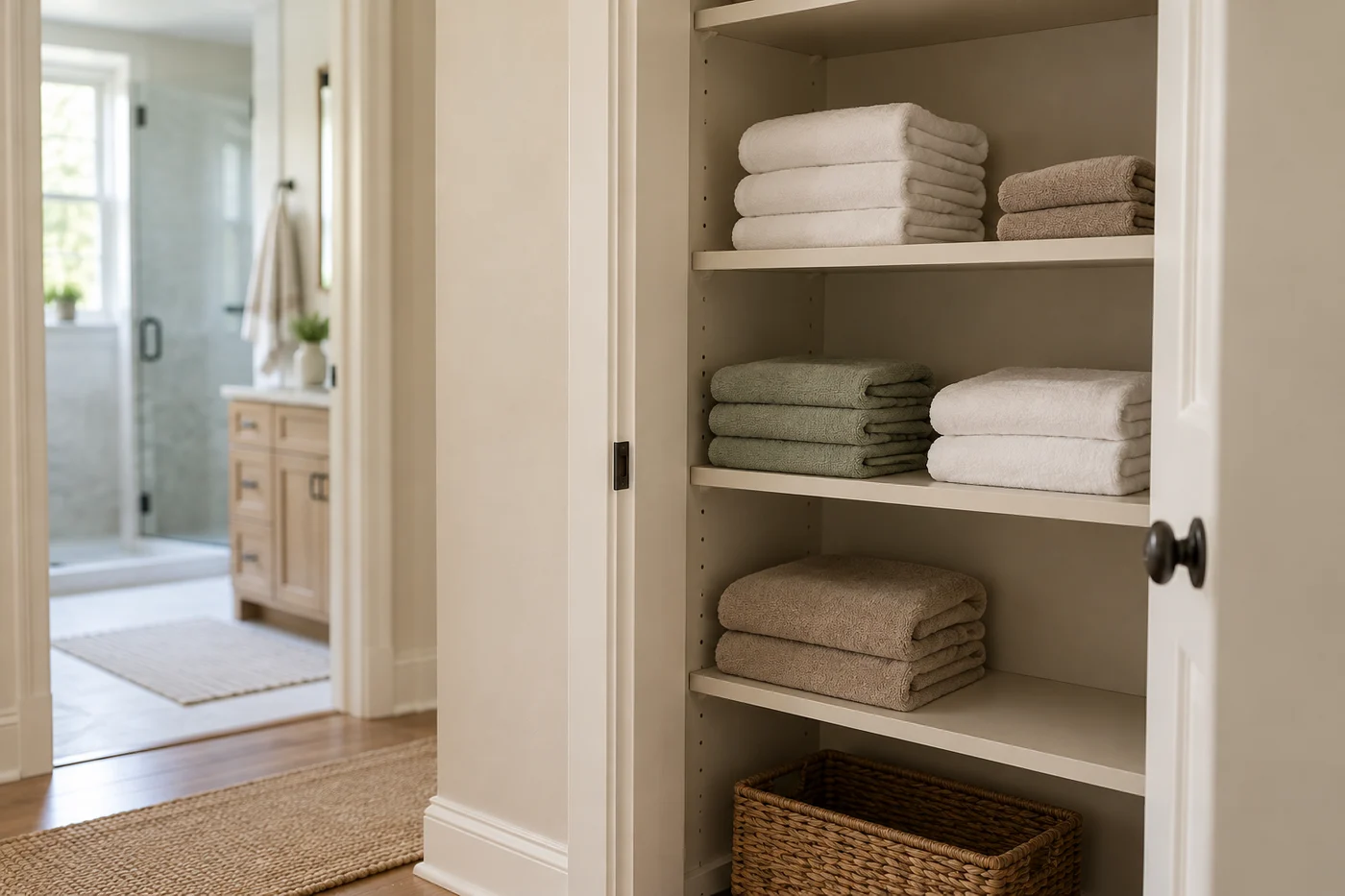
| Nearby dry linen cupboard | Overflow or occasional guest towels | A clear route to replenish the bathroom |
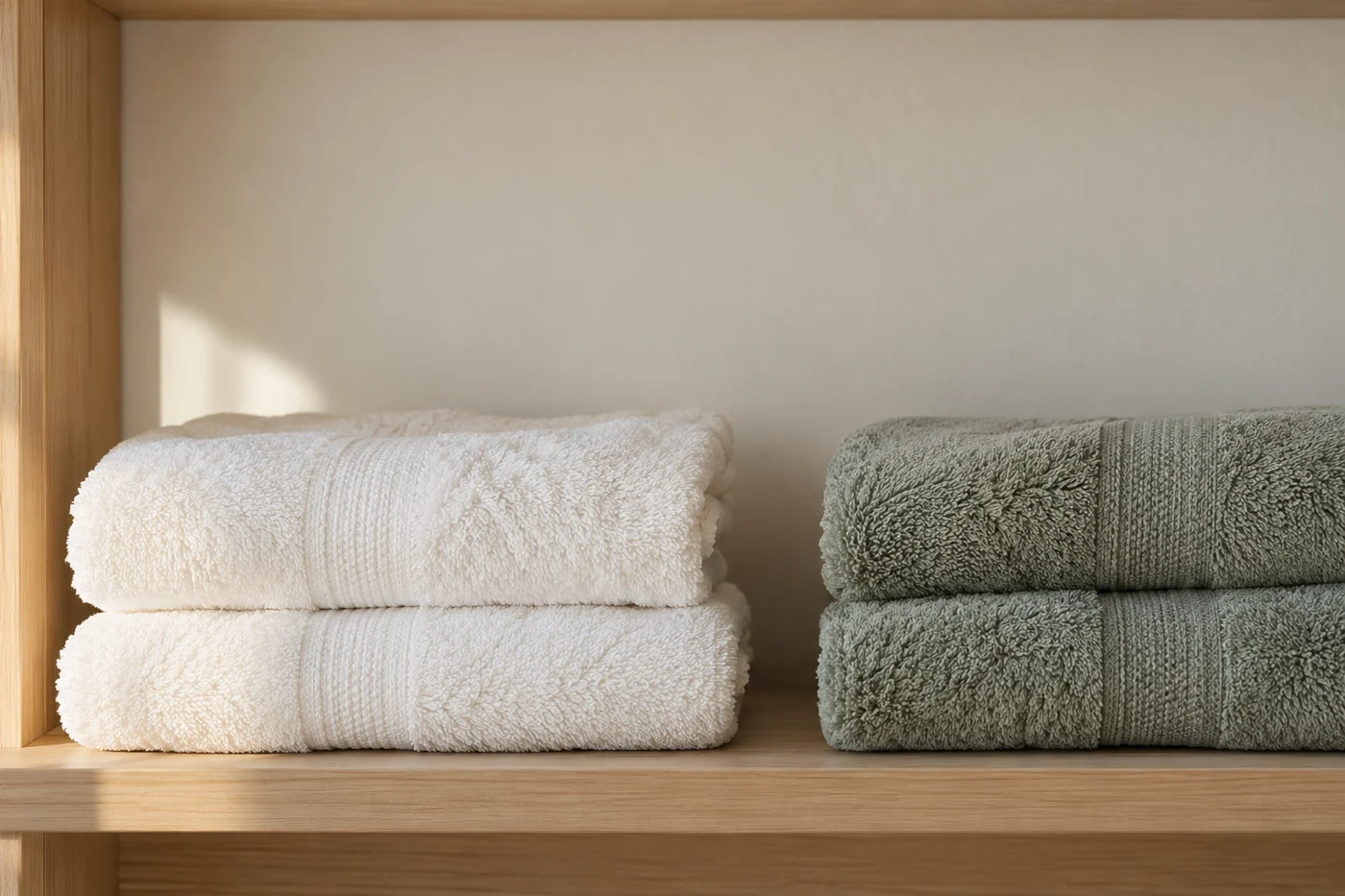
Try folding before replacing storage. Adjust the fold to the shelf depth while keeping the towel easy to remove. Rolling may suit one basket; folding may make another shelf easier to maintain. Neither method guarantees greater capacity for every towel and container.
Use under-sink storage cautiously. Check for plumbing obstacles and moisture, preserve maintenance access and keep linens separate from cleaning products. If the space is unreliable or awkward, choose another location for clean towels.
Avoid storing towels where retrieving them means leaning over fixtures or lifting a heavy full container from overhead. Put routine supply within comfortable reach, and use higher storage only for a manageable reserve you can access safely.
Add hanging space only where installation works
A door-mounted towel rack can suit a bathroom with an available door and compatible brackets. Measure door thickness and top clearance, then check the door with the towels loaded. The rack and hanging ends must not catch nearby fixtures or prevent normal closure.
Adhesive hooks or bars need exact surface and moisture compatibility. 3M’s bathroom instructions exclude rough surfaces and tile grout lines and explain product-specific preparation and removal. Follow the instructions for your particular item, including its load limit and waiting time.
Leave room to reach a removal tab later. Check the lease before attaching anything, including removable products. No-drill hardware does not provide a universal promise about an old paint finish or eventual removal.
A freestanding rack must fit the room in use, not just when empty. Include the towel’s width and length when assessing the footprint. Check the rack’s intended installation and stability instructions. If it blocks the route between shower and door, choose another location or reduce what the bathroom stores.
Give laundry and overflow their own route
Choose where used towels go when ready for laundering. You may use a suitable laundry container outside the bathroom if there is no room inside. Avoid building a second towel pile on the floor because the hamper is difficult to reach.
Follow care guidance about drying and laundry handling. Keep clean reserves distinct from towels awaiting washing so you do not have to guess which is which. A towel-storage plan should make that separation obvious to everyone using the room.
For overflow, choose a specific dry cupboard, shelf or drawer. Replenish the bathroom from that location when the clean supply drops. Do not spread reserve towels among several unlabeled bags unless each has a clear purpose and is easy to identify.
Check the arrangement across a laundry cycle
Check the bathroom once with fresh towels in storage, once after ordinary use, and once when a load is waiting to be washed. Notice where towels migrate. A location that works only when everything is freshly folded needs another drying or laundry destination.
Change the arrangement that causes the repeated problem. If clean stacks topple, shorten them. If towels bunch on hooks, reassess their hanging space. If the room feels crowded, move reserve linens outside before adding another rack.
Begin with a usable place to hang each towel in use, then fit your actual clean towels into the available dry storage. That order gives you a bathroom you can use every day, including the days it does not look freshly styled.