
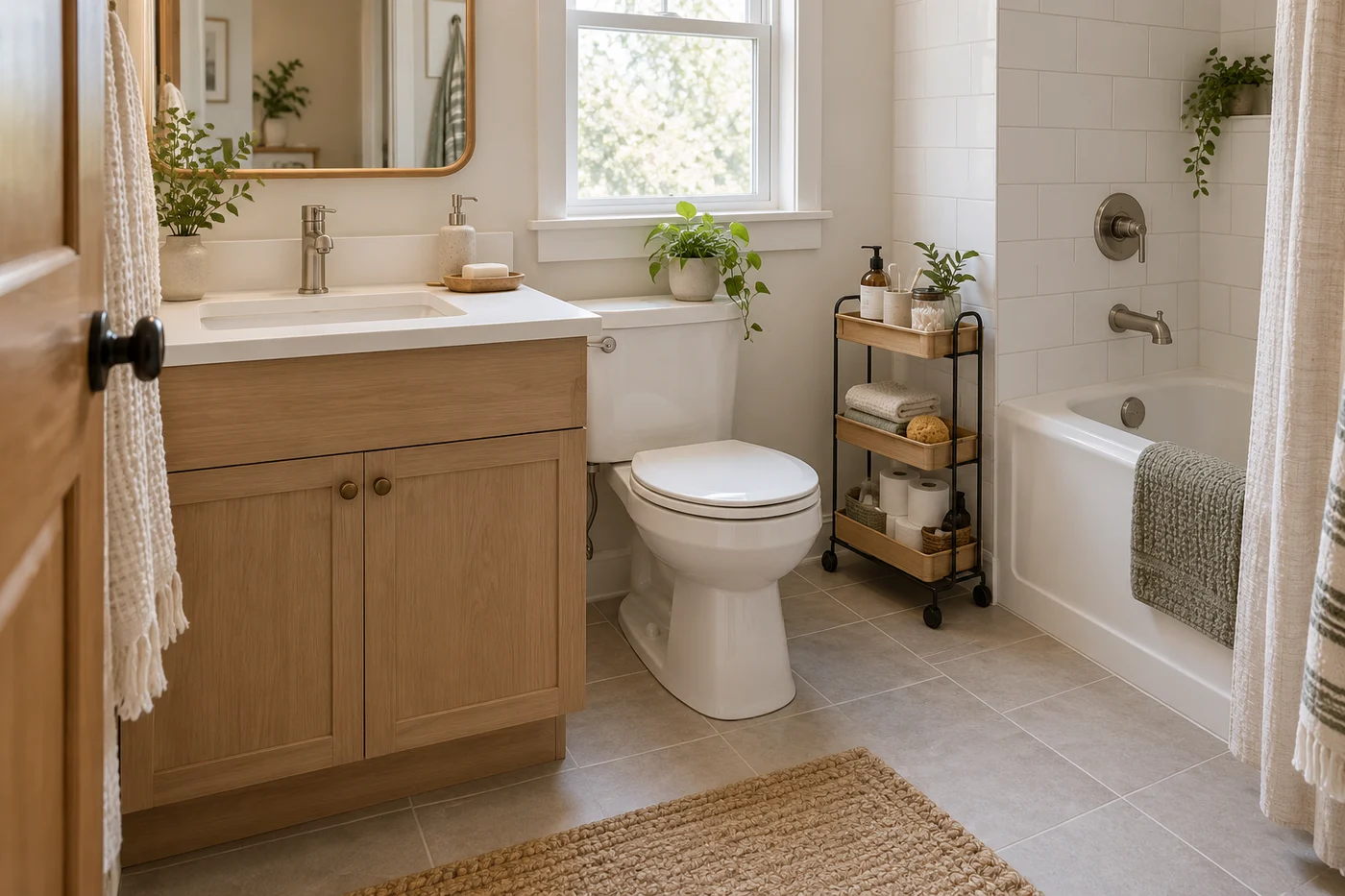
Small bathroom storage ideas for renters work best when you use existing storage first, keep daily supplies near their point of use, and check every added item against the room and lease. Start with a shelf or drawer reset. Then consider a portable caddy, door storage or an approved adhesive option only for the remaining problem.
No-drill describes an installation method. It does not promise that every surface stays unmarked, that every door closes properly, or that a tall unit can stand without anchoring. Your plan should account for storage, moisture, access and eventual removal together.
Two common bathroom tasks need their own detailed plans: organizing around sink plumbing and storing clean towels separately from towels in use.
Identify the problem before adding shelves
List what needs a home: daily toiletries, shower products, clean towels, spare toilet paper, hair tools and cleaning supplies. Separate current items from duplicates and occasional-use supplies. Return anything normally used in another room to that room if it has a suitable place there.
Walk through your morning routine. Notice which things you reach for together and where they land afterward. A small container for daily skincare may solve scattered bottles, while extra shelves would simply collect the same bottles over a wider area.
Look at the room with the door open and closed. Note the space beside the vanity, behind the door, around the toilet and near the shower. Include the door handle, towel ends and drawer movement in your assessment. A storage unit that fits an empty rectangle can still interfere with use.
Choose the problem that causes the most inconvenience. Solve that first rather than installing something in every visible gap. A small bathroom needs space to move, clean and reach fixtures as well as places to store belongings.
Use the storage you already have
Empty one drawer or shelf at a time and group its contents by task. Give daily items the easiest-to-reach location. Place reserve supplies farther back only if you can still identify and retrieve them without emptying the whole shelf.
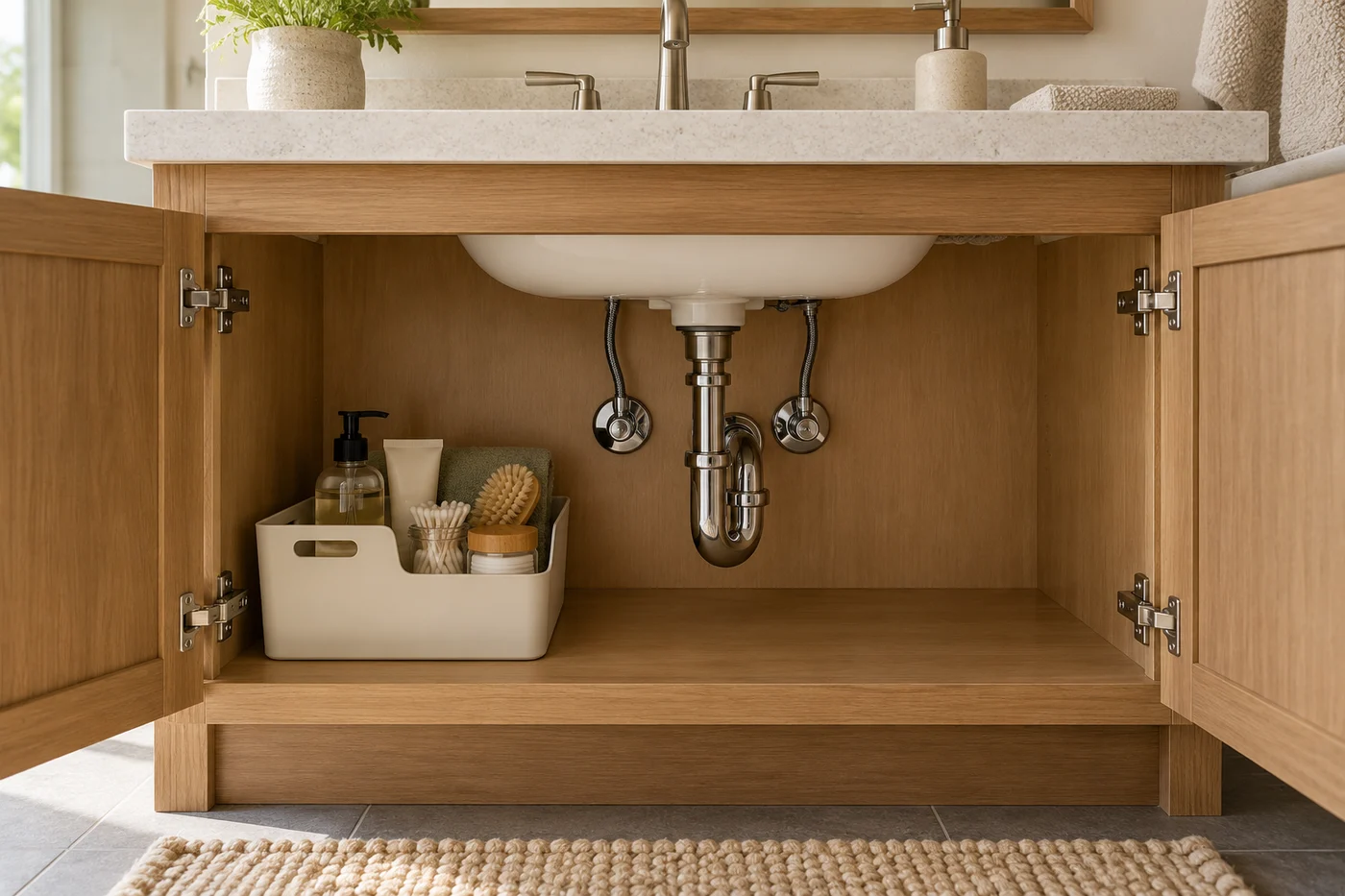
Use existing small containers to test categories before buying a coordinated set. A removable toiletries bin can let you take the whole routine to the sink and return it afterward. The right container holds the group you use, not every product you own.
For under-sink storage, look at the actual plumbing, shutoff valves and access needed for maintenance. Measure around those obstacles. Avoid forcing a rigid organizer around pipes or hiding a valve behind something difficult to remove. Leave yourself a way to inspect for leaks.
Keep towels and toiletries separate from cleaning products. The Virginia Poison Center advises secure storage for cleaners in their original labeled containers. A pretty unmarked bottle is not a storage improvement. Follow the product label, and choose a secure location suited to the people and pets in your home.
Compare portable and freestanding storage
A small caddy suits products you carry to the sink or shower and then put away. Check that it fits the storage location with the actual bottles inside. Include projecting handles, and choose a shape you can lift and clean.
A modest shelf unit can serve a bathroom with usable floor space. Measure its full assembled footprint and the space to reach contents. Check materials and care instructions for the intended bathroom conditions. Do not assume that a wood finish or metal coating tolerates direct shower spray.
A rolling cart is useful only if it can move where you need it to go. Include wheels and handles in the measurements, and check the turning path. A cart squeezed permanently between fixtures may function as a fixed shelf with more awkward cleaning access.
Tall units, including over-toilet furniture, may require wall fastening. The CPSC advises following manufacturer instructions for securing furniture. If required anchoring is not allowed or cannot be completed correctly, choose another option. Freestanding does not automatically mean no installation.
Check door storage with the door loaded
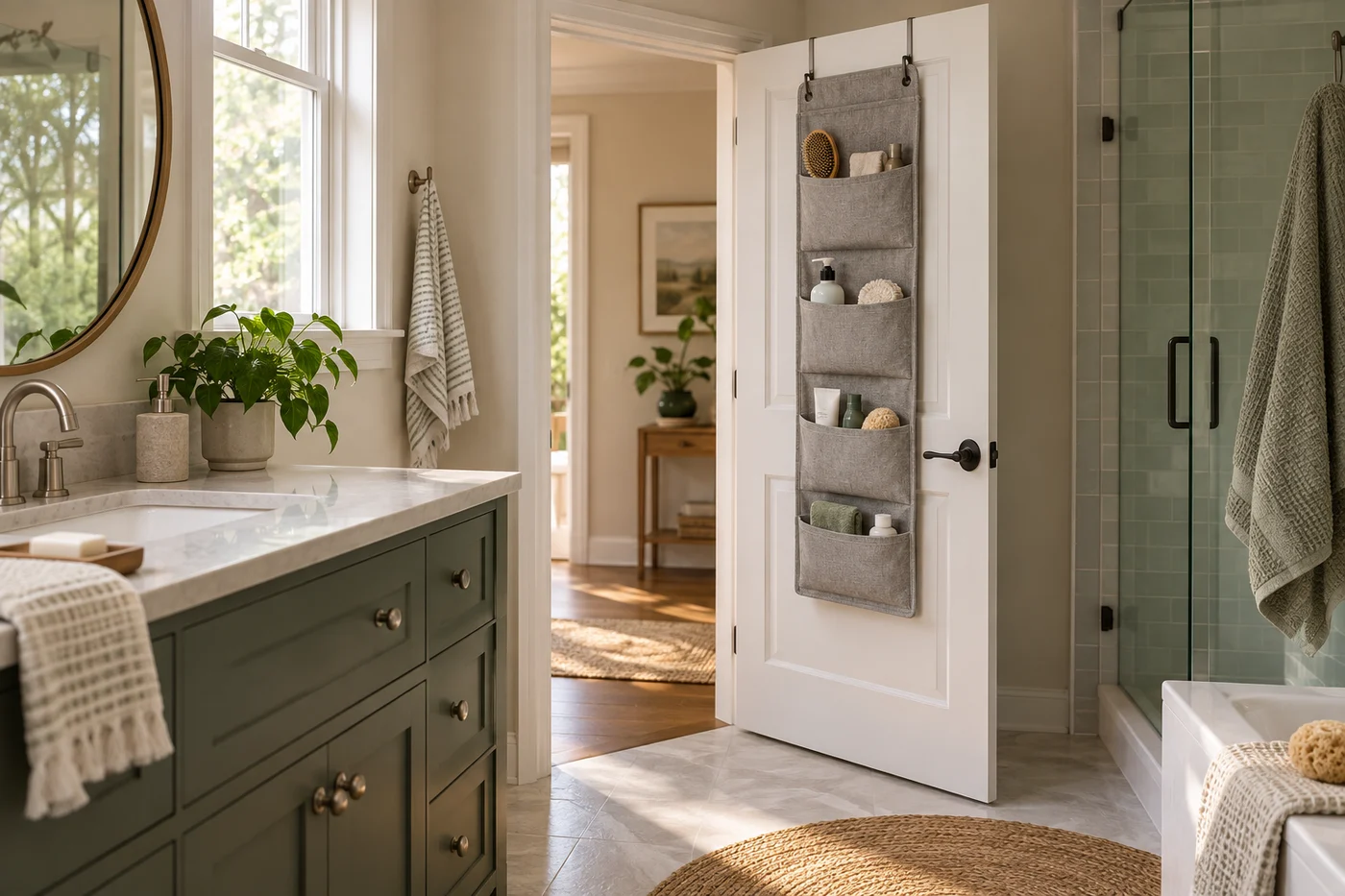
A shallow organizer on the bathroom door can hold suitable lightweight items when its mounting and clearance work. Start by checking door thickness, the top gap, the bracket dimensions and any manufacturer restrictions.
Check the organizer on both sides of the door’s movement. It must not hit a wall, towel bar or shower enclosure, catch the handle, or prevent normal closure. Do not force a door shut over a bracket that does not fit.
Assess the contents as well as the empty organizer. Bottles, brushes and towels project beyond their hooks or pockets. Wet towel ends should not drag across the floor. Avoid putting items where they might fall during ordinary door movement.
Door storage is optional. If the door cannot accommodate the bracket and contents, a portable container or a nearby dry cupboard may be more practical. You do not need to use the door simply because wall drilling is restricted.
Use adhesive only on an approved surface
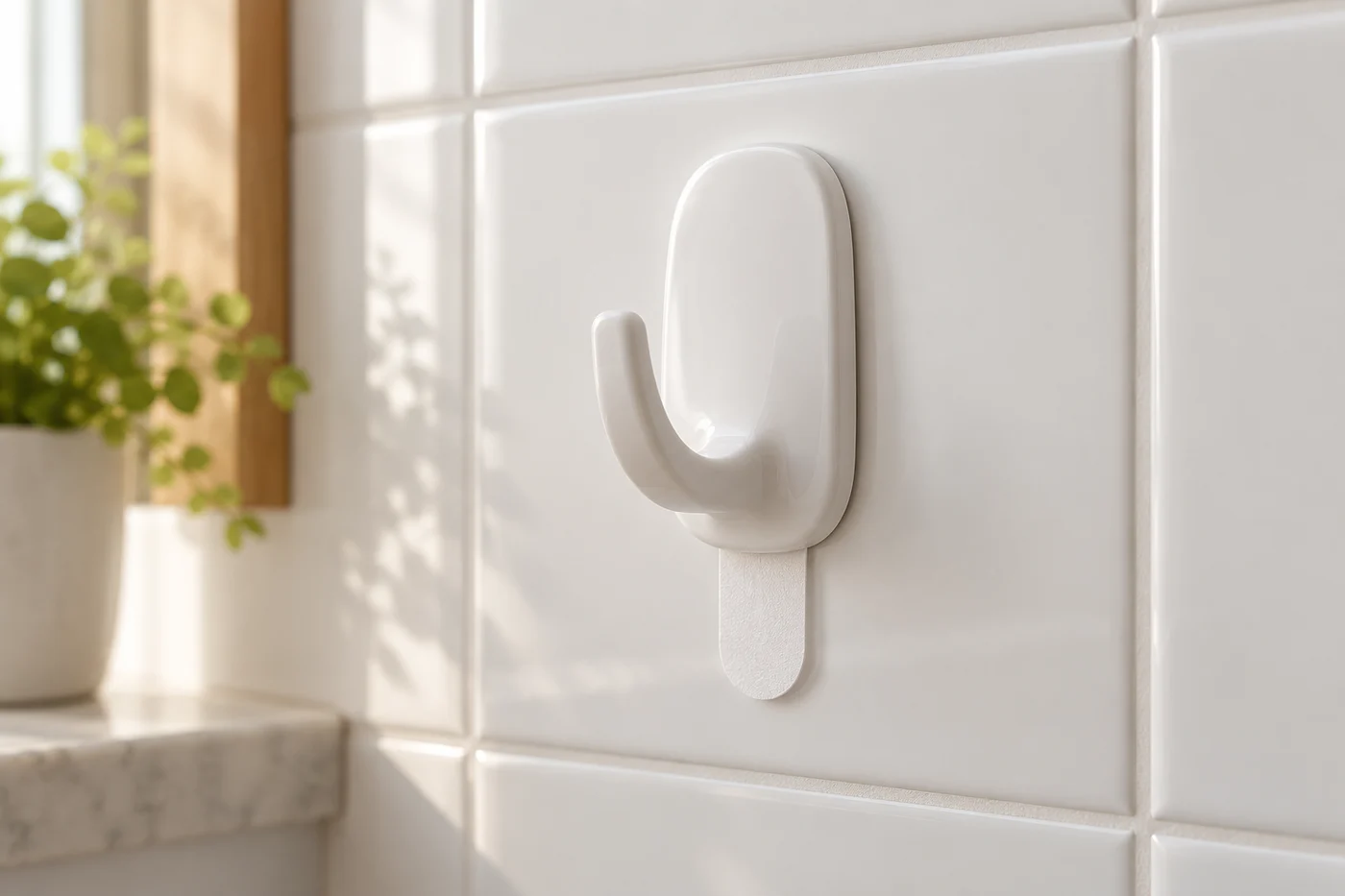
Read the exact product instructions before choosing a spot. Match the surface, moisture conditions, intended use and rated load. Keep the instructions so you can follow the removal procedure later.
For example, 3M’s bathroom guidance excludes rough surfaces and grout lines, specifies preparation and requires a controlled stretch-release removal. Those directions are specific to the products covered. They are not proof that an unrelated adhesive shelf will work on your bathroom wall.
Look at the finish itself. Old, damaged or peeling paint needs attention rather than another attachment. Check whether the lease permits adhesive products, and keep any required permission. Save a photograph of the condition before installation for your own records, without treating that photograph as a guarantee of damage-free removal.
Leave access to the release tab or other removal mechanism. Placing a hook tightly above furniture may make correct removal impossible later. Check this before loading it, and follow the manufacturer’s waiting time and load guidance without improvising a larger capacity.
Suction and tension storage also need compatible surfaces and correctly sized components. Use the specific product instructions. Do not assume pressure leaves no marks or that every suction cup works on textured tile.
Separate shower supplies from dry reserves
Keep in the shower only the current products you need there. Put backups in a suitable dry location where you can see what you have. This can reduce the number of bottles competing for the wet zone without requiring a larger caddy.
Check that any shower storage is approved for its exact location and attachment point. Do not hang a heavy caddy on plumbing or enclosure hardware unless both the accessory instructions and fixture guidance permit that use. Avoid blocking shower controls or normal movement.
Clean-towel storage and used-towel drying need separate places. Keep a modest clean supply accessible, and give towels in use a location where they can hang without crowding the sink or floor. Detailed towel folding and reserve planning are a separate task from this whole-room storage plan.
Preserve cleaning and maintenance access
Choose arrangements you can remove or reach around when cleaning. Avoid building a wall of containers in front of plumbing, toilet service access or ventilation. If a leak appears, being able to clear the area quickly matters more than how coordinated the baskets look.
The EPA recommends bathroom ventilation and prompt reporting of rental plumbing leaks or moisture problems. Storage cannot correct a persistent moisture problem. Report it to the property owner or manager instead of concealing it behind a cabinet.
Try the arrangement through an ordinary routine: wash your hands, retrieve products, return them, use the door and clean the sink. Keep what works without shifting multiple containers. If the room still feels crowded, move reserve stock outside the bathroom before adding another shelf.