
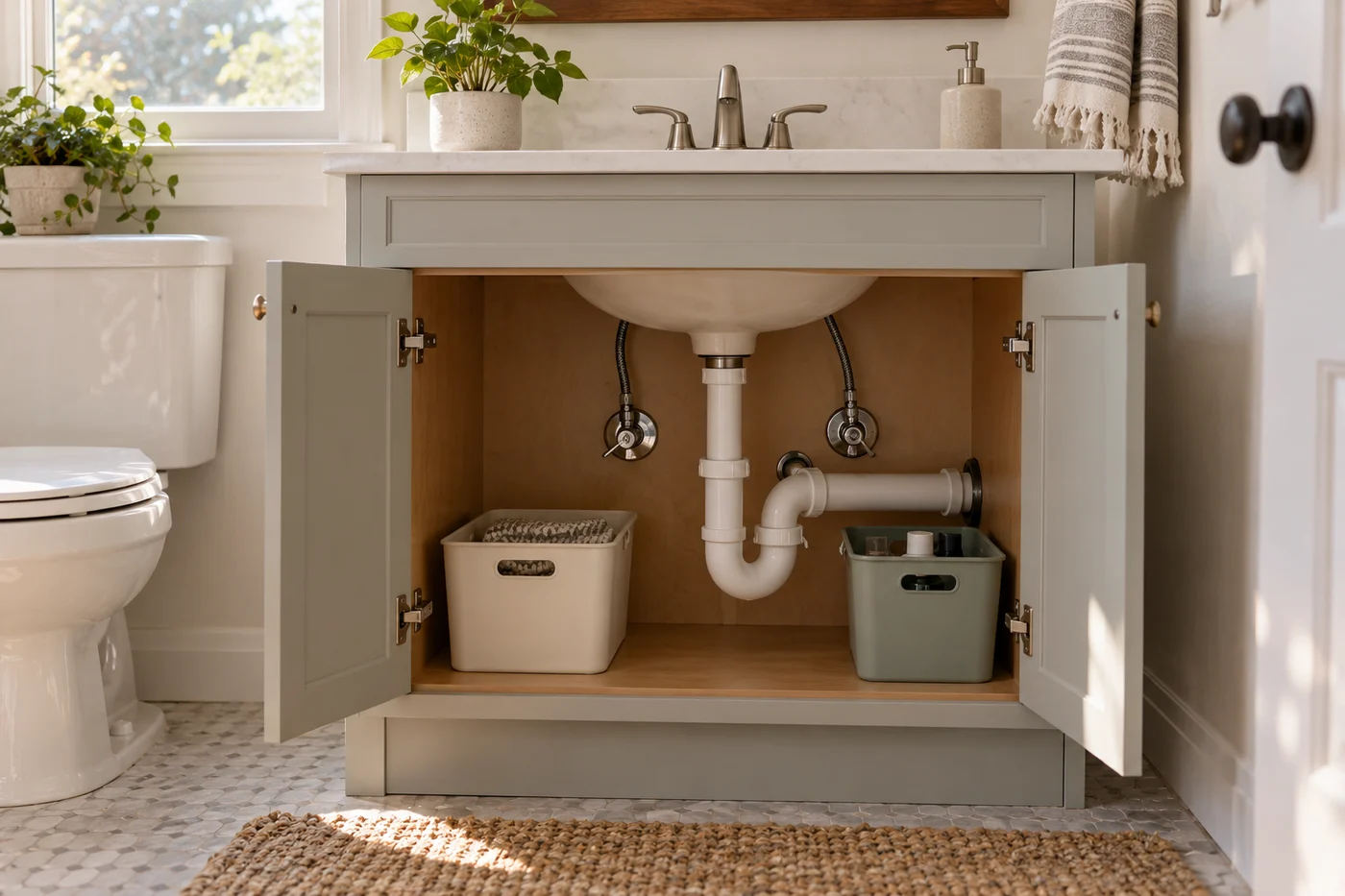
To organize under a bathroom sink, empty the cabinet, preserve access to the plumbing, and divide the remaining space into small, removable zones. Keep frequently used supplies near the opening and backups together. Move anything that needs a safer or drier home elsewhere.
The goal is a cabinet you can use without lifting out three unrelated things. You do not need identical containers or a shelf stretched across the drainpipe. Start with the actual shape of your cabinet and the products you keep.
This cabinet is one zone within the room. Use the bathroom storage plan for renters to decide which supplies should live elsewhere.
Check the cabinet before planning storage
Take everything out, including the liner. Look at the floor, back corners, and area below pipe joints. If you find a drip, swollen board, or persistent dampness, stop and report it to your landlord or arrange a repair. A tray can contain a bottle spill; it cannot repair plumbing.
Once the cabinet is sound and dry, clean it according to its finish-care instructions. Let it dry before putting anything back. Avoid covering evidence of a problem with a fresh liner.
Identify the drain trap, supply lines, and shutoff valves. Keep them accessible. Do not hang containers from plumbing or force an organizer against it. You should be able to remove a bin and reach the valves without dismantling a storage system.
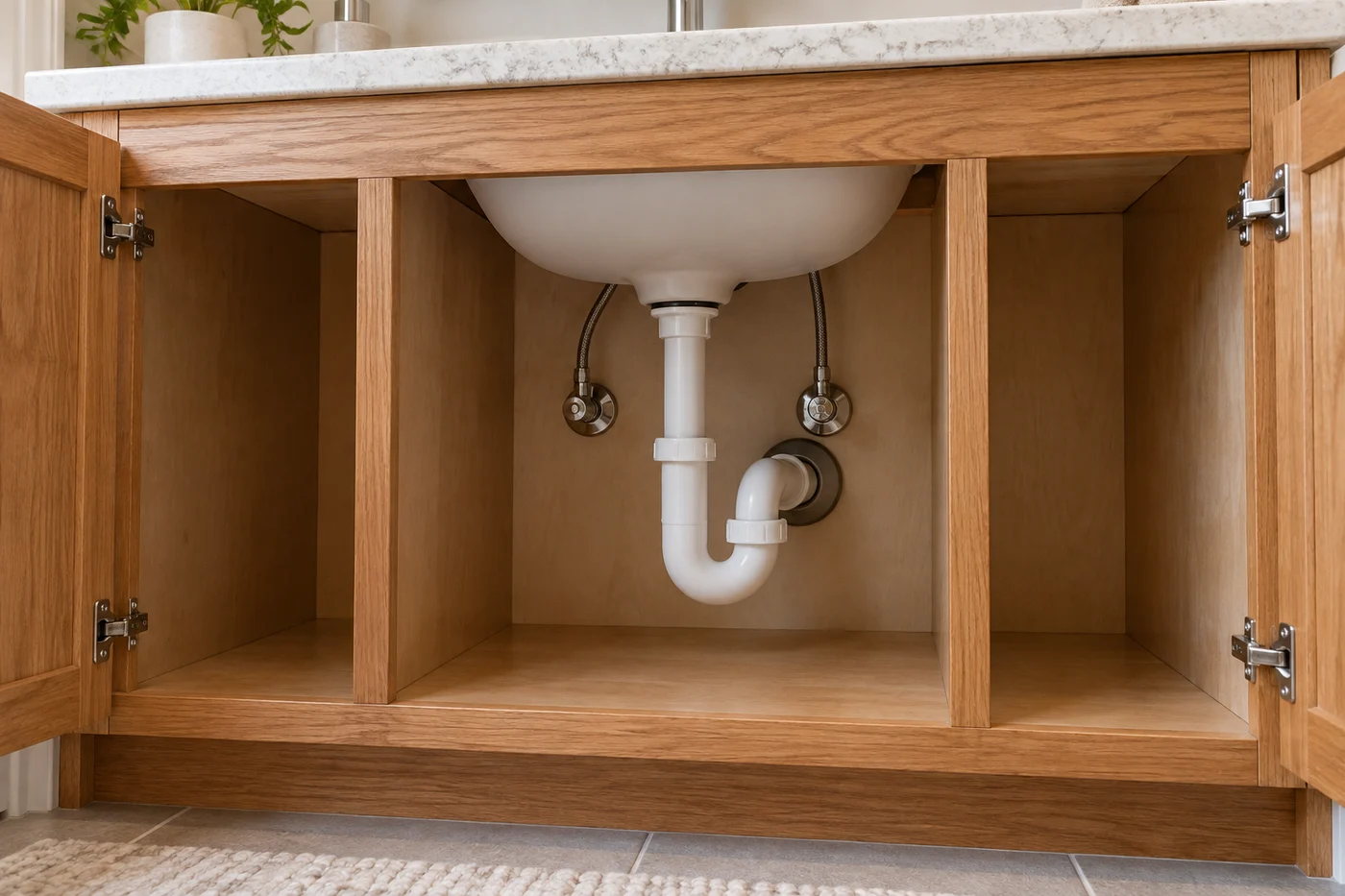
Treat a fixed shelf or central divider as a boundary. A wide exterior vanity does not necessarily contain one wide storage opening.
Measure the opening and the route inside
Record usable dimensions rather than the vanity’s advertised size. Measure the door opening, floor depth, and clear space beside the pipes. Note where hinges project into the cabinet.
Check how a container will move. A bin can fit on the floor but fail to pass through the opening when filled. A drawer may hit an open door when pulled forward. Try an empty container before assigning contents.
Your notes should answer four questions:
- Can the container pass through the opening without tilting?
- Can its lid open or be removed where you will use it?
- Can the cabinet door close without pressing on the contents?
- Can you reach the plumbing after removing that one container?
Allow room for your hand around a handle. Empty space around the pipes is useful when you inspect or service them.
Choose what belongs under the sink
Sort items by use, then decide where each group belongs. Spare shampoo, unopened toothpaste, and a cleaning caddy have different needs from medicine, paper supplies, and styling tools.
The Consumer Product Safety Commission’s poison-storage guidance says household products and medicines should stay in original containers and be locked away from children. A low cabinet with an ordinary door is not a substitute for that protection. Choose secure storage that follows each product’s label.
Keep cleaner labels readable. Do not decant cleaners into matching decorative bottles or combine leftovers. Store chemicals separately from personal-care supplies. Follow their labels for storage and disposal.
Keep medicine where its storage instructions allow. Do not assume a bathroom cabinet is suitable merely because it is convenient. Keep paper and textiles elsewhere if the cabinet tends to become damp. Put styling tools away only after they are unplugged and cool, following their manufacturer’s instructions.
Build three removable zones
Start with three jobs: daily extras, backups, and suitable cleaning supplies. These are organizing suggestions, not a requirement to buy three bins.
Place daily extras near the opening. A shallow tray can hold the few things you reach for during your routine. If you use them at the sink, consider whether a drawer or another nearby spot would be more convenient.
Put backups on one side or farther back. Keep duplicates together, with the next one to use at the front. Label the group in ordinary language, such as dental backups or hair care.
Use a separate removable caddy for cleaning supplies only if this cabinet is a safe storage location. Keep bottles upright in original packaging. If chemicals need a different locked cupboard, give the under-sink zone another job.
For a shared bathroom, you can divide personal-care supplies by person. That works best when each person has a modest set of items. Shared backups can occupy one common zone.
Match the organizer to the cabinet
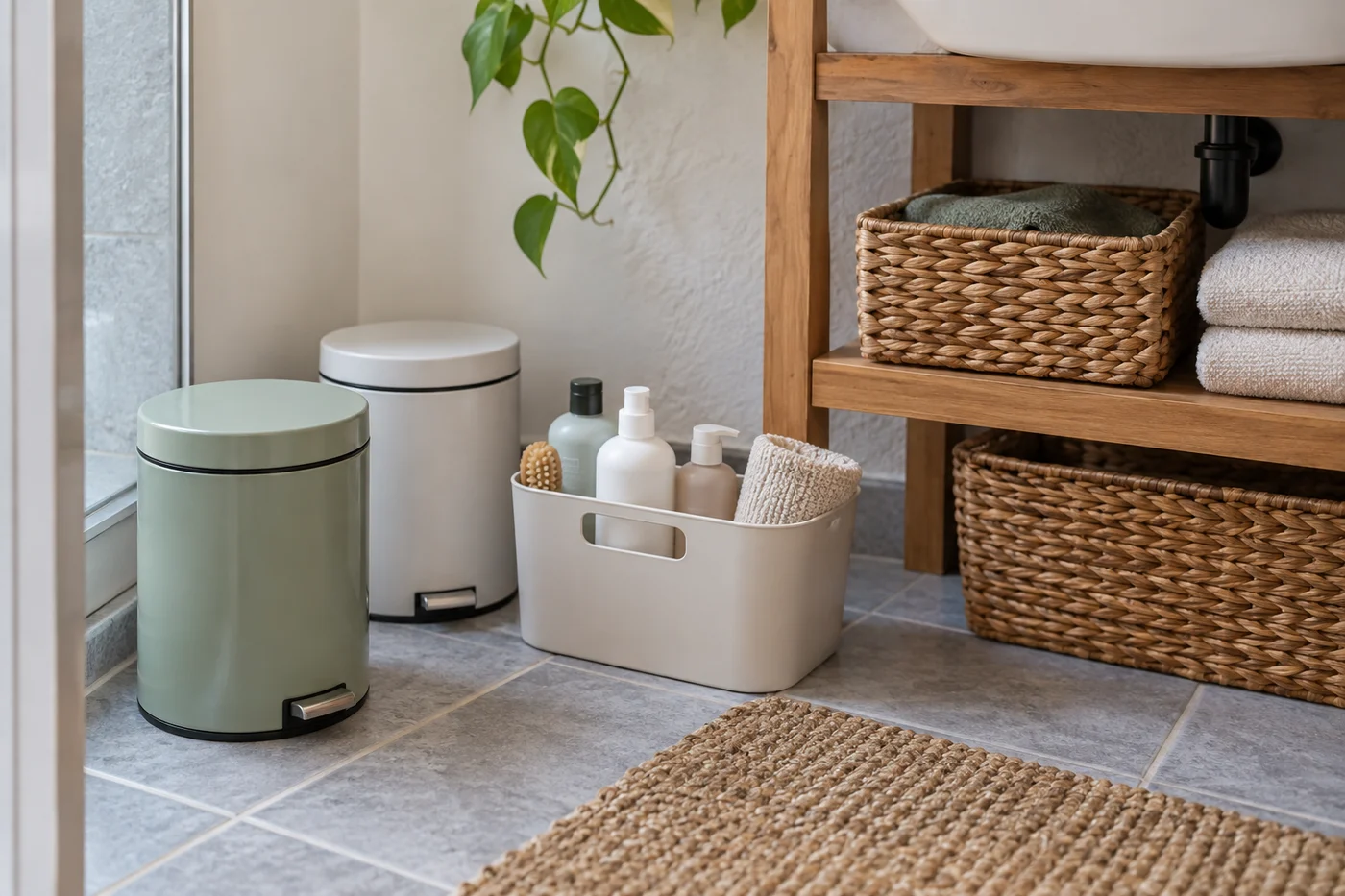
A plain open bin suits a narrow side bay when you can lift it through the opening. A covered container works only if you can remove its lid without scraping the underside of the sink.
A small freestanding shelf may fit beside the trap if its feet sit fully on a sound cabinet floor. Follow its assembly and load instructions. Adjustable width does not guarantee compatibility with every pipe arrangement.
A turntable needs a complete turning circle. Place the tallest intended bottle on it and rotate it before keeping that layout. If it hits a pipe or hinge, the turntable adds an obstacle.
Stacked drawers are useful only when they open freely and remain stable as instructed. Check the top opening as well as the unit’s footprint.
Door storage introduces door thickness, hinge movement, hardware, and closure constraints. Do not add it simply to fill unused-looking space. More storage can make a small cabinet harder to use.
Test the routine and keep access clear
Return a small amount first. Reach for an everyday item, remove a backup bin, lift out the caddy, and close both doors. If a simple task requires rearranging the cabinet, move the item or reduce the contents.
Keep a brief backup list and check it before shopping. Put a new bottle behind the existing one instead of making a second pile. When the backup zone is full, review what you already have before adding another organizer.
During ordinary cleaning, remove the bins and inspect beneath them. Check that bottles are closed and labels visible. Follow cleanup instructions if a product has leaked. This routine preserves access and makes problems easier to notice.
Common questions
Should you put a shelf over the pipes?
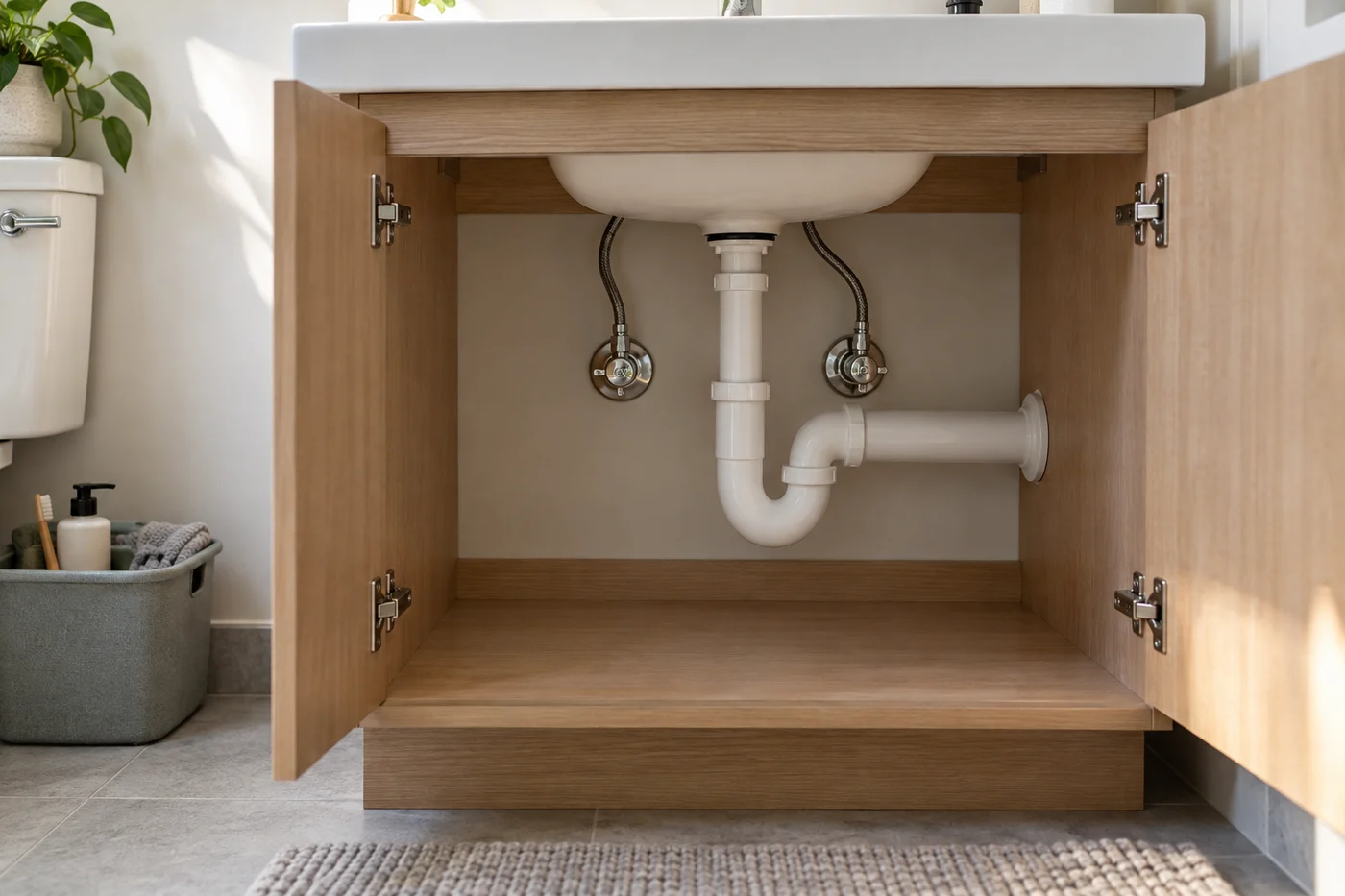
Only if the organizer’s instructions and your measurements allow it while leaving plumbing accessible. Two smaller side containers may be easier to remove than a full-width unit.
Is a liner enough to protect against a leak?
No. Depending on its material and the cabinet finish, a liner may help with ordinary bottle drips. It cannot repair a leaking pipe or guarantee protection from water damage.
How much should you keep under a small sink?
Use access as your limit. Keep supplies that suit the environment and that you can retrieve without unloading the cabinet. Give excess backups another home.