
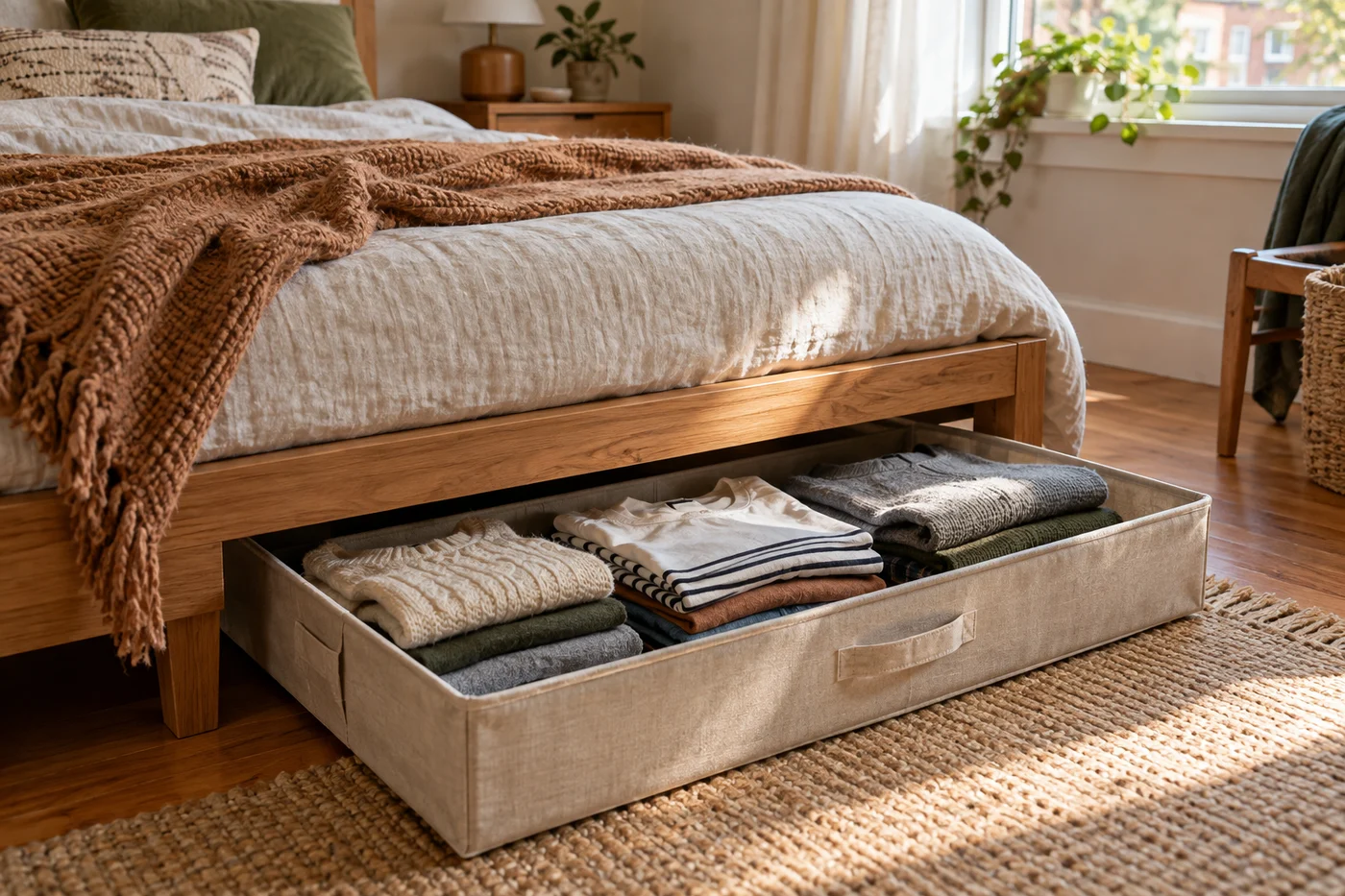
To store clothes under a bed, choose clean, fully dry garments, pack them in a container that suits the fabric and room, and group them by when you will need them. Leave enough space to pull the case out and open it comfortably.
This is a seasonal packing system, not a replacement for every part of your wardrobe. Everyday shirts and garments that need hanging may belong in a more accessible location. For a whole-room arrangement, start with clothes storage without a closet or dresser.
Choose clothes that suit folded storage
Start with garments you will not need during an ordinary week. Seasonal casual clothes, spare sleepwear, and some folded knits may be sensible candidates if their care instructions allow it.
Keep occasion wear, structured garments, and delicate pieces out of this group until you know how they should be stored. Do not assume every coat can be compressed or that a formal garment will recover after months beneath other clothes.
Sort by the next likely use. You might have one group for warm-weather clothes and another for occasional travel layers. A purposeful group is easier to retrieve than a mixed box of everything that did not fit elsewhere.
Choose a realistic amount. If a lid closes only with pressure, divide the contents or select a different case. Under-bed storage should make the current wardrobe easier to use, not hide unresolved overflow.
Check that the location is suitable
Inspect beneath the bed and clean the area before bringing containers in. Do not use a damp location or a case with visible mold, moisture, or persistent mustiness.
The Canadian Conservation Institute’s textile-care guidance identifies clean, dry textiles and a cool, dark, dry, ventilated environment as basic storage considerations. It concerns collection care, so it is not a promise that any household box protects every garment. Follow the care label and seek specialist advice for valuable or fragile pieces.
Look for vents, cables, bed mechanisms, and floor access to preserve. Use only bays you can retrieve from without unsafe stretching or moving a loaded bed.
Measure the lowest obstacle along the entry route. Include the filled case, lid, and handles. A soft case that fits empty may bulge once packed. Check its loaded shape before assigning a location.
Clean, dry, and inspect before packing
Follow the garment’s care label. Complete laundering, drying, or professional cleaning before the item goes into storage. Thick seams and waistbands deserve an extra check rather than an assumption that the garment is dry.
Empty pockets. Remove receipts, tissues, and objects that might stain, snag, or press into fabric. Fasten closures where appropriate to keep a zipper or hook from catching another garment.
Look for repairs needed before the next season. Keep damaged garments outside the storage group until you decide whether to repair, donate, recycle, or dispose of them appropriately. Otherwise the same problem awaits when you reopen the case.
Do not add perfume, a scented sachet, or a chemical treatment as a substitute for cleaning. Check textile and product instructions before using anything inside a clothing container.
Select the container around the fabric and access
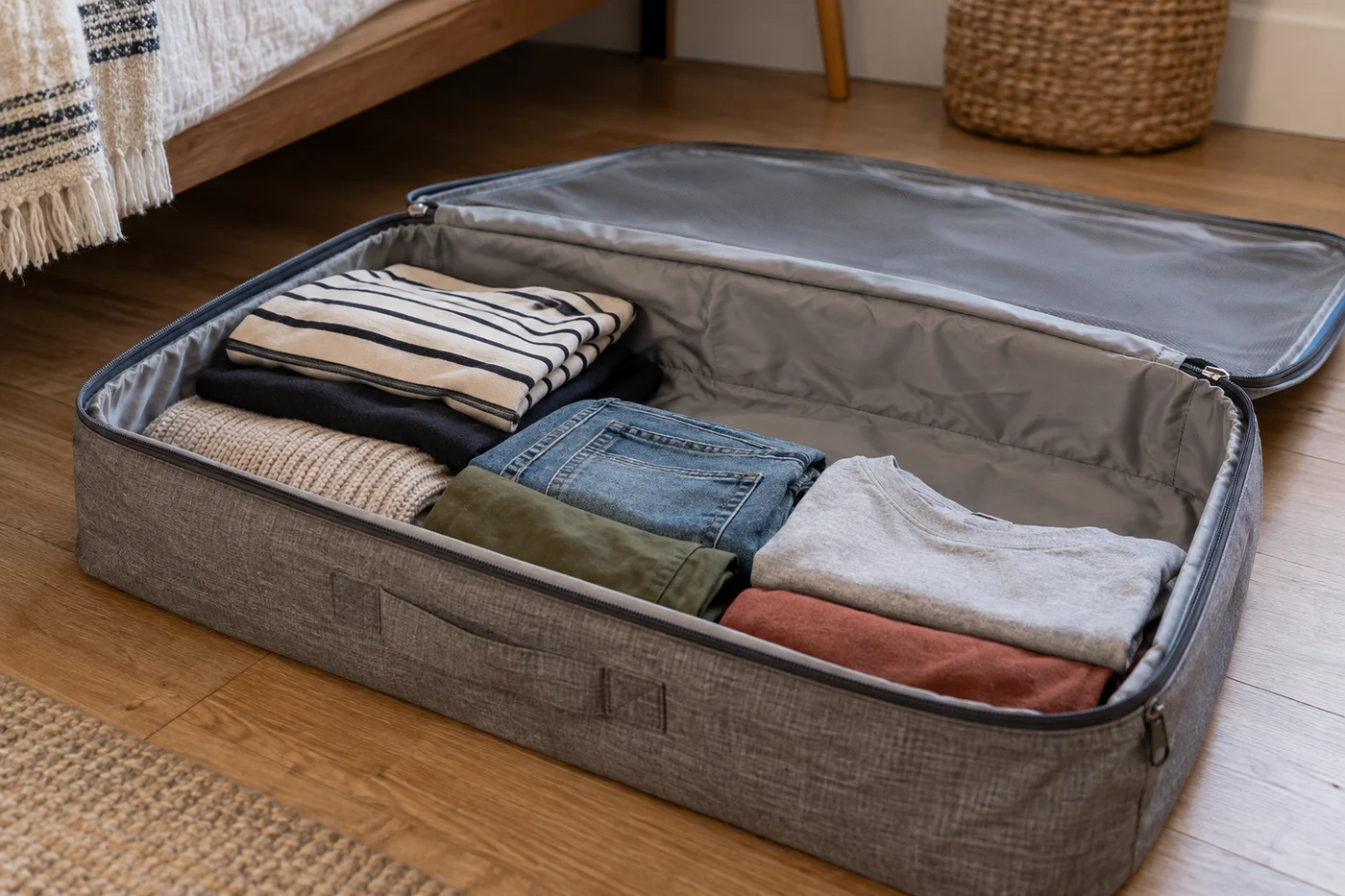
A zippered fabric case can work for light, ordinary clothing when its construction and the room are suitable. It may flex around an awkward opening, but it can also bulge or collapse when pulled. Keep its packed weight manageable.
A rigid lidded container gives you a defined shape. Check its material, condition, lid fit, and dimensions. A lid does not automatically make it pest-proof or moisture-proof. Those claims need manufacturer evidence.
For precious textiles, seek appropriate conservation storage rather than using spare packaging. Ordinary cardboard, dyed liners, and unknown adhesives are not automatically suitable for prolonged contact with delicate fabric.
If you consider a vacuum bag, read both garment-care advice and bag instructions. Compression is a separate decision from storage. Skip it when the item should not be compressed or you cannot verify suitability. Vacuum packing is not necessary for a useful seasonal system.
Keep shoes, toiletries, and chemicals in separate storage. Clothing should not share a mixed box with objects that can transfer dirt, moisture, or residues.
Fold to the container and pack by use
Measure usable interior depth instead of folding everything to a standard size. Make one trial fold, set it inside, and check that the closure works freely.
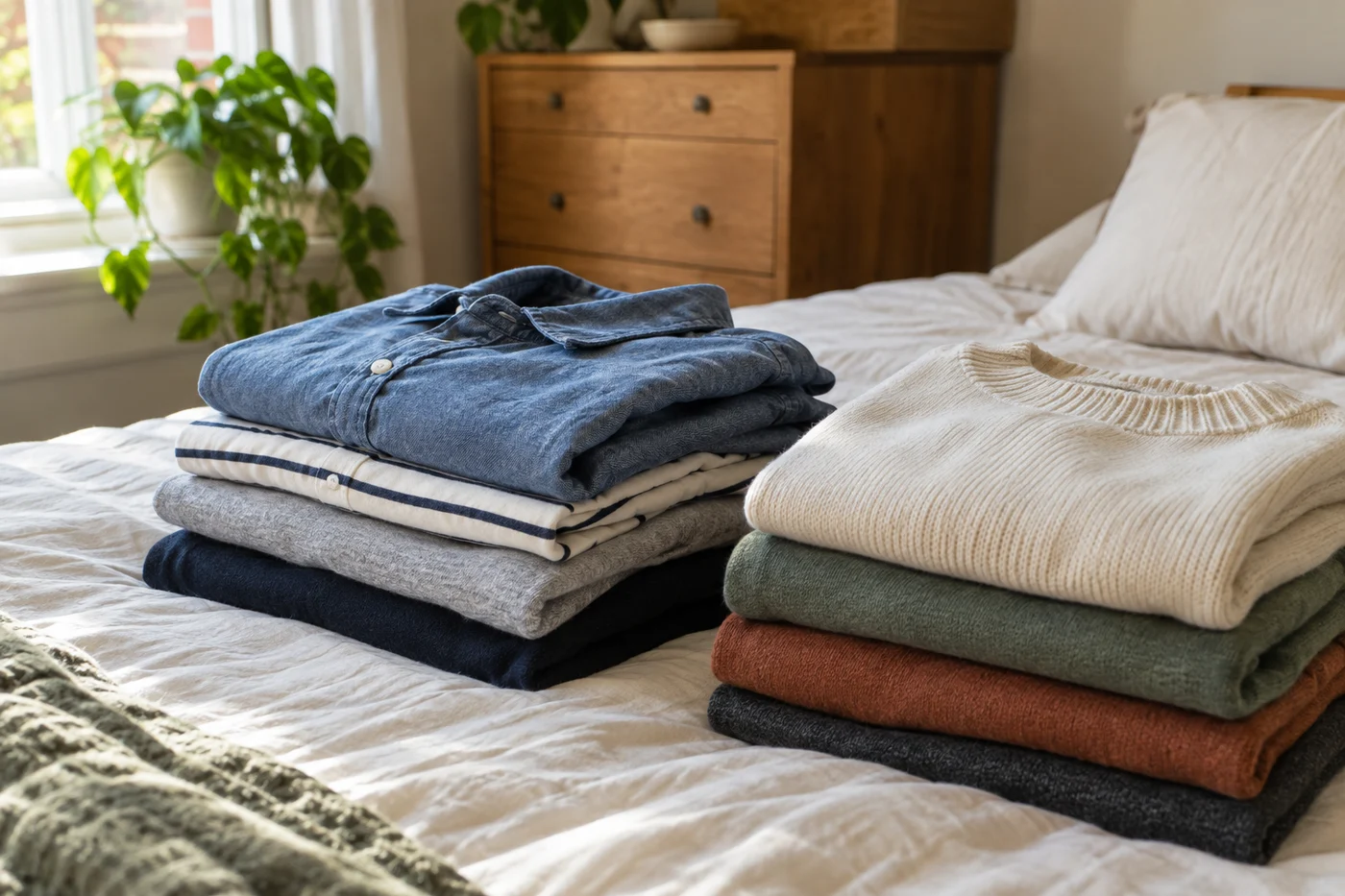
For casual pieces you retrieve individually, shallow rows may be easier than deep stacks. For a whole seasonal group you remove together, modest stacks can be practical. Choose the arrangement according to how you will use the contents.
Place heavier items below lighter ones where appropriate without compressing delicate clothing. Keep sharp fasteners from rubbing vulnerable surfaces. Do not force a garment into a corner just to preserve a neat row.
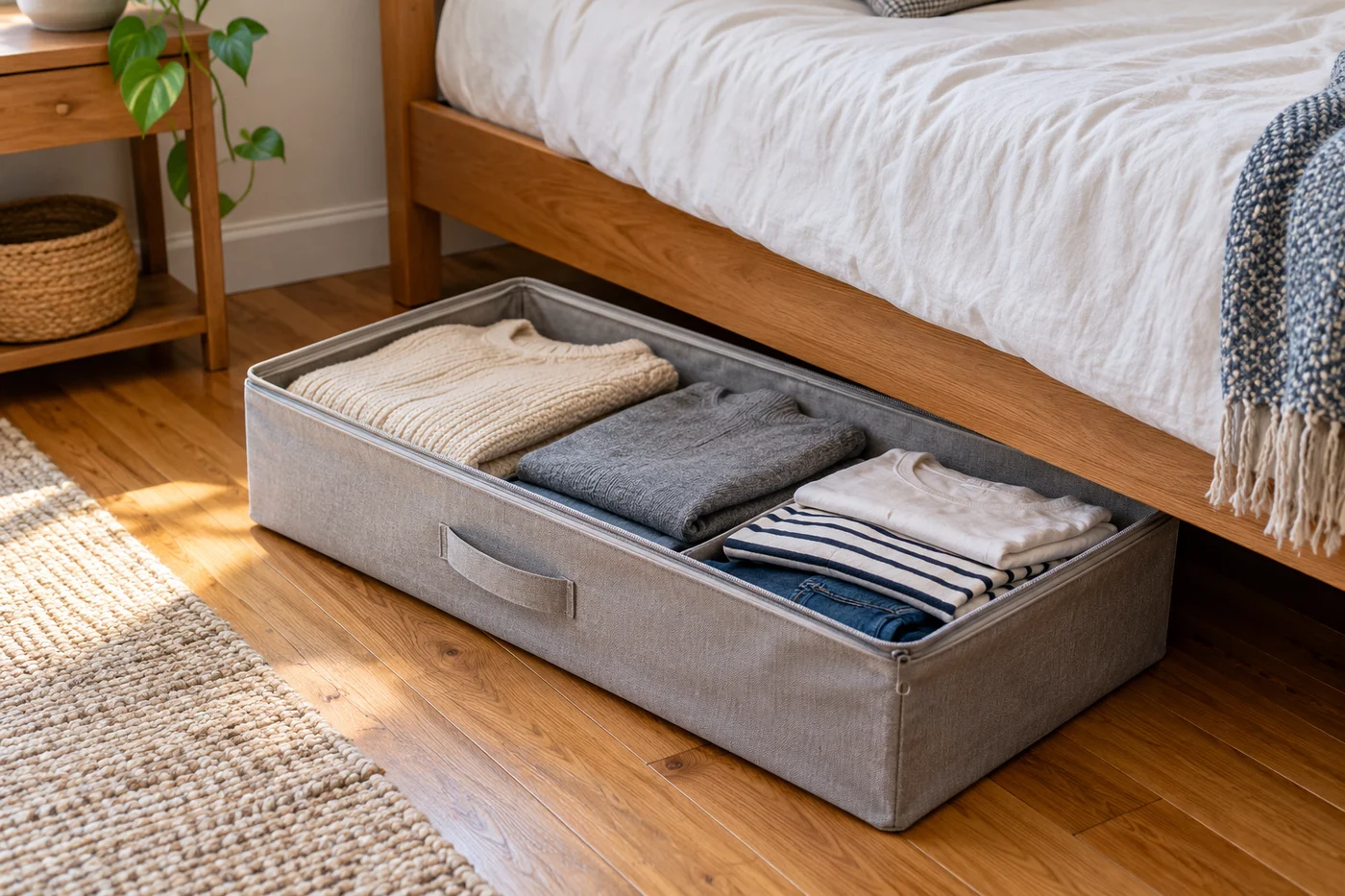
Avoid complicated dividers. One pouch for accessories may help, but numerous compartments can reduce useful space and slow packing. The test is whether you can find what you need and return it easily.
Try lifting the packed container before sliding it away. If the handles strain or you cannot move it comfortably, reduce the load. Splitting clothing between two manageable cases may be more useful than maximizing one large box.
Label for the next season
Write contents and the packing date on an outward-facing label. Use descriptions you will understand later, such as summer casual clothes or spare sleepwear, rather than extras.
Keep a brief inventory inside the lid or in a phone note. You do not need to list every sock, but record garments you might forget when shopping. Update the note when you remove something.
Give the easiest bay to the group you will need first. In a shared bedroom, assign a container to each person or divide space by season. One person should not have to unload another person’s belongings to reach a single case.
Leave enough grip space around handles. Test removal when the case is packed. If it catches on the frame, change the position or format rather than pulling harder.
Reopen and rotate with a purpose
Check stored clothing periodically and when seasons change. Look for dampness, insects, odor, and changes to the case. Address a problem’s source before repacking.
The Canadian Conservation Institute advises checking textile storage for insect activity and cautions against mothballs in its collection-care guidance. Do not treat a scent product as guaranteed protection. Identify an actual pest issue and get appropriate advice instead of adding products at random.
When unpacking, inspect clothes and air them as their care instructions allow. Complete needed cleaning before returning them to your active wardrobe. Clean and dry the empty case before adding the outgoing seasonal group.
If you repeatedly retrieve the same item, move it to daily storage. The under-bed case works best when it holds belongings you can comfortably set aside.
Common questions
Is under-bed storage suitable for everyday clothes?
It can be if access is easy, but repeated kneeling and opening may be inconvenient. Use it mainly for folded items you retrieve less often and keep daily storage simple.
Are vacuum bags necessary?
No. A suitable case and smaller seasonal group often solve the task without compression. Use compression only when compatible with the garment and the bag instructions.
Can you pack clothes straight after washing?
Wait until they are fully dry, including thick seams and waistbands. Follow the care label. Packing damp clothing into a closed case does not finish drying it.