
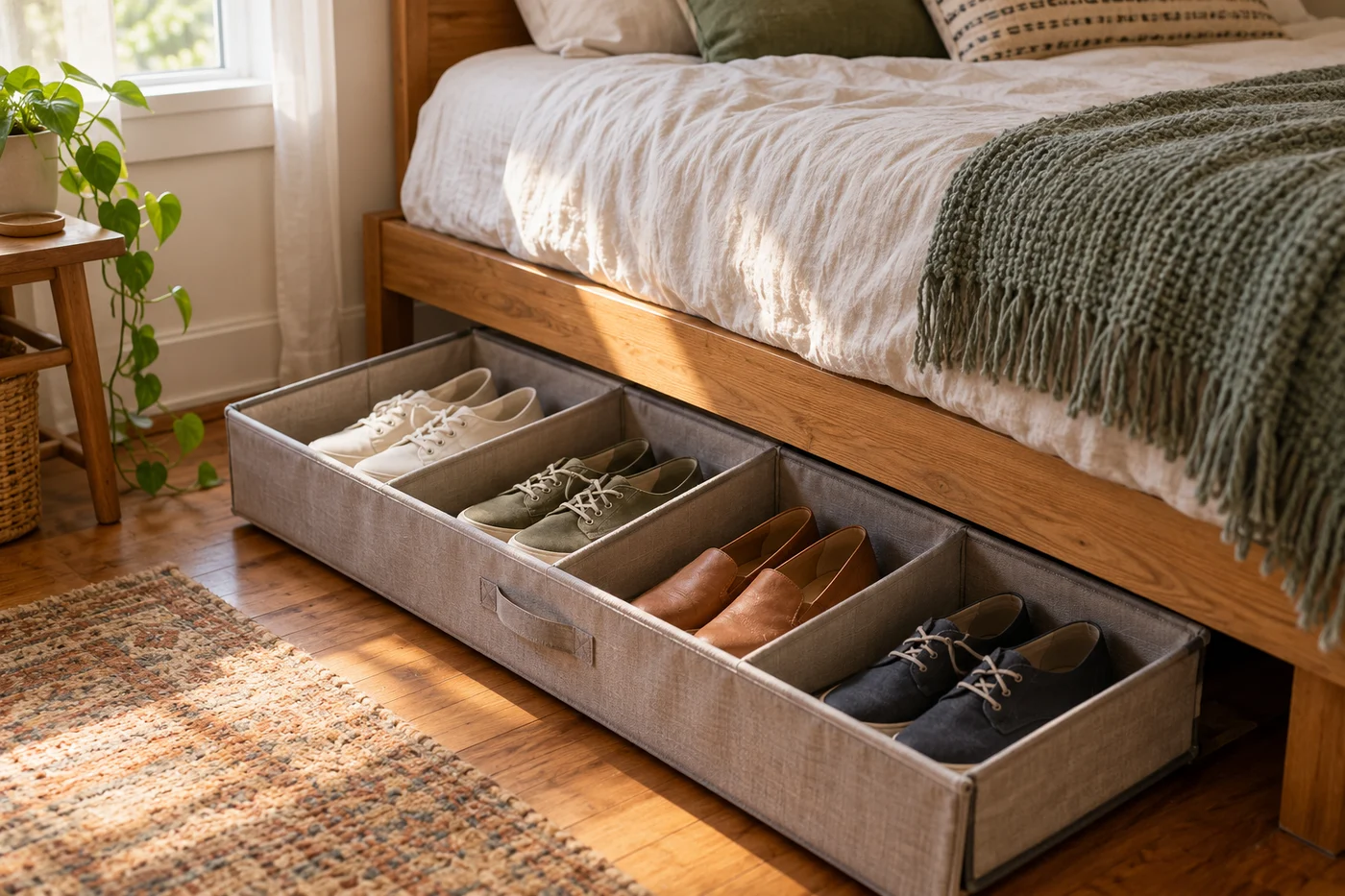
Under-bed shoe storage works best for clean, dry pairs that you do not need at the door every day. Separate daily shoes from occasional and seasonal footwear. Then choose a container around the length, width, and height of those actual pairs.
A printed pair count is not a fit guarantee. Chunky sneakers, wide shoes, heels, and ankle boots take different amounts of space. A container can fit beneath the bed while its compartments remain too small for your footwear.
Keep your frequently worn pairs in a convenient daily location. The small entryway shoe storage plan helps you divide daily footwear from the reserves stored here.
Decide which shoes should live under the bed
Keep the pair you wear most days in a convenient entryway location. You should not need to kneel beside the bed every time you leave home. Under-bed storage is better suited to dress shoes, seasonal sandals, and other pairs you use less frequently.
Take out the shoes you are considering and pair them up. Remove footwear you no longer intend to wear from the planning group. Decide what needs cleaning, what needs repair, and what can be stored now.
Check the care instructions for special materials and delicate shapes. If a tall boot needs upright storage or a shoe should not be compressed, give it a suitable location rather than forcing it into a low organizer.
Separate footwear from clothes and bedding. That makes the containers easier to maintain and avoids mixing clean textiles with soles that may carry dirt.
Measure pairs and the usable clearance
Place the largest candidate pair on a flat surface in the position you want to store it. Measure its occupied length, width, and height without squeezing it. Repeat for an unusually tall or wide pair.
Look at the bed’s center supports and crossbars. Measure the narrowest part of the route the container must pass through. Include the lid, handles, and wheels in its exterior dimensions.
Check the opening too. A rigid box may fit beneath the frame but be difficult to maneuver around a center leg. You also need room beside the bed to remove the container and open it.
For a divided case, check internal dimensions or measure it in person. A photograph of neatly arranged shoes is not evidence that your pair fits. Do not fold a heel or crush a toe to meet an advertised count.
Try a simple paper footprint before buying. Mark the area your largest pair occupies, then compare that footprint with the container’s usable interior. Treat this as your own planning aid, not a capacity test for every shoe.
Pick the format by the shoes you own
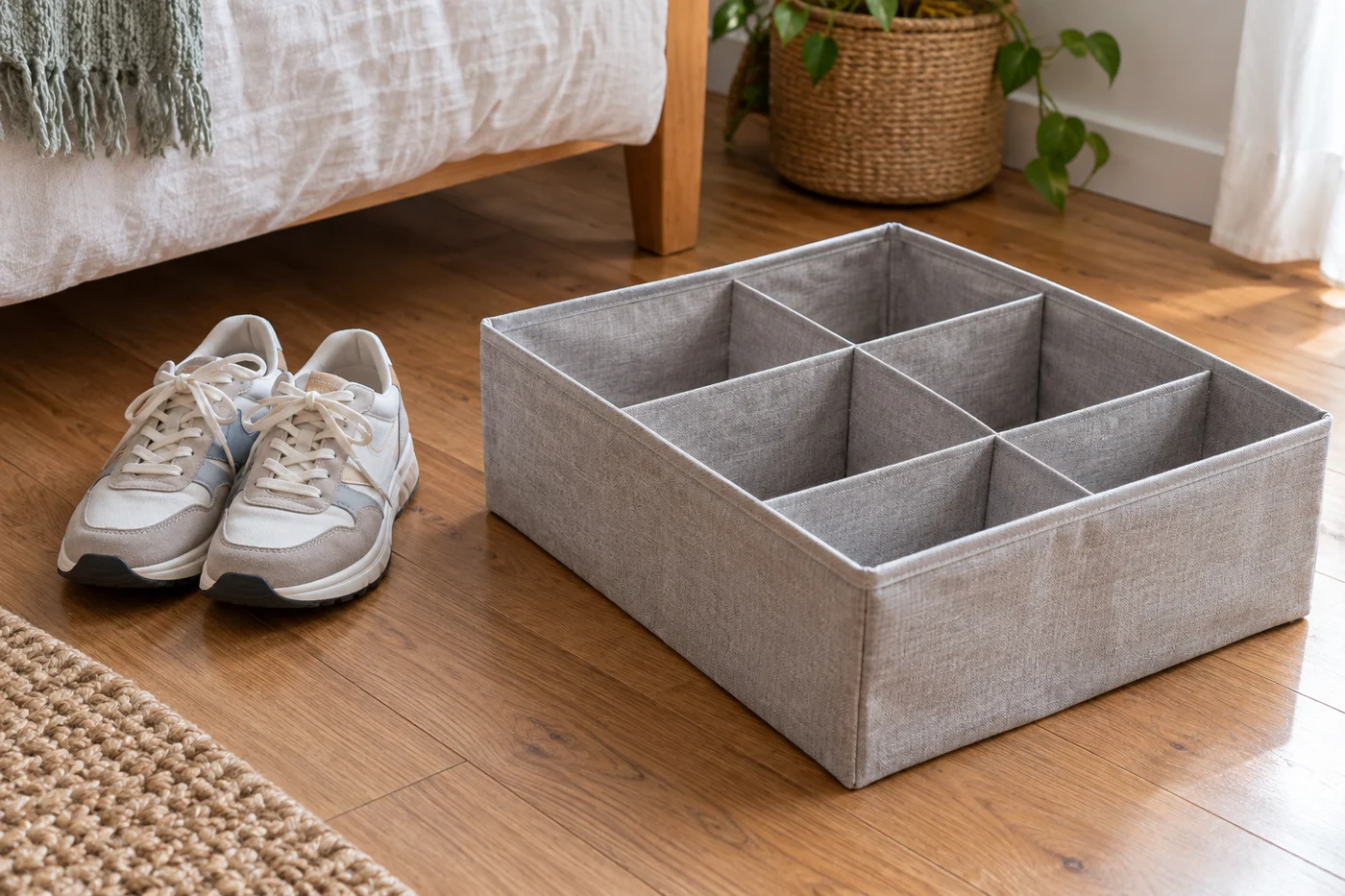
A divided fabric case is useful when its compartments match your shoes and you can lift it without collapsing the contents. Removable dividers give you flexibility. Check whether the base remains supported when you pull it out.
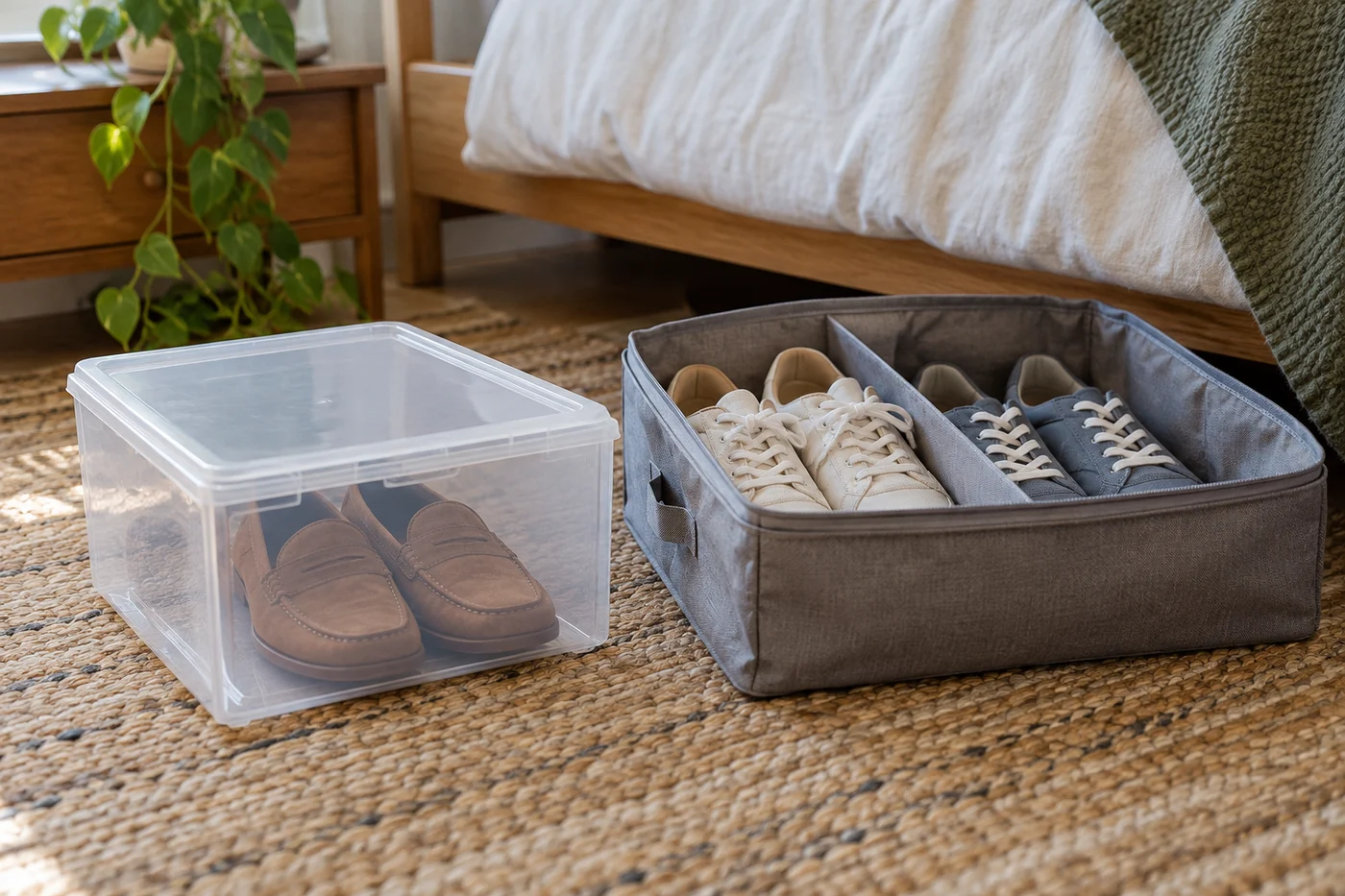
A rigid covered box can suit larger pairs or footwear in suitable protective bags. Put pairs beside one another rather than piling them until the bottom pair disappears. An external contents list can make an opaque box as easy to identify as a clear one.
A shallow tray offers quick access for dry, frequently rotated shoes. It gives less coverage than a closed container. Use it only where that tradeoff suits the room and leave room to remove it for cleaning.
A rolling drawer can make retrieval easier when its full height and pull-out space fit. Follow assembly and load instructions. A wheel catching on a rug or threshold can make the arrangement awkward.
Avoid putting one container behind another if you regularly need both. Two smaller boxes side by side may work better than one long case, but test your own access route first.
Prepare shoes before closing the container
Brush off loose dirt and clean footwear according to its material and manufacturer guidance. Do not use one cleaning method for every pair.
Nike’s shoe-care guide advises gentle cleaning and air drying sneakers at room temperature. It also gives separate considerations for leather and suede. Use your footwear maker’s instructions where available, particularly for finishes needing specific care.
Let shoes dry fully before storing them. A closed under-bed box is not the place for rain-soaked shoes to finish drying. Give wet footwear an appropriate drying location separate from the stored pairs.
Check inside as well as outside. Remove loose objects and make sure insoles are dry before replacing them. Avoid adding a strong fragrance merely to cover an odor. Address the cause with material-compatible care.
Store polish, cleaning chemicals, and used cleaning cloths elsewhere. Do not keep them in the footwear container.
Arrange pairs for one-step retrieval
Keep both shoes of a pair together. Face pairs consistently if that helps recognition, but never press them into a shape that could distort them.
Group by season or occasion. A summer-sandal box and an occasional-dress-shoe box may be easier to understand than a case divided by color. Choose the grouping that matches when you look for footwear.
Place the next pair you expect to use toward the accessible side. You should be able to retrieve it without emptying the case. If the same shoes always need rearranging, simplify the division.
For opaque containers, use an outward-facing label or a short list of pairs. A phone photo can help if you update it when contents change. Keep the system simple enough to maintain.
Use protective bags only when suitable for the footwear. They can separate surfaces, but they do not correct damp conditions or a box that is too small. Check care guidance for shoes needing special storage.
Make the seasonal handoff simple
Give recently worn shoes a place to dry before they return to storage. That could be an existing mat or shelf in an appropriate location. Do not move wet footwear straight from the doorway into a closed bedroom case.
When the season changes, bring out the relevant box and inspect each pair. Clean and dry outgoing shoes before storing them. Keep a pair needing repair outside the container until you address it.
Inspect the case for dirt or moisture. Clean it according to its care instructions and allow it to dry. Avoid pushing a full container back under the bed merely because the seasonal switch is finished.
If more shoes accumulate than the system holds, review the assignment. Move the most frequently worn pair to the entryway, give tall footwear a better location, or reduce the group. Another bin is not always the answer.
Common questions
Can you store boots under the bed?
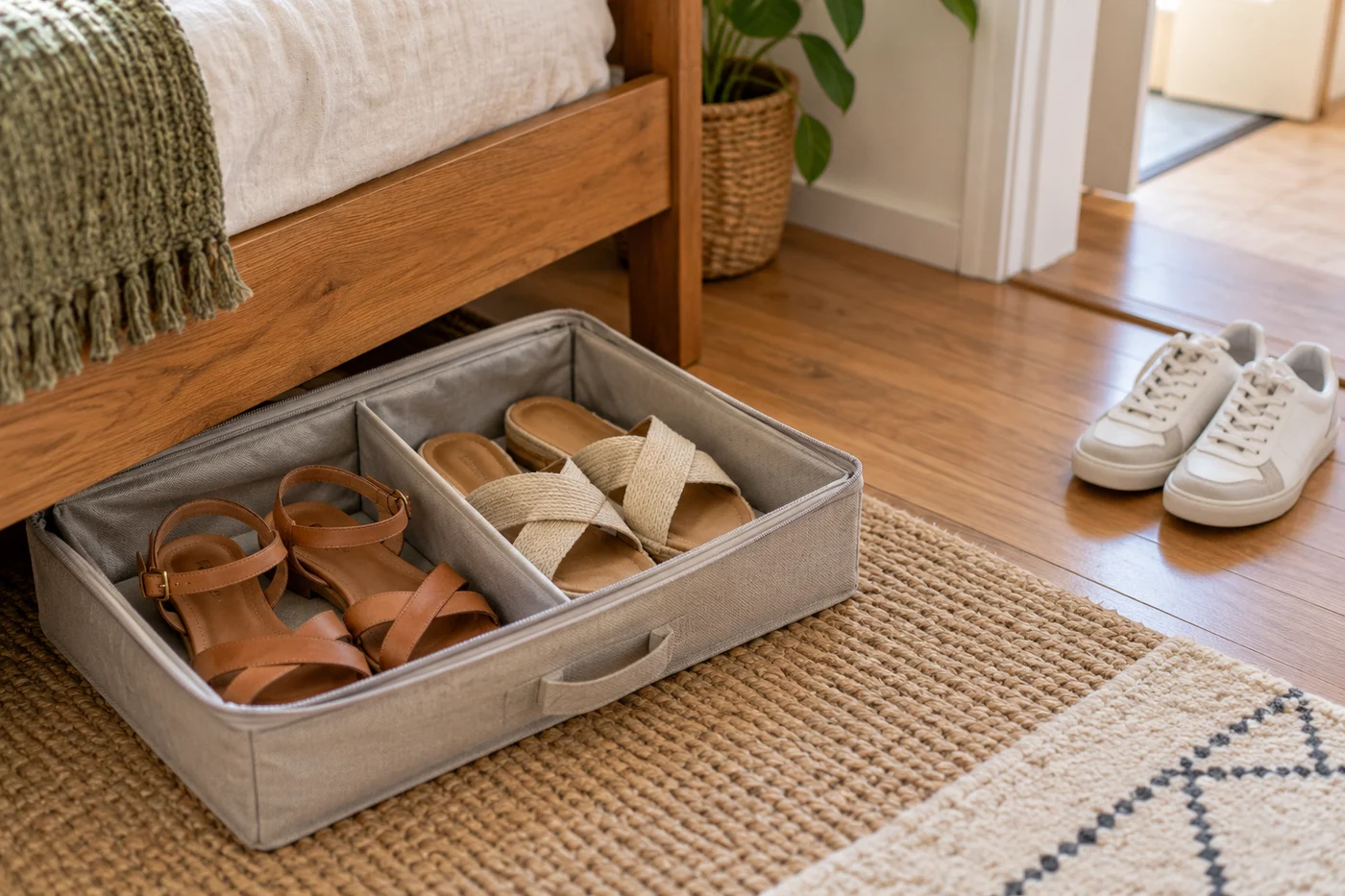
Some short boots fit without compression. Tall shafts and delicate shapes may need another location. Measure the actual boots and follow their care guidance rather than assuming a soft case suits them.
Should shoes be in a sealed container?
Choose a closure appropriate to the material and environment, and pack fully dry shoes only. A closed container does not make a damp room or wet footwear suitable for storage.
How many pairs fit under a queen bed?
There is no reliable count based on mattress size alone. Supports, usable clearance, container shape, and actual shoes determine capacity. Plan with the pairs and space you have.