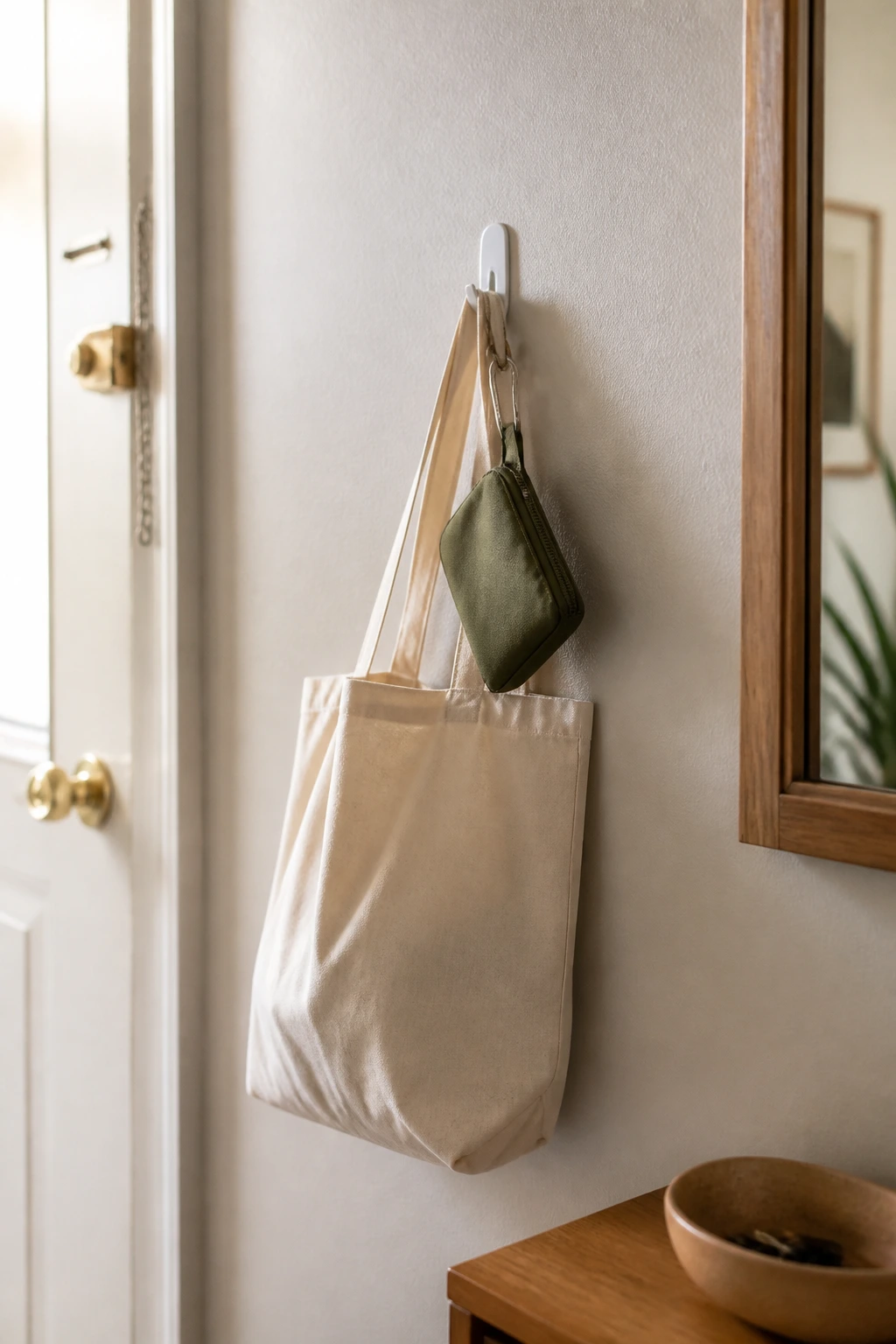
Watch one complete routine before measuring or buying.
Protect the route, opening parts, and exit plan.
Measure and rehearse
Use your room as the standard.
The numbers below are examples of what a reader might measure, not universal clearances. Your household, lease, building instructions, and access needs decide what works.
- What to measure
- Measure the item at its widest and heaviest in normal use, then measure the full support surface and the route needed to lift it on and off. Record the wall or finish type only if you can identify it confidently.
- Clearance and access
- Check that a freestanding or over-door option does not obstruct doors, latches, hinges, sprinklers, vents, controls, or the route people use. Include the item’s swing or removal path.
Before you add anything
Ask three room-specific questions.
Write the answers beside your measurements. A choice that misses one of them is easier to rule out before it reaches the room.
- 01
What does the lease and surface allow?
- 02
Can an existing shelf or stable piece carry the job?
- 03
What happens during use, failure, and removal?
No-buy test
Prove the routine before the purchase.
Move the item to an existing drawer, shelf, rail, or container and test whether a simple label or change of location solves the access problem.
Low-commitment paths
Change one part, then observe.
These are starting paths, not promises that one setup fits every home.
- 01
Ask whether an existing shelf, cabinet, rail, or stable piece can carry the job.
- 02
Keep the load low and visible while testing a removable method permitted by the property.
- 03
Plan removal and surface inspection before treating the setup as permanent.
Decision boundaries
Know the compromise and the stop sign.
Renter-aware does not mean risk-free. Check the property rules, instructions, surface, access, and consequences before committing.
- Renter-aware path
- “Removable” is not the same as damage-free on every surface. Follow both the lease and the hardware instructions, stay within stated conditions, and choose freestanding when paint, wallpaper, moisture, load, or removal is uncertain.
- Trade-offs
- Freestanding solutions use floor or surface area and may need tip protection. Adhesive solutions preserve floor space but add surface compatibility, load, environment, and removal risks.
- Who should avoid this path
- Skip adhesive hardware if you cannot confidently identify the surface, conditions, full load, and removal method. Avoid unknown, damaged, damp, textured, freshly painted, or otherwise excluded surfaces, and never use it where a fall could injure someone.
Practical example — illustrative, not a standard
Put the measurements into a real decision.
If the everyday load weighs 4 pounds on your scale, do not shop by that number alone. Include the container, pulling force, surface condition, humidity, and maker’s stated limits; if any condition is unknown, use a shelf or stable floor-based option.
The common thread
Measure first. Keep the exit plan visible.
The Fit Check helps you decide whether a solution still works when the room changes, the lease matters, or the routine gets busy.
Read the Fit Check method