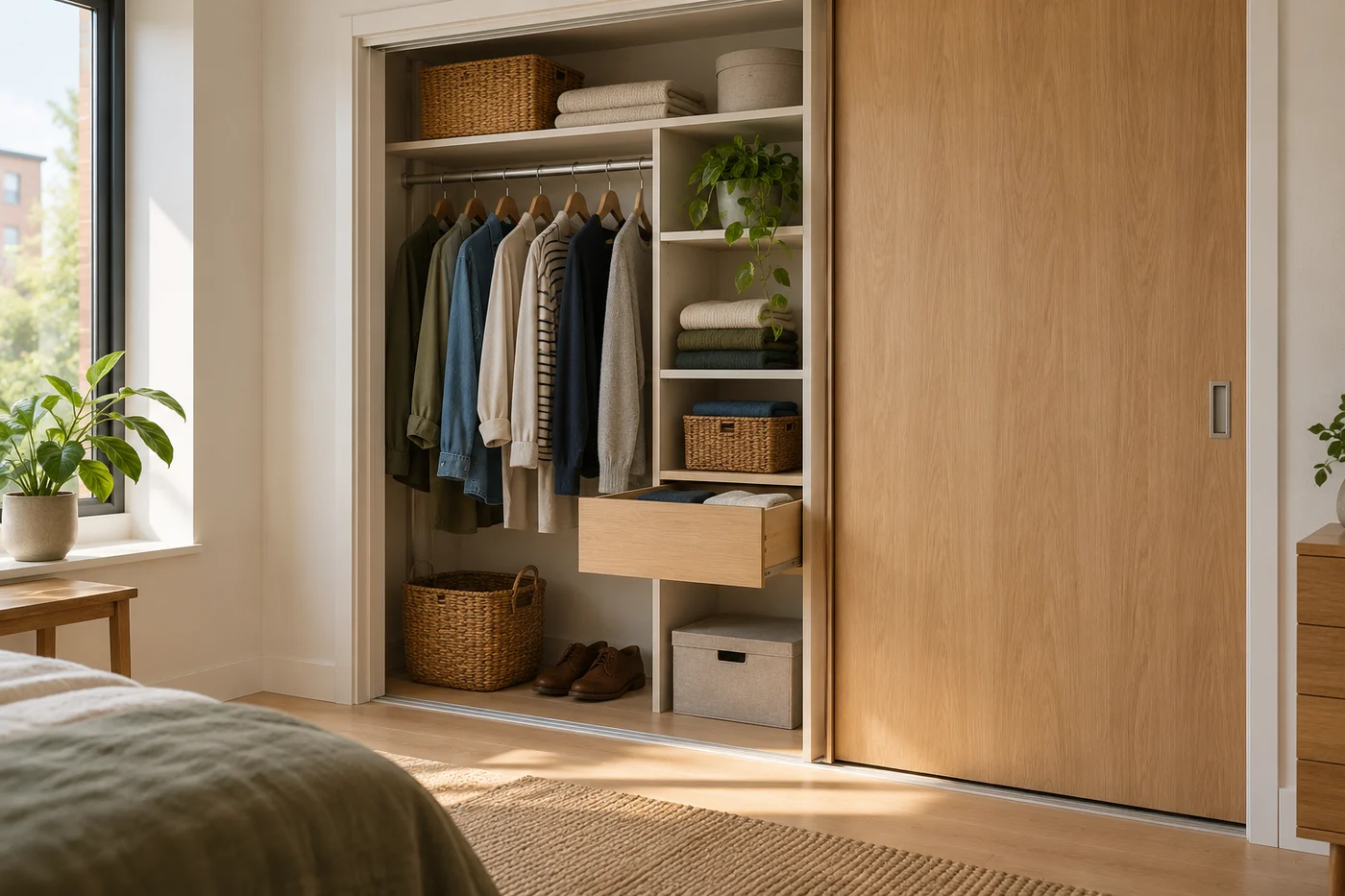
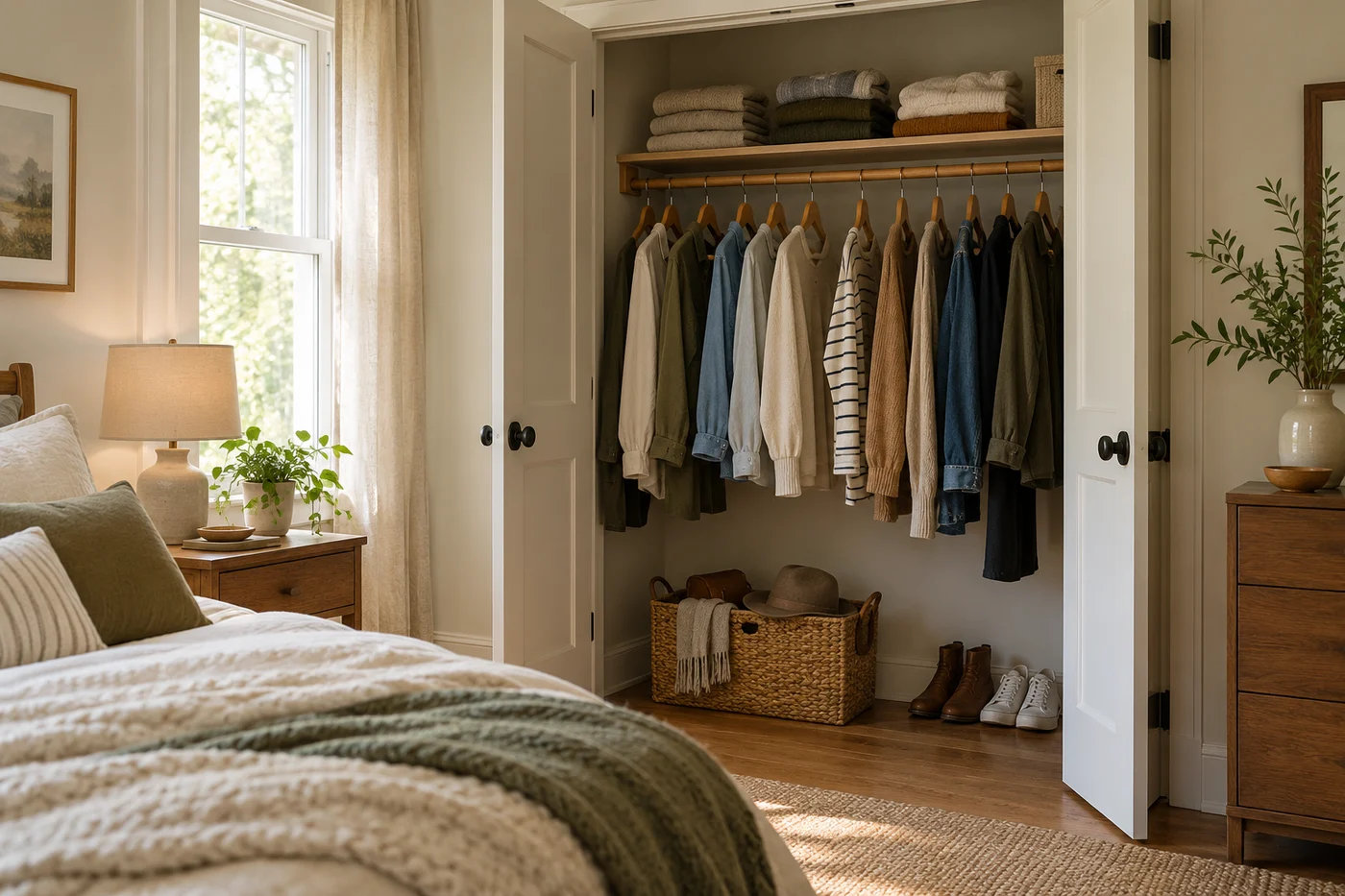
To organize a small closet with lots of clothes, sort the wardrobe by how you wear and store it, measure the usable space, and assign easy-access locations before adding organizers. Keep long garments clear, group folded clothing in manageable sections, and reserve space for clean laundry to return.
The aim is to retrieve and put away your clothing without shifting half the closet. More bins or thinner hangers will not solve an arrangement that blocks the opening or puts your everyday items behind rarely used belongings.
If hanging clothes press against the doors, check closet depth and garment clearance. Seasonal folded items may suit clothing storage under the bed.
Sort the wardrobe without emptying your whole room
Choose a manageable section to work through first. If you cannot finish a complete closet reset in one session, start with the rail or one shelf. Keep your bed and walking route usable while you sort.
Group clothing by its current role: regular wear, occasional wear, off-season, repair or alteration, and items you no longer want. Keep uncertain decisions separate from the ready-to-wear selection, with a clear next action. A bag of clothes awaiting repair should not quietly become another permanent shelf category.
Decide whether each group belongs in this closet. Work clothes may need prime access even if their appearance does not match a tidy color arrangement. Formalwear used occasionally can sit farther along the rail if its care needs and access remain suitable.
Check care labels before choosing how to hang or fold particular garments. Use storage appropriate to the fabric and garment shape. This guide does not recommend hanging every sweater or folding every dress simply because one method saves space in a photograph.
Map usable space and the opening
Measure internal width, depth and height. Note shelf supports, hinges, door tracks, wall returns and any other obstacles. Check the width of the actual opening rather than assuming the whole back wall is directly accessible.
With sliding doors, identify which section opens at one time. Avoid placing a pull-out drawer where the closed panel always obstructs it. Hinged doors also need opening clearance, and door-mounted storage may occupy space your clothing currently uses.
ClosetMaid’s guidance considers room dimensions, garment lengths and drawer clearance when planning a system. Use those factors for your own arrangement without assuming its example installation heights fit your wardrobe or reach.
Look at the widest clothing you hang, not just an empty hanger. Check whether shoulders or sleeves press against the door or back wall. Keep a note of the longest hanging garment so you can protect space beneath it.
For a rented closet, assess the existing shelf and rail before altering anything. Follow the system instructions and obtain required permission for installation changes. Do not add a loaded organizer to a rail whose intended load or condition you cannot verify.
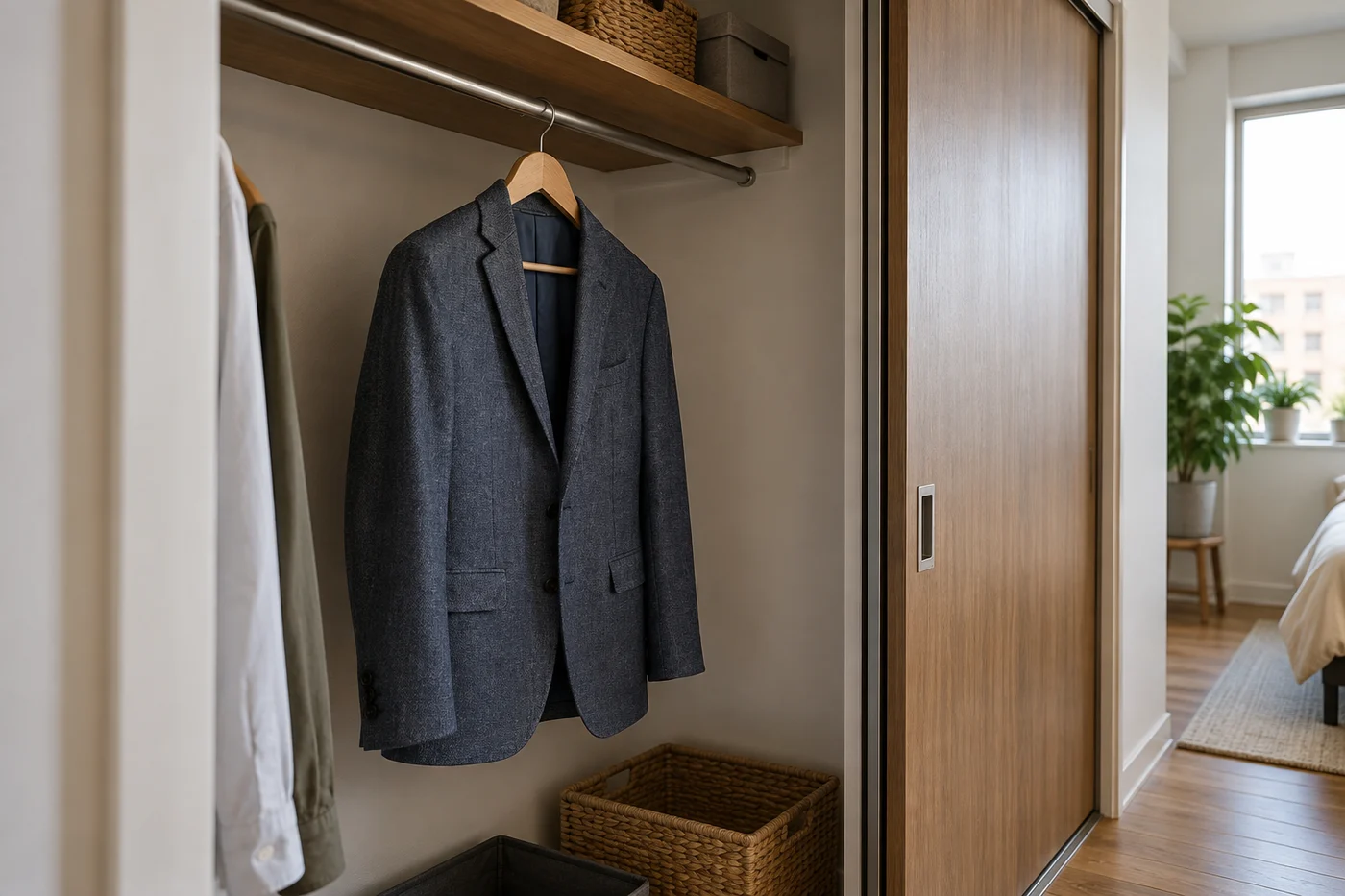
Allocate hanging space from actual garments
Separate garments that need long hanging space from shorter pieces. Place a long dress or coat where its hem can hang clear of shelves and containers. Use the remaining rail area for shorter clothing where practical.
A second hanging rail can help a mostly short-garment wardrobe only if both rows fit. Measure garment length from the hanger hook to the hem, then account for the rail and shelf hardware. Check the lower row in use; clothes should not crowd the floor or items below.
Avoid installing double hanging simply because the closet is tall. A wardrobe full of long garments has different needs. You might keep one long-hang section and add shelves or a small compatible short-hang area elsewhere.
Use hangers that suit the clothes and fit the rail. Matching hangers can make a row easier to scan, but do not promise a fixed percentage of extra capacity. Garment thickness, shoulders and comfortable retrieval still determine how tightly the rail can be used.
Try taking a frequently worn item out and returning it. If you must force hangers apart or squeeze the garment back into place, the section is overfilled for convenient access. Move reserve clothing or change the grouping before buying another multi-item hanger.
Make folded clothing easy to return
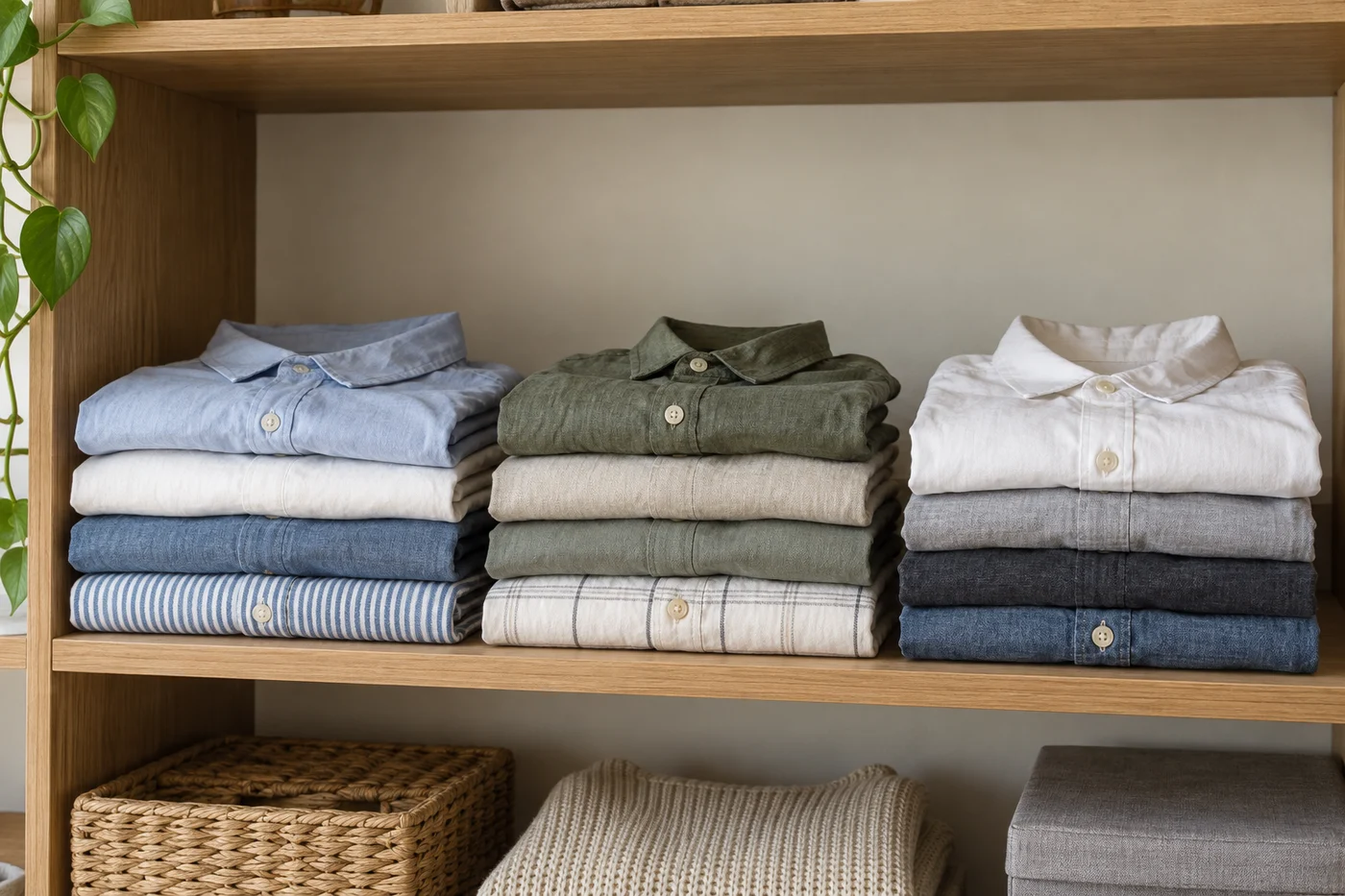
Choose a fold that suits each shelf or drawer. Measure one folded item and check it against usable depth. Test a small group before refolding the whole wardrobe. A method that looks neat but takes too much effort to repeat may not suit your routine.
Keep stacks at a height you can manage when removing a middle item. If piles collapse, shorten them or divide the group. Shelf dividers can help define space when compatible with the shelf, but they do not make an overloaded stack easy to use.
In drawers, upright folds may let you see several items at once if the drawer height and fabric permit it. Leave enough room to return a clean item without compressing the whole row. A drawer that only closes after careful repacking can make laundry return inconvenient.
Use a container for a genuine category, such as workout shirts or scarves. Avoid buying baskets before deciding what each will hold. Check handles and removal space as well as capacity. A bin you cannot lift from the shelf becomes a hidden pile with a frame around it.
Place shoes and accessories around the clothing
Locate shoes where they do not obstruct long garments or the door. Check the longest shoe and tallest boot against the available space. Treat pairs as physical objects with different shapes, not a standard unit of capacity.
Keep current shoes accessible and move occasional pairs to suitable reserve storage if needed. Use a manageable arrangement that lets you see or identify them. Avoid a deep pile under the rail that requires lifting clothing to find footwear.
Accessories can fit in a shallow drawer section, small suitable container or compatible door organizer. Choose the format by the objects: a belt, a delicate scarf and a structured bag may need different treatment. Follow relevant care guidance rather than forcing every accessory onto hooks.
For door storage, check closure with the organizer and contents in place. Do not let a hook snag clothing, hit the rail or prevent a door from closing normally. If it uses a required fastener or specific load rating, follow those instructions.
Give reserve clothing a deliberate location
Off-season clothing should have an identifiable home, not scattered spare spaces. Clean and prepare garments according to their care labels before storing them. Choose a dry location and suitable container or cover for the specific clothing.
You can keep an accessible reserve shelf in the closet or move suitable items to another storage location. Record what went where so you do not repeatedly buy or search for things you already own. A plain inventory note is enough if it helps you remember.
Do not treat compression as harmless for every fabric or garment. Verify care guidance before vacuum packing delicate, structured or filled items. Reducing the volume on paper is not useful if the storage method conflicts with the item’s care needs.
If your active wardrobe still exceeds the closet’s workable capacity, make a clear decision about overflow. Reduce the active selection, use another suitable clothing location, or reconsider what you own. Adding organizers inside an already obstructed closet can reduce access further.
Make laundry return the final check
Bring a normal group of clean clothes back to the closet. Can you return them without rebuilding stacks, moving reserve bins or clearing a shelf? Check the arrangement at that moment rather than only after the initial reset.
Keep empty storage capacity available for clothes temporarily in the laundry. Otherwise the closet may seem to fit everything while some of the wardrobe is elsewhere, then overflow as soon as it comes back.
For a shared closet, agree where each person’s active clothes and reserves belong. Revisit the allocation when one person’s routine changes. Equal-looking sections are less useful than a division that makes both wardrobes accessible.
Start with one rail section and one folded category. Complete their return routine before expanding the system. A small closet is organized when you can find, wear and put away your clothes without a second sorting task each time.