
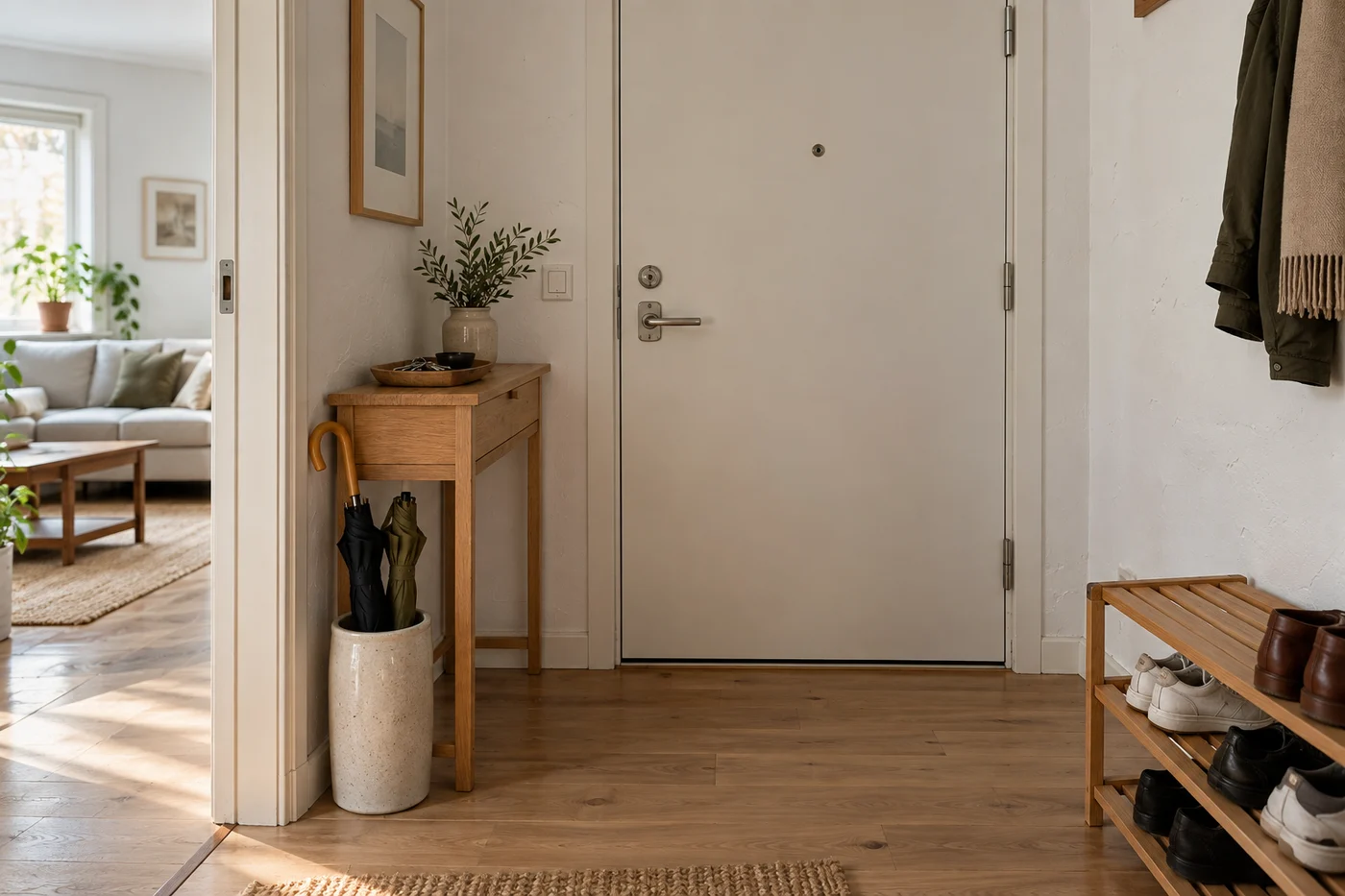
Small apartment entryway ideas work when you plan the arrival routine before choosing furniture. First protect the route through the door. Then give the things you carry every day a reachable home. A tray on furniture you already own may do more for your entrance than a large hall tree squeezed beside it.
Your entryway does not have to hold everything you take outside. It needs to let you enter, put things down, change shoes if needed, and leave again without moving a pile. Decide which jobs belong in that small space and which can move a few steps into the apartment.
For a doorway crowded mainly by footwear, start with small entryway shoe storage. If you have an enclosed coat area, use the small hall closet plan for the belongings that can move inside.
Map the door and the route
Open your front door normally and look at everything it passes: walls, handles, a closet door, the edge of a rug, and furniture. Check neighboring doors too. A cabinet may fit with the entrance closed yet interfere with a bathroom or closet when someone opens it.
Write down the available wall length, depth beside the walking route, and position of baseboards. Include handles and projecting coat hooks in the depth you assess. A jacket hanging on a hook occupies space beyond the hook itself.
Try the entrance while carrying your usual load. Can you step inside with groceries, turn to close the door, and set a bag down? If you use a mobility aid or need help changing shoes, assess that movement as well. Keep the doorway, lock and usable route unobstructed. These checks describe your layout, not a universal clearance measurement.
Before buying anything, mark the proposed furniture footprint with paper on the floor, or low-tack tape only if your finish allows it. Include the space an open drawer or seated person would use. Walk the route several times. Remove any layout that requires squeezing around it.
Give the entrance a short job list
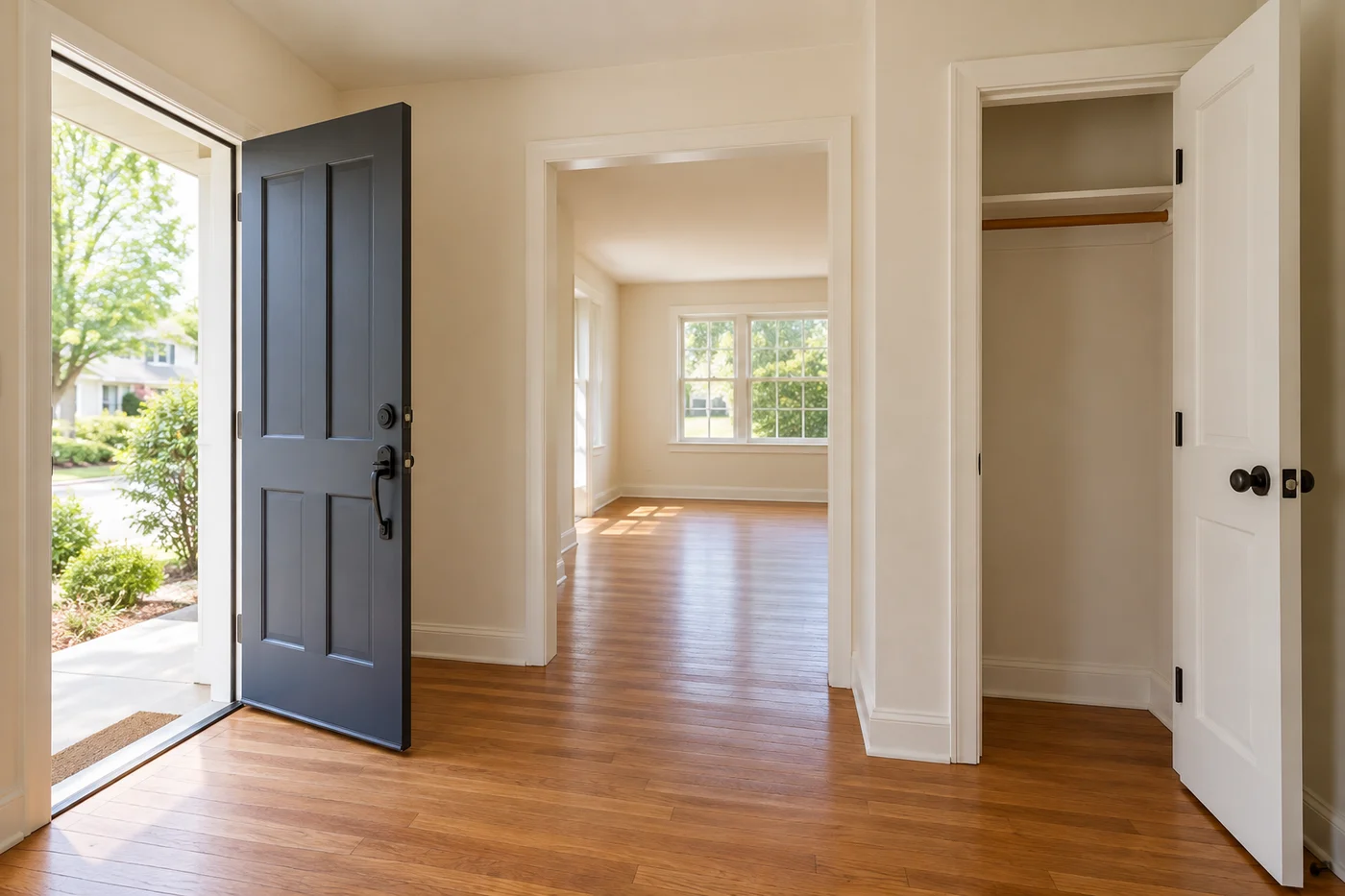
Look at what actually arrives here over a few ordinary days. You might have keys, a work bag, shoes, mail, a leash and a current coat. Write the recurring items down, then choose a destination for each.
Separate daily arrivals that need an immediate place, departure items that must be ready when you leave, and reserve belongings that can live elsewhere. Your daily tote could stay near the door while occasional luggage stays in a bedroom. An outgoing library book needs a temporary departure spot; it does not need permanent entryway shelving.
Extra reusable bags can live with groceries rather than forming a second collection at the entrance. Keep the bags you actually take out where you will remember them, but avoid storing the whole reserve in your daily landing place.
If several people share the apartment, decide together which items belong here. Personal zones can help, but make them suit each person’s reach and routine. A shelf is less useful if its owner needs another person to retrieve a bag every morning.
Try a no-purchase reset first
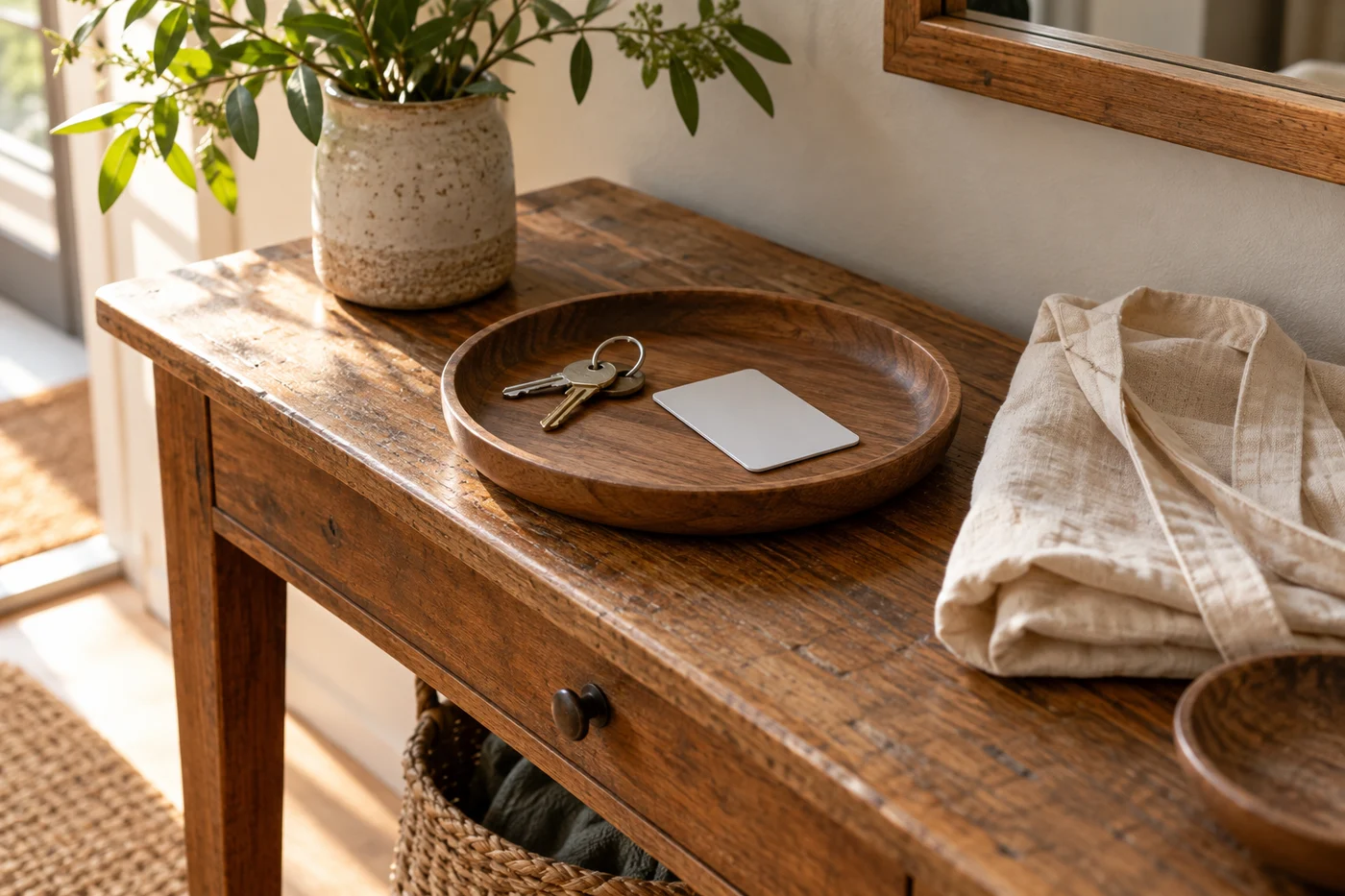
Clear the entrance and return items that already have homes. Put an existing shallow dish or tray on the nearest suitable surface for keys and a transit card. Use a small existing container for the specific items that otherwise scatter.
A nearby living-room shelf can serve as your landing place if the doorway has no spare wall. Keep the part you use for arrivals distinct from display objects. If putting keys away means rearranging decor, simplify the surface.
Give mail a destination beyond the entryway. You can set aside incoming mail briefly, then process it where you normally handle paperwork. Avoid using the key tray as a permanent archive. Move delivery packaging to its disposal or recycling location when practical rather than reserving floor space for it.
Live with the reset before adding furniture. Notice the exact failure: keys still disappear, bags fall on the floor, or coats are hard to put away. That tells you whether the missing piece is a small surface, a hanging location or a different daily habit.
Choose the smallest storage change that solves the problem
A narrow console suits an entrance with usable depth and a need for a landing surface. Check the actual overall dimensions, legs and access to drawers. A shallow top can still become awkward if bags underneath extend into the route.
Hooks suit a usable wall where coats or bags can hang without covering switches or interfering with doors. Verify the installation method, wall material and rated load for the particular hook. Your lease and the product instructions both matter. Do not assume adhesive hardware suits every paint finish or every bag.
A low open shelf can organize a small collection of belongings. Choose categories before baskets so you know what each container has to hold. If you cannot see an item and the container is difficult to reach, that location may be inconvenient in daily use.
A bench earns its space when someone needs to sit while changing shoes. Check its intended sitting use and assembly requirements, and allow room for the person’s knees and feet. If a bench only fits when nobody sits on it, it has not solved that task.
A tall hall tree or cabinet requires more than a narrow footprint. Check its assembled depth, hanging garments and installation requirements. The CPSC advises following manufacturer instructions to secure furniture. Required anchoring is part of the setup, including in a rental.
Handle shoes without making them the whole entrance
Reserve the doorway for shoes that need to be there now. Decide that selection from your routines and the room’s usable capacity, rather than an arbitrary pairs-per-person rule. Special-occasion shoes and off-season footwear can live with other clothing.
Give footwear arriving wet or muddy a washable temporary place clear of the walking route. Follow the shoe’s own care instructions before putting it into enclosed storage. Avoid treating a basket as the solution for every kind of shoe; tall boots and delicate footwear may need a different arrangement.
If shoes are the main source of crowding, plan their actual fit before adding coat storage around them. A shoe unit that takes all the spare wall may displace the bag or seating you need. Keep detailed shoe decisions separate from this whole-entrance plan.
Adapt the layout to your entrance
When the door opens straight into the living room, use the nearest existing surface and a modest footwear zone if one fits. Define the arrival area through placement without building an artificial hallway or crowding the sofa. Storage does not have to line the door itself to be convenient.
In a narrow corridor, wall storage may be more useful than floor furniture, but only where the mounted item and its contents leave room to pass. If that is not possible, move storage to the nearest room or hall closet. A clear entrance can stay simple while the rest of the apartment handles the belongings.
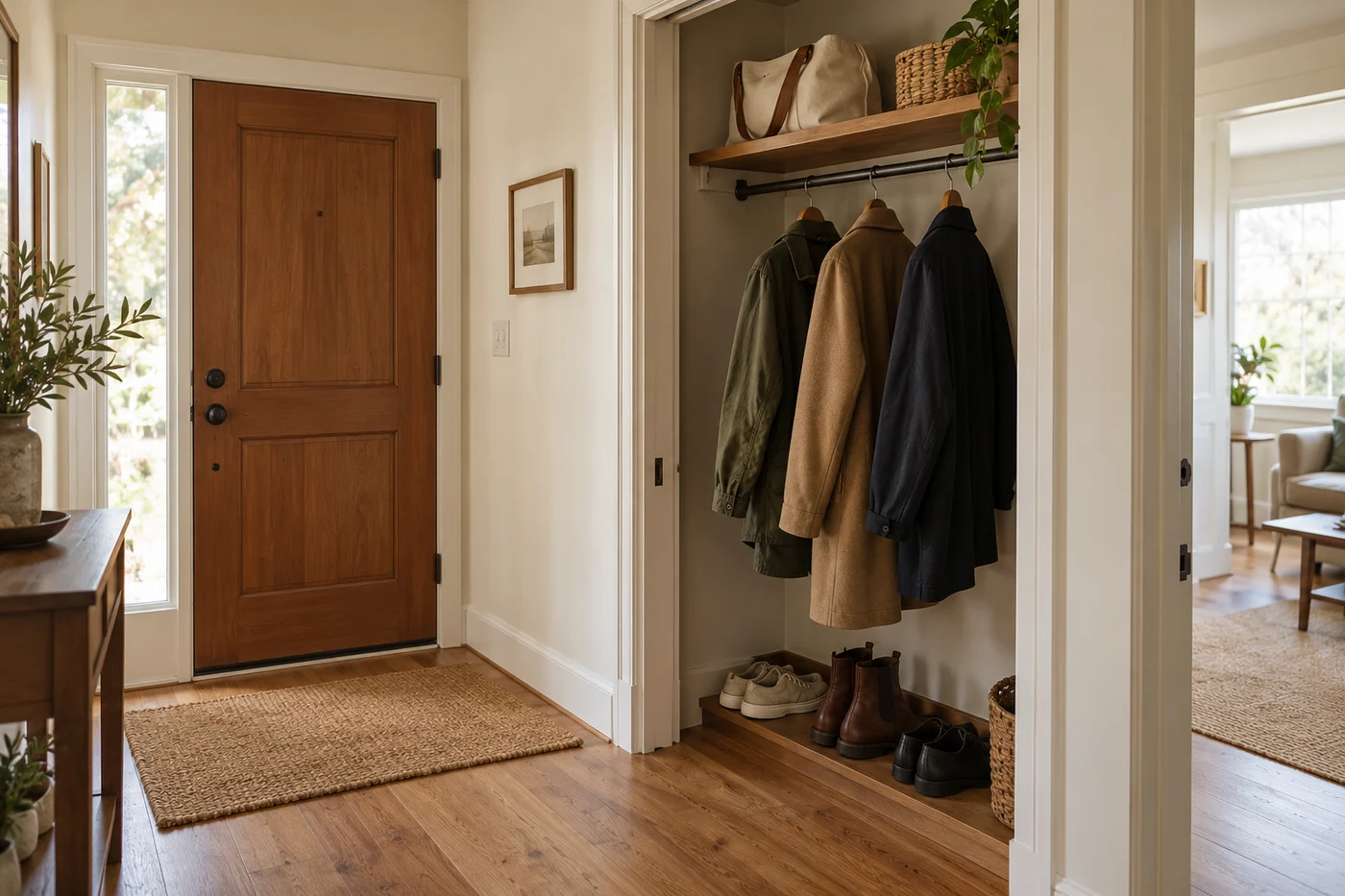
When there is a coat closet, use it for items that benefit from enclosed storage and a usable rail. Leave frequently handled small items outside only if doing so helps your routine. Avoid duplicating a full coat collection on hooks just because you have installed them.
For a shared entrance, place each daily bag where its owner can return it without shifting another person’s belongings. Limit the departure location to things leaving soon. If it stays full, reduce the contents rather than adding another basket.
Check the arrangement during everyday use
Look for belongings that repeatedly land elsewhere. Move the storage toward the successful habit if the new location still leaves the route clear. A bag may belong beside the living-room chair rather than directly beside the lock.
Check whether you can clean the floor and reach door hardware. Remove reserve items that drift into daily zones. Reassess coats when the season changes because hanging bulk can alter a layout that worked with lighter clothing.
Your next step is to place your actual daily belongings in the proposed arrangement, open every nearby door, and walk in carrying a normal bag. Keep the arrangement that supports those movements with the least equipment.