
Useful tension rod storage ideas start with the rod’s permitted use, span, and supporting surfaces. A short rod can hold a light curtain or act as a divider where the exact product supports that arrangement. It is not a universal replacement for a shelf, clothes rail, or mounted drying rack.
Before copying a storage idea, identify what the rod would actually carry. A divider may keep flat items separated while the shelf carries their weight. A hanging arrangement puts the contents directly on the rod. Those are different jobs, and they need different checks.
Find the instructions for your rod
Identify the manufacturer and model. Check its extension range, intended orientation, installation sequence, supported surfaces, and load information. If you have an unmarked rod with no recoverable instructions, avoid assigning it a hanging storage load.
Some rods use a spring; others adjust and lock differently. The steps for one design may not apply to another. Kenney provides an installation resource for its products. Umbra’s Anywhere system is a different, purpose-built curtain assembly with its own dimensions and capacity. Neither establishes the permitted load for an anonymous rod in your cabinet.
Do not copy the weight figure from a product that simply looks similar. Check whether the maker specifies different conditions across the extension range and whether brackets or other components are required.
Also verify that the suggested task is actually permitted. A curtain rod may be designed for curtain fabric without being approved to support a shelf, hang a wardrobe, or hold several full spray bottles.
Check what the ends will press against
Measure the inside distance between the contact surfaces at the intended position. Make sure both ends land fully where the instructions allow them to sit.
Look at the surfaces themselves. A sturdy cabinet side is not the same as a thin removable panel. Damaged paint, a fragile finish, a loose shelf divider, or an angled wall can make the proposed position unsuitable.
Check what is behind the contact point too. The pressure should not be applied to a panel you can visibly flex or move. If you cannot establish that the supports suit the rod’s requirements, choose another arrangement.
Keep the rod clear of pipes, wiring, and moving parts. Do not brace it against plumbing or use a water pipe as one end support. In an appliance closet, required clearances and access take priority over a rod.
No drilling also does not mean no possible marks. Inspect the finish and follow the product’s surface guidance rather than assuming a rubber end cap suits every material.
Use a light curtain to define a storage zone
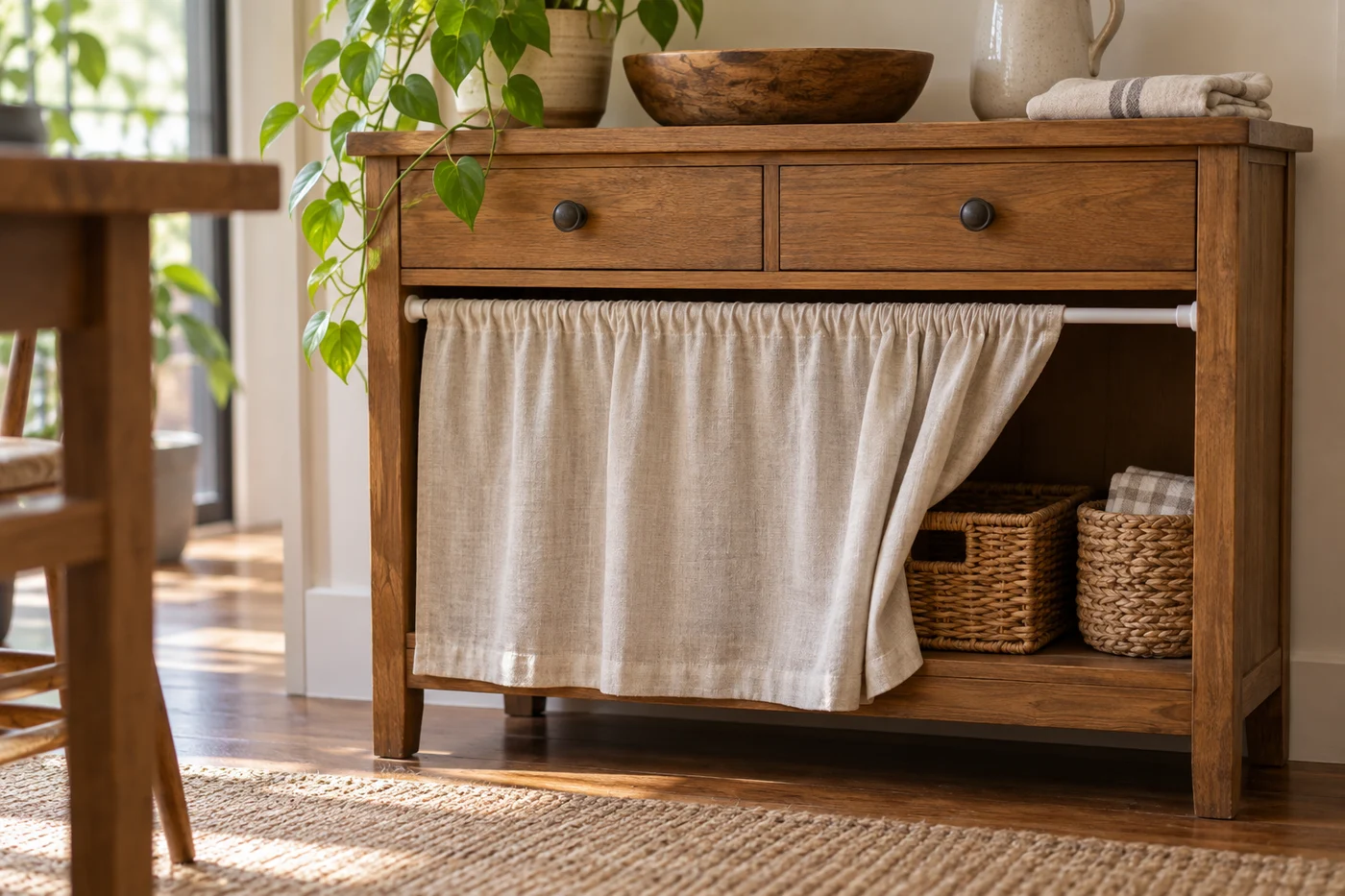
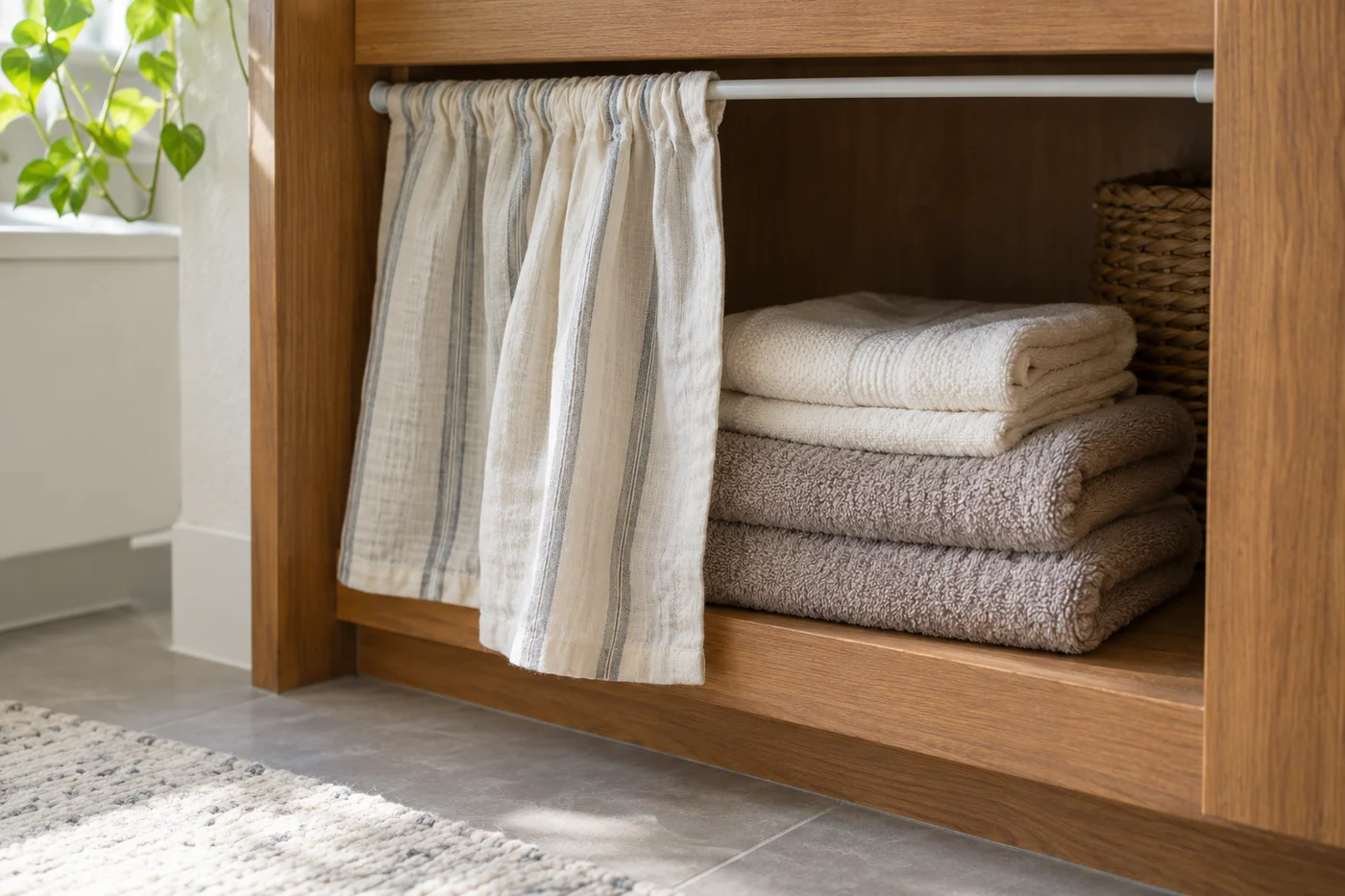
A curtain is the most straightforward starting point for a rod designed to hold one. It can visually separate an open lower shelf, small alcove, or permitted storage opening.
Keep the curtain short enough for the task and clear of doors or drawers. Choose fabric whose weight and dimensions suit the rod. The curtain should slide without repeatedly pulling the rod sideways.
Check the whole routine. Can you open it with one hand and retrieve the box behind it? Can you see enough to return the item to its place? If it catches whenever you use the shelf, simplify the fabric or move it out of the way.
Do not cover required appliance ventilation or place fabric against heat sources. A laundry closet’s louvered door or dryer opening is not spare curtain space. The separate laundry closet guide explains how to map the area needed for appliances first.
A curtain hides the contents, but it should not hide an unresolved sorting problem. Give the shelf behind it a defined task and retain access for cleaning.
Consider dividers where the shelf carries the weight
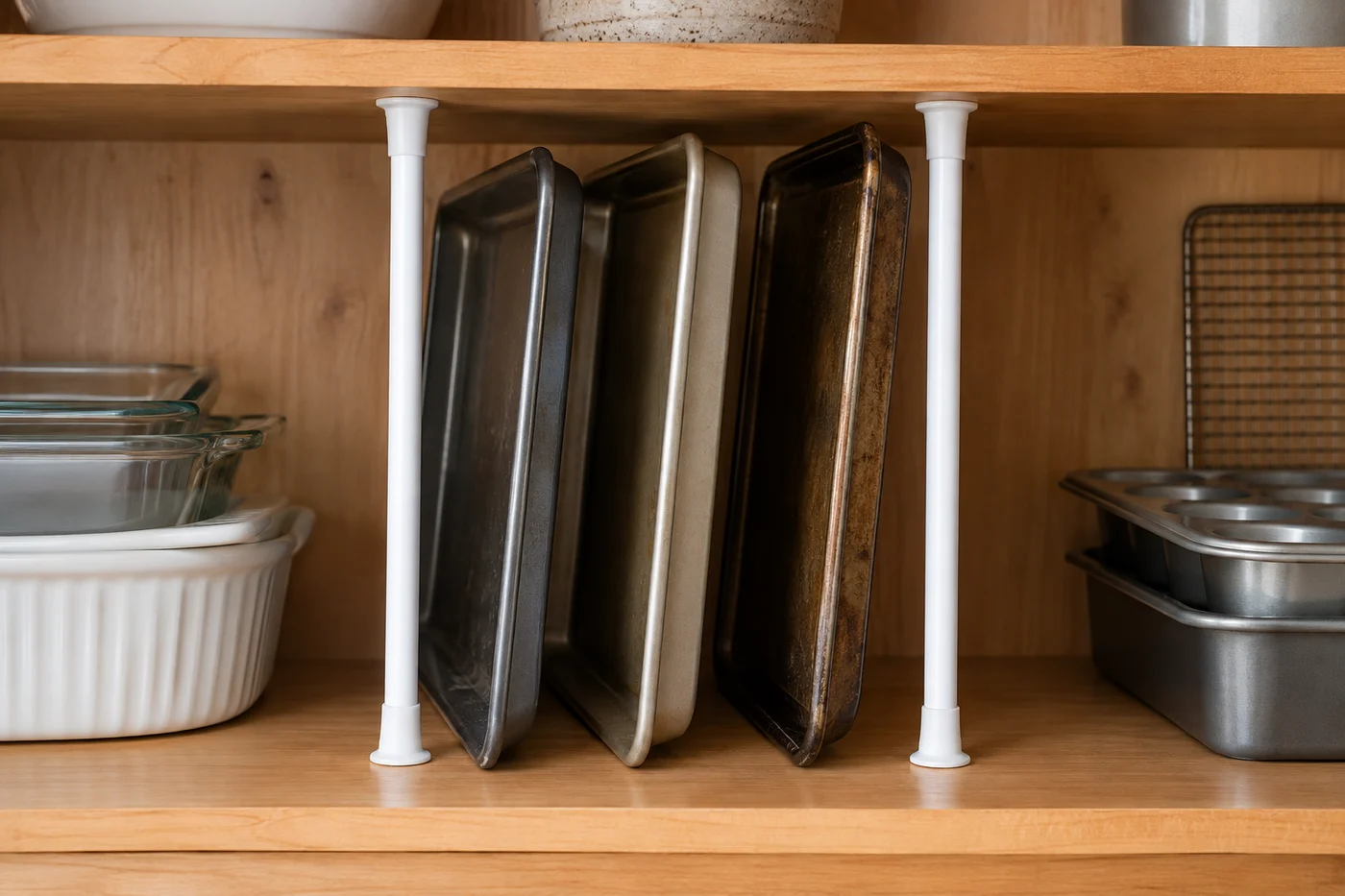
A short rod may serve as a boundary between lightweight flat items if the product supports that use and orientation. The important distinction is that the items rest on the shelf or drawer bottom; they do not hang from the rod.
For example, you could explore a divided group of lightweight trays in a suitable cabinet. Measure their height and the space needed to lift one out. Keep the group stable without forcing items tightly against the rod.
Do not assume a horizontal curtain rod is suitable for vertical installation. Check the instructions before changing its orientation. Purpose-built shelf dividers may be the clearer solution when the rod has no approval for the proposed use.
Try the arrangement with one group first. If removing one item causes the rest to fall against the rod, the divider is not doing the job well. Reduce the group or use an organizer designed for those items.
Do not build a makeshift shelf across two rods. A supported flat object, a spanning shelf, and a hanging load impose different demands. Without a manufacturer’s specified system, there is no verified capacity for that construction.
Keep hanging ideas limited to supported uses
Hanging storage is the part of tension-rod advice that needs the most restraint. A photograph of a rod holding objects does not establish how securely it is installed or how long it remains in place.
If the exact instructions allow the hanging task, weigh the intended load and include accessories such as hooks or clips. Confirm that those accessories also suit the rod and the intended use.
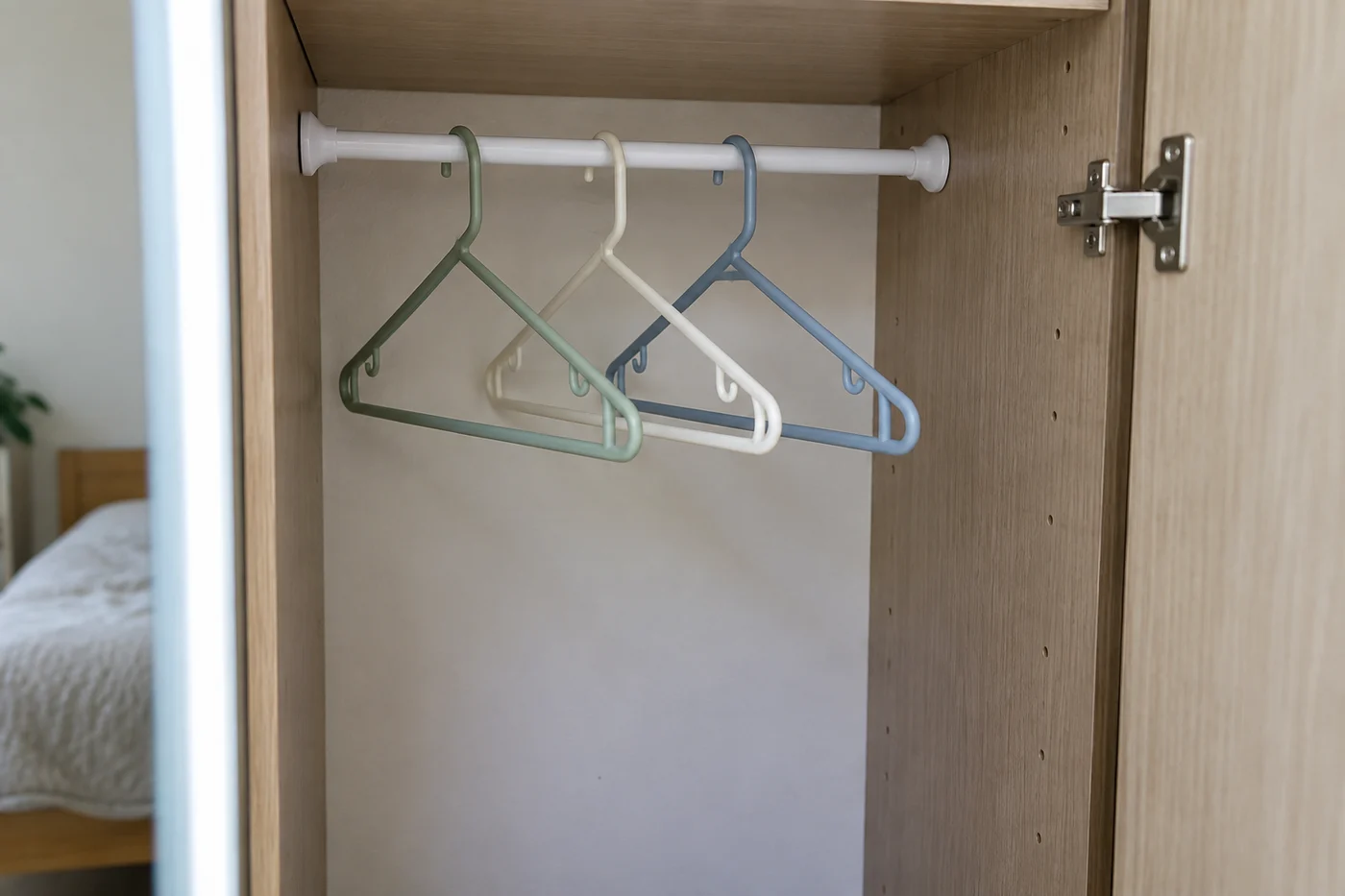
Light empty hangers may be a different load from wet clothes or a row of coats. Do not transfer permission between those tasks. A drying arrangement also needs the clearances and support specified by its maker.
Avoid hanging chemicals from bottle triggers as a general recommendation. The bottle, trigger, rod, end surfaces, and intended installation would all need to support that use. A shelf-supported caddy keeps the task easier to verify, and product storage instructions still apply.
Keep potentially hazardous products in their original packaging and suitable secure storage. CPSC’s laundry packet guidance requires packets to remain sealed in their original packaging, locked up and out of children’s sight and reach. An exposed rod arrangement does not satisfy that requirement.
Install one arrangement and check its normal use
Once the use is supported, follow the exact installation sequence. Use the specified adjustment and locking method rather than tightening until the panel bends. Keep any needed brackets or supports in place.
Check the arrangement empty first, then add only the verified intended contents. Operate nearby doors and drawers. Confirm that neither the rod nor its contents interfere with their movement.
Watch for slipping, movement at the end caps, surface damage, or loosened components. If any occurs, unload the arrangement and consult the instructions. Repeatedly tightening a slipping rod does not address an unsuitable surface or excessive load.
Keep a record of the product model and the use you checked. That helps another household member avoid turning a light curtain rod into a rail for heavy bags.
Remove what creates more work than it saves
A rod should make a specific task easier. If it blocks the view into a cabinet, requires moving items each time, or prevents cleaning, take it out and reassess the storage group.
Many useful changes do not need a rod. Stand appropriate flat items in an existing compartment, group routine supplies in a suitable caddy, or move occasional belongings to another shelf. For a broader kitchen reset, use the no-pantry organization guide.
Choose the smallest change that solves the problem. The aim is not to install tension rods in every unused opening; it is to create a storage arrangement you can use reliably.
Common questions
Are tension rods automatically suitable for rentals?
No. Check the lease, surface condition, and product’s installation guidance. Pressure fittings can still be unsuitable for fragile surfaces or unsupported uses.
Can a tension rod hold books or full cleaning bottles?
Do not assume so. Use only tasks and loads explicitly supported by the exact product instructions. A photograph or a rating from another model is not evidence for your installation.